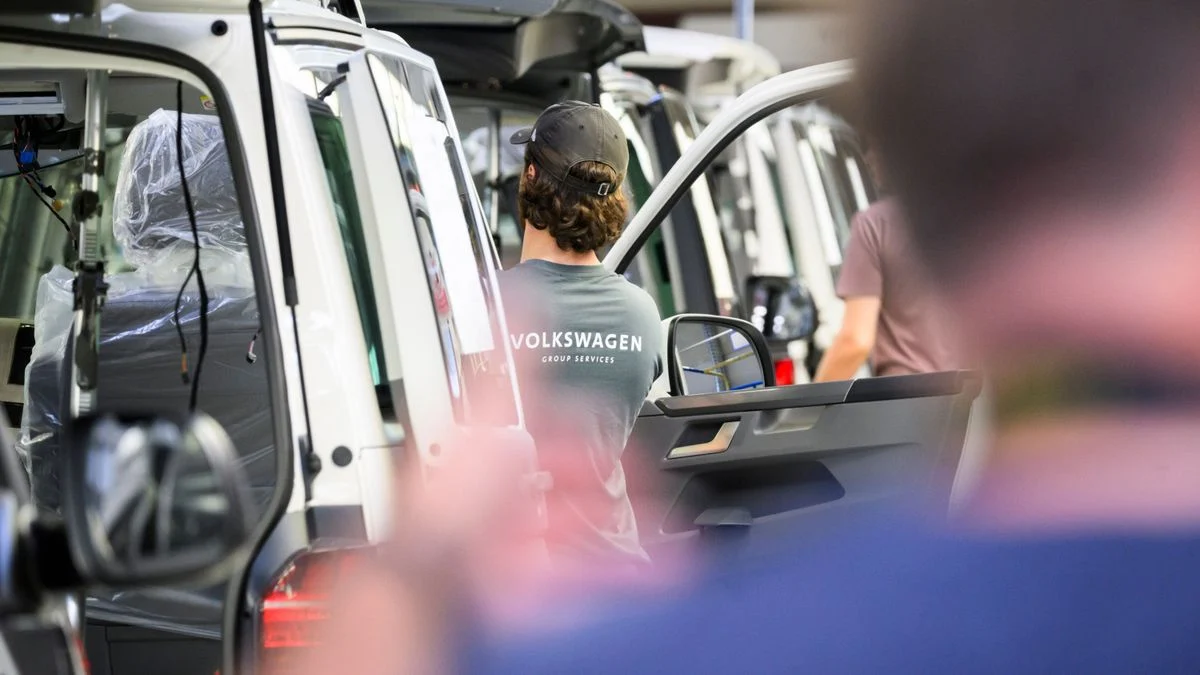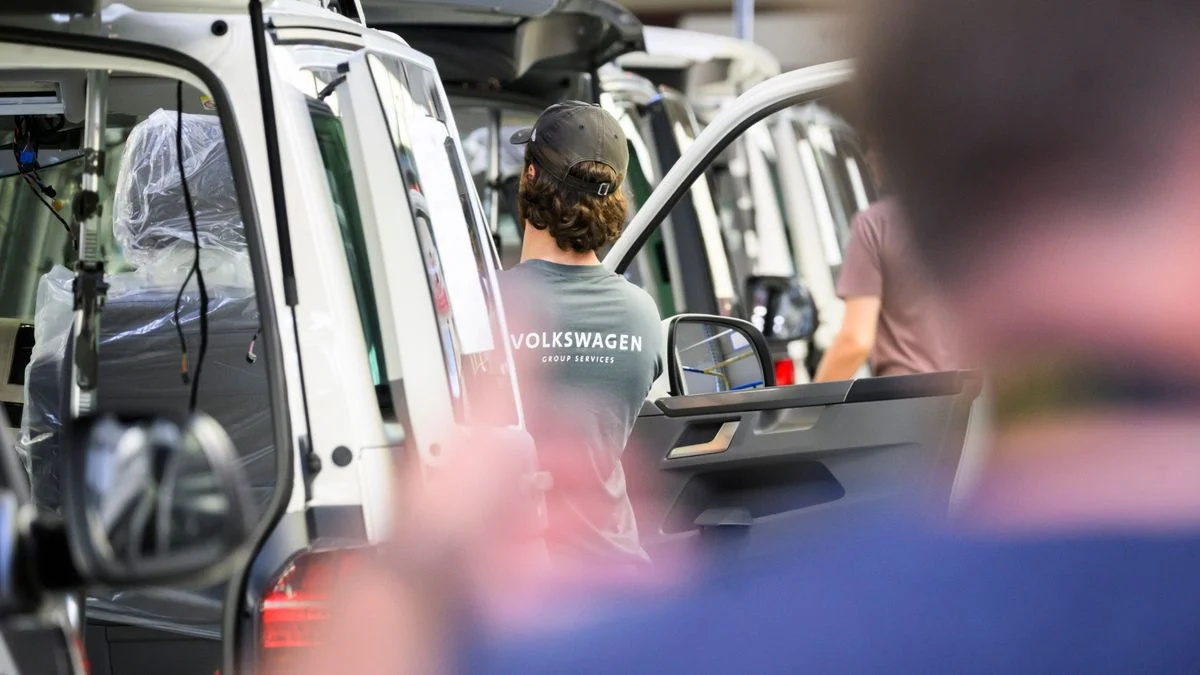
The Volkswagen Group, the crown jewel of the German automotive industry, is facing one of the most critical junctures in its post-war history. As the transition to electric mobility intensifies and global competition—particularly from China—erodes the company’s traditional profit margins, the automaker has announced a drastic expansion of its austerity measures. The company intends to slash an additional 12,000 jobs by 2030, a move that exacerbates an already volatile situation between the executive board in Wolfsburg and the powerful labor unions.
This latest announcement is not an isolated incident but rather a symptom of a deep-seated structural crisis. With CEO Oliver Blume at the helm, the company is attempting to navigate a "historic" turnaround, which includes a total planned reduction of 50,000 positions globally by the end of the decade. The situation has set the stage for a brutal confrontation in the upcoming tariff negotiations, which are scheduled to commence on November 24.
The Core of the Conflict: Why 12,000 More Jobs?
The decision to cut 12,000 additional jobs follows a series of previous agreements. Two years ago, Volkswagen had already negotiated a reduction of 35,000 positions by 2030, covering the core brand, the component division, and corporate administrative functions. The new, additional cuts signify that the initial restructuring plan was insufficient to address the rapidly deteriorating market environment.
Volkswagen argues that these measures are essential to ensure the long-term viability of the company. The plan involves the introduction of "transfer companies"—transitional entities where employees whose positions have been eliminated can receive training, professional development, and assistance in finding new employment. These entities are often partially subsidized by the German Federal Employment Agency through short-time work benefits.
However, the company’s push for these transfer mechanisms has been met with immediate, fierce opposition from the IG Metall union.
Chronology of the Crisis
To understand how Volkswagen arrived at this impasse, one must look at the timeline of the current fiscal year:
- Early 2024: Mounting pressure on the VW brand to improve its "return on sales" amid declining demand for internal combustion engine vehicles and a sluggish ramp-up of the ID. series electric vehicles.
- Late Summer 2024: Internal audits reveal that the cost-saving targets set in 2022 are being missed by a significant margin. The Board begins drafting a more aggressive "Plan B."
- Early November 2024: Following discussions with worker representatives in Hannover, Volkswagen officially confirms the need for an additional 12,000 job cuts, citing a requirement to reduce labor costs significantly to maintain competitiveness.
- Mid-November 2024: The IG Metall union labels the plan a "breach of tariff policy" and categorically rejects the proposal, setting the stage for a contentious start to the collective bargaining round on November 24.
Supporting Data and Financial Context
The financial stakes are immense. Industry analysts estimate that the total cost of this "radical cure" for Volkswagen could reach upwards of 10 billion euros. This capital is required not just for severance payments, but to facilitate the massive technological pivot required to maintain a lead in software-defined vehicles and battery technology.
The company’s struggle is reflected in its stock performance and the pressure from shareholders to maintain dividends. While the company insists on honoring its "Future Tariff Agreement," which includes a commitment to job security until the end of 2030, the sheer scale of the necessary cost-cutting makes this promise increasingly difficult to keep.
Volkswagen’s management points to three pillars of the new plan:
- Transfer Companies: To handle the headcount reduction socially.
- Voluntary Departures: Maximizing the use of early retirement and severance packages.
- Cost Reduction: Cutting non-personnel costs and optimizing supply chains to improve operational efficiency.
Official Responses and the Stance of IG Metall
The reaction from labor representatives has been one of indignation. Thorsten Gröger, the IG Metall district leader, has been vocal in his criticism, arguing that the company is attempting to shift the burden of its own strategic failures onto the shoulders of the German taxpayer.

"Before the contributors have to step in, the shareholders have a duty," Gröger stated. He emphasized that it is fundamentally unacceptable for the general public to subsidize the transition through state-funded transfer companies while the company continues to distribute dividends to shareholders.
Furthermore, the union argues that Volkswagen is looking at the problem through the wrong lens. According to IG Metall, management should focus on "product-led growth"—developing new, competitive electric vehicles, conquering new international markets, and asserting technological leadership—rather than merely shrinking the workforce. The union views the reliance on transfer companies as an admission of defeat, asserting that these should only be used as a last resort in the event of factory closures, not as a standard tool for headcount management.
Strategic Implications for the Future of VW
The standoff between the VW board and the unions has profound implications for the German economy. Volkswagen is the largest private employer in Germany, and its "Wolfsburg model" of co-determination has long been considered a benchmark for labor-management cooperation. If this relationship breaks down, it could signal a broader erosion of the German social market economy.
1. Technological Sovereignty
Volkswagen is currently fighting to maintain its status as a technology leader. As competitors like BYD and Tesla aggressively capture market share in Europe, VW’s high labor costs have become a primary disadvantage. The company is forced to make a choice: maintain the social status quo and risk insolvency, or embrace a leaner, more agile structure at the cost of thousands of jobs.
2. The Risk of Deindustrialization
There is a growing fear among policymakers in Berlin that if Volkswagen, the flagship of German manufacturing, cannot successfully transition to a post-combustion world, the entire domestic supply chain—consisting of thousands of small and medium-sized enterprises (the Mittelstand)—could follow suit. The loss of 12,000 or 50,000 jobs is not just a statistical decline; it represents a loss of critical engineering expertise and manufacturing capacity.
3. The Tariff Negotiation Battlefield
The negotiations starting on November 24 will be a litmus test for the future of German industrial relations. If the two parties cannot find a compromise, the potential for strikes is high. A strike at Volkswagen would not only halt production but would send a shockwave through the European economy, given the company’s deeply integrated supply chains across the continent.
Conclusion: A Delicate Balancing Act
Volkswagen finds itself in the classic "Innovator’s Dilemma." It must simultaneously fund the expensive development of next-generation mobility while shedding the legacy costs of a manufacturing model that is no longer as profitable as it once was.
The proposal to utilize transfer companies is an attempt to bridge this gap, offering a "socially responsible" exit for thousands of employees. However, the union’s rejection highlights a deeper ideological divide: who should pay for the transition to the green economy? Is it the responsibility of the state, the shareholders, or the workers themselves?
As the deadline for the November negotiations approaches, all eyes are on Wolfsburg. The outcome will determine whether Volkswagen can successfully reinvent itself as a lean, tech-focused powerhouse, or if it will be mired in a decade-long cycle of internal conflict and decline. For now, the road ahead remains fraught with uncertainty, and the cost of the transition—both in human and financial terms—continues to rise.