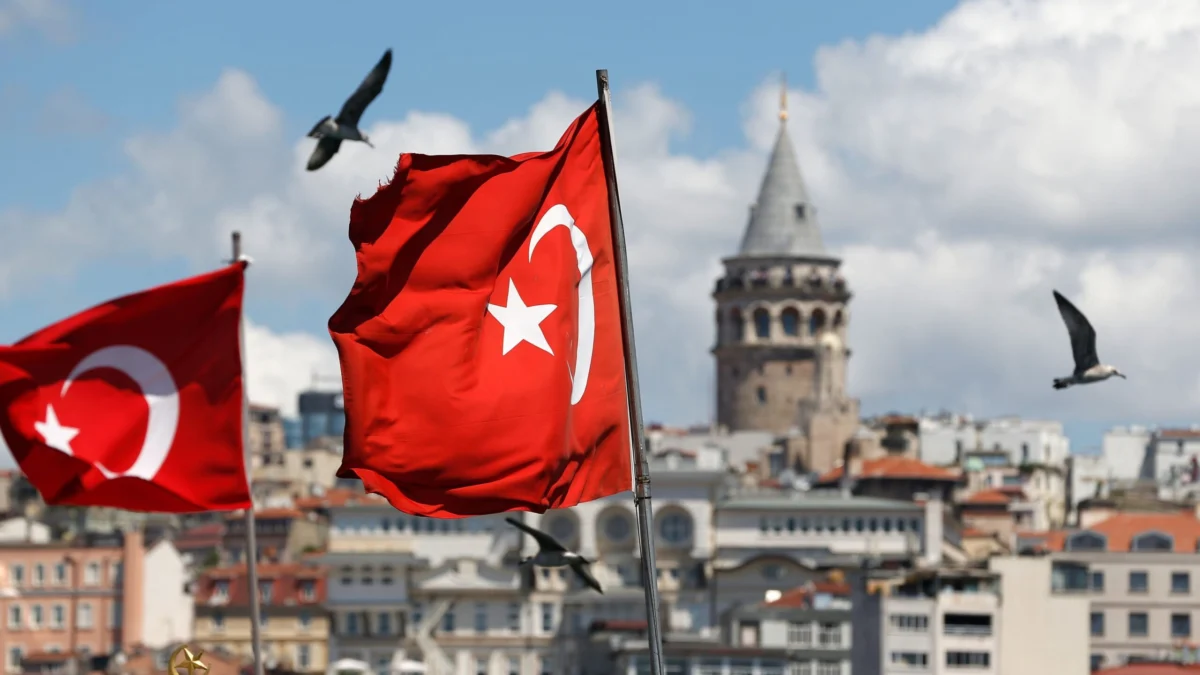
ISTANBUL – In a significant shift for the Turkish financial landscape, the Central Bank of the Republic of Turkey (TCMB) has officially resumed its monetary easing cycle. Following a five-month period of policy stagnation, the bank moved on Thursday to lower its benchmark interest rate from 37 percent to 36 percent. This move, which was largely anticipated by market participants, marks a return to a more accommodative stance, signaling a newfound confidence in the nation’s ability to weather the geopolitical and economic volatility currently roiling the Middle East.
The decision comes at a delicate juncture, as Turkey navigates the secondary effects of the ongoing Iran-led regional conflicts, which have placed immense pressure on global energy markets and domestic inflation figures.
The Core Decision: A Calculated Move Toward Easing
The central bank’s decision to cut rates by 100 basis points—bringing the key policy rate to 36 percent—was met with a muted reaction from the currency markets. The Turkish Lira, which has been under consistent downward pressure throughout the year, remained relatively stable, trading at 49.63 against the U.S. Dollar immediately following the announcement.
Market analysts suggest that the stability of the Lira following the announcement indicates that the cut was already "priced in" by investors. By easing credit conditions, the central bank is attempting to provide a buffer for the domestic banking sector, which has faced significant liquidity constraints in recent months.
Chronology of a Volatile Year
To understand the weight of this decision, one must look back at the erratic trajectory of Turkey’s monetary policy over the past ten months.
Phase 1: The Inflationary Shock (Q1 2025)
The year began with optimism that was quickly derailed by the onset of the Iran-led conflict in late February. As global oil and gas prices spiked, Turkey, as a net energy importer, saw its trade deficit balloon. The immediate response was a sharp spike in inflation, forcing the central bank to maintain high borrowing costs to protect the Lira.
Phase 2: The Stagnation Period (Q2 – Q3 2025)
For five consecutive months, the monetary policy committee held firm. The primary objective was to observe the "pass-through" effects of energy price volatility. During this period, the central bank was effectively playing a game of wait-and-see, fearful that any premature loosening would trigger a currency collapse or a wage-price spiral that could prove impossible to contain.
Phase 3: The Pivot (October 2025)
By September, data indicated that while inflation remained high—clocking in at 29.73 percent—the impact of the energy crisis was proving less catastrophic than initial projections had warned. This relative resilience in the real economy provided the "political and fiscal space" for the central bank to initiate the current rate-cutting cycle.
Supporting Data and Economic Indicators
The Turkish economy is currently defined by a tug-of-war between high headline inflation and a slowing manufacturing sector.
- Inflation Dynamics: At 29.73 percent, inflation remains significantly above the central bank’s long-term targets. However, the deceleration from previous, more aggressive peaks has given policymakers the confidence that the worst of the cost-push inflation is in the rearview mirror.
- The Investment Fund Crisis: A critical factor in the central bank’s timing was the recent implosion within the Turkish investment fund sector. Last month, regulatory authorities were forced to order the liquidation of 131 separate investment funds. This sparked a liquidity crunch that threatened to freeze credit markets. The central bank was forced to intervene with emergency liquidity provisions, an action that likely served as a precursor to today’s rate cut.
- Future Projections: Consensus among economists polled by Reuters suggests this is only the beginning. Projections indicate a further cut to 35 percent at the December meeting, with a gradual easing trajectory extending through 2027. Some analysts are forecasting a benchmark rate as low as 28 percent by the end of 2026.
Implications for the Turkish Economy
The shift toward a lower interest rate environment carries profound implications for various stakeholders within the Turkish Republic.
Impact on Domestic Households and Borrowers
For the average Turkish citizen, the high-interest-rate environment of the last year has been punishing. With consumer loan rates hovering at record highs, credit card debt and mortgage accessibility became major hurdles for the middle class. A downward trend in the central bank rate should eventually trickle down to commercial banks, lowering the cost of borrowing for households and businesses alike.
Impact on the Banking Sector
The banking sector has been under immense pressure, particularly following the aforementioned liquidation of 131 investment funds. By lowering the policy rate, the central bank is essentially "loosening the purse strings," making it cheaper for commercial banks to manage their reserves and reducing the burden of carrying high-interest debt on their balance sheets.
Geopolitical Risk Management
The Turkish economy remains tethered to the stability of the surrounding region. The central bank’s policy is essentially a hedge: they are betting that the energy price surges caused by the Iran-related conflicts have reached a plateau. If the conflict escalates further, however, this easing cycle may be cut short, forcing the bank to pivot back to aggressive tightening to defend the Lira.
Official Responses and Expert Analysis
The central bank’s leadership has emphasized that this decision is "data-dependent" and "cautious." In their accompanying press release, they reiterated their commitment to long-term price stability while acknowledging the need to support industrial output in an environment of high input costs.
"The central bank is walking a tightrope," says Dr. Ayla Demir, a senior economist specializing in Emerging Market Debt. "They need to keep rates high enough to maintain the attractiveness of the Lira to foreign investors, but low enough that they don’t trigger a recessionary collapse in the domestic credit market. 36 percent is still a restrictive rate, but it is a psychological signal that the tightening cycle has ended."
Conversely, some critics warn that the easing cycle is premature. "With inflation still near 30 percent, real interest rates are hovering in a zone that is still technically negative," noted an analyst from a major European investment bank. "There is a risk that by lowering rates now, the TCMB could reignite inflation expectations, particularly if the currency loses momentum in the coming weeks."
Conclusion: A New Chapter for the Lira
As the Turkish central bank embarks on this new chapter, the focus will shift entirely to the data. Will the inflation rate continue to trend downward, or will it prove "sticky" at current levels? Will the liquidity issues in the investment sector remain contained, or are there further skeletons in the closet?
The move from 37 to 36 percent is, on paper, a minor adjustment. In the context of Turkey’s complex and high-stakes economic environment, however, it represents a bold assertion of control. By taking this step, the central bank is telling the market that it believes the worst of the storm—both the energy-driven inflation and the financial sector instability—is beginning to subside.
Whether this confidence is misplaced will be tested in the coming months. For now, the markets remain in a state of watchful waiting, as Istanbul navigates the turbulent waters of global economic realignment. As the world watches, the central bank’s path to 28 percent by 2026 will serve as a bellwether for the resilience of the Turkish model in an increasingly fragmented global economy.