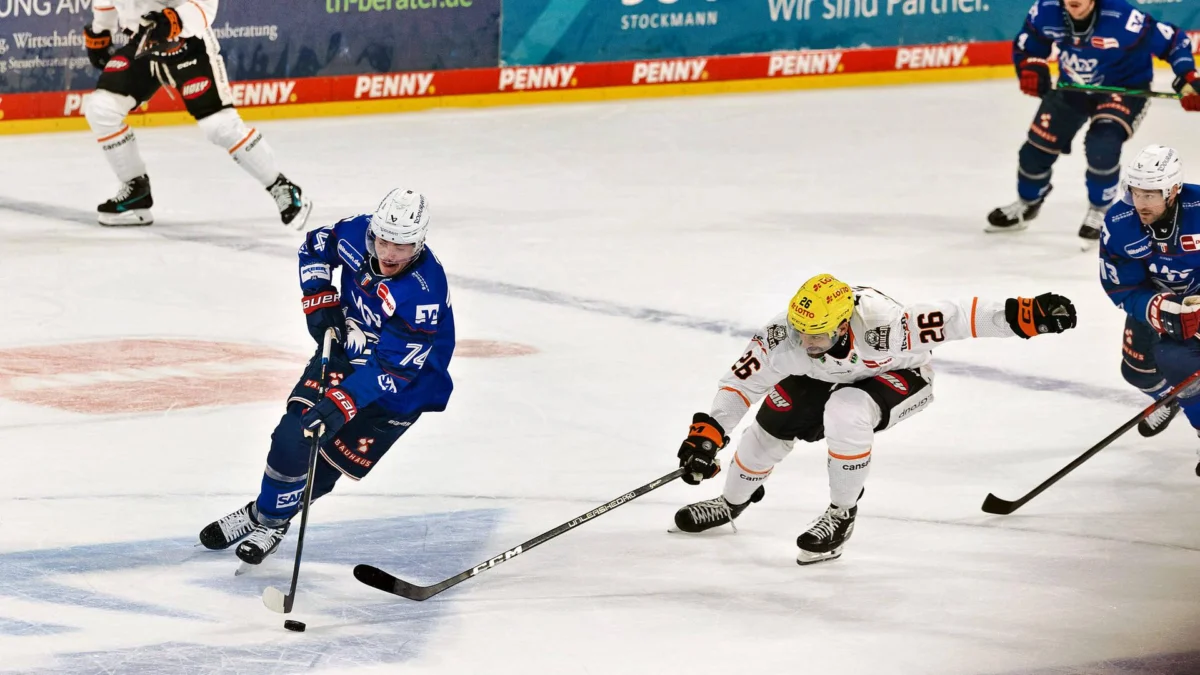
The tension inside the SAP Arena was palpable long before the opening puck drop. For the Löwen Frankfurt, Friday night’s encounter against the Adler Mannheim was more than just a standard mid-season fixture; it was a test of character and a chance to build on the momentum of their first home victory of the season against Iserlohn just five days prior. However, the optimism proved short-lived. In a performance that highlighted the gulf in tactical discipline and offensive clinicality between the two sides, Frankfurt fell to a sobering 0-3 defeat, leaving their fans searching for answers as the playoff race begins to pull away.
Main Facts: A Night to Forget for the Bornheim Side
The final scoreline of 0-3 accurately reflected the balance of power on the ice. While Frankfurt entered the game with hopes of capitalizing on their recent success, they found themselves stifled by a well-drilled Mannheim defensive unit.
The goals for the hosts were distributed across the first two periods, with Brooks Macek, Patrick Brown, and Lukas Kälble finding the back of the net. Frankfurt’s offense, which had shown flickers of life earlier in the week, remained largely dormant against a relentless Mannheim forecheck. With this result, the Löwen remain anchored in 11th place in the Deutsche Eishockey Liga (DEL) standings. The loss serves as a stark reminder of the "rollercoaster" nature of their current campaign, characterized by inconsistency and a struggle to convert territorial pressure into meaningful scoring opportunities.
Chronology: How the Derby Unfolded
The match began with a frantic pace, typical of a Rhine-Main derby. Both teams exchanged early physical hits, signaling that neither side was willing to concede an inch of ice.
First Period: The Breakthrough
Mannheim established their dominance early, controlling the neutral zone and forcing Frankfurt’s goaltender into difficult saves. The deadlock was broken when Brooks Macek capitalized on a defensive lapse in the Frankfurt zone, burying a clinical shot to put the Adler up 1-0. Despite a late power-play opportunity for the Löwen, they failed to generate high-danger chances, heading into the first intermission trailing.
Second Period: Expanding the Gap
The middle frame saw Frankfurt attempt to claw their way back, but their efforts were repeatedly thwarted by disciplined defensive coverage from the Adler. Patrick Brown doubled the lead for Mannheim, a goal that visibly sapped the energy from the visiting bench. As Frankfurt pushed forward, gaps opened up at the back, and Lukas Kälble added the third goal, effectively putting the game out of reach.

Third Period: A Defensive Lockdown
The final period was a masterclass in game management by Mannheim. Knowing that a three-goal cushion was sufficient, they slowed the tempo, opting for a structured defensive shell that forced Frankfurt to play on the perimeter. The visitors failed to register a breakthrough, and as the clock ticked down, the frustration within the Frankfurt ranks became evident in a series of minor scuffles. When the final buzzer sounded, the 0-3 scoreline remained, marking a comprehensive victory for the home side.
Supporting Data: The Statistical Gulf
To understand why the Löwen struggled so profoundly, one must look beyond the final score. Throughout the 60 minutes, the shot-differential significantly favored the Adler. Mannheim dominated in the face-off circle, controlling over 60% of puck possessions, which allowed them to dictate the rhythm of the game from the opening minute.
Furthermore, Frankfurt’s special teams, often a barometer for their success, failed to fire. The power play, which had been a point of emphasis in training sessions leading up to the derby, looked stagnant. They struggled to gain entry into the offensive zone, and when they did, Mannheim’s penalty-kill unit effectively neutralized any shooting lanes. The defensive metrics were equally concerning for Frankfurt, as they allowed 32 shots on goal while struggling to clear rebounds, leading directly to the second and third goals.
Official Responses: The Post-Game Atmosphere
Following the match, the mood in the Frankfurt locker room was somber. Head coach and team leadership emphasized the need for a "back-to-basics" approach.
"We lacked the intensity required for a derby," noted a member of the Frankfurt coaching staff in the post-game press conference. "When you play a team of Mannheim’s caliber, you cannot afford lapses in concentration. We saw positive signs against Iserlohn, but tonight, we took two steps back. We have to learn that every shift counts in this league."
On the other side of the tunnel, the atmosphere was celebratory. The Mannheim camp praised their defensive structure, particularly the goaltending performance that earned them a clean sheet. "It was a complete team effort," said the Mannheim captain. "We stuck to our game plan, kept them to the outside, and capitalized on the chances we created. That’s how you win derbies."

Implications: The Long Road to the Playoffs
The implications of this loss extend far beyond the single defeat. For the Löwen Frankfurt, the path to the postseason is narrowing significantly. Remaining in 11th place, they are now fighting not just for points, but for relevance in the playoff conversation. The DEL is a league that punishes inconsistency, and Frankfurt’s inability to string together consecutive wins is becoming their defining narrative.
Tactical Re-evaluation
The coaching staff now faces a difficult week. With the playoff cutoff point drifting further away, there is a legitimate question regarding whether a change in tactical philosophy is required. The team has shown it can compete with lower-tier teams, but against top-tier opponents like Mannheim, their lack of a "plan B" when the initial strategy fails is glaring.
The Mental Hurdle
Beyond the tactics, there is a psychological component to the current slump. The "rollercoaster" performance—a term used by observers to describe their recent form—suggests a lack of mental resilience. Winning at home is one thing, but performing on the road in a hostile environment like the SAP Arena requires a level of poise that the current Frankfurt roster is yet to demonstrate consistently.
Looking Ahead
The schedule does not get any easier. With the league season entering a critical phase, the Löwen need to find a way to stabilize their defensive zone and find a secondary scoring threat. The reliance on a few key players to carry the offensive load has made them predictable. If they are to turn this season around, the upcoming matches are "must-win" scenarios. The margin for error has effectively evaporated.
Conclusion: A Season at the Crossroads
Friday night’s loss to the Adler Mannheim was more than just a defeat; it was a wake-up call for the entire Frankfurt organization. The passion of the derby was present, but the execution was lacking. As the team travels back to Bornheim, they do so with the knowledge that their playoff dreams are currently on life support.
To bridge the gap between their current 11th-place standing and the upper echelon of the DEL, they must find consistency. They have proven they can win, as evidenced by their victory over Iserlohn, but the ability to translate that success into sustained momentum is the difference between a mid-table finish and a legitimate playoff run. The fans, who travel in numbers and provide unwavering support, deserve a team that plays with the consistency required of a top-tier contender. Whether the Löwen can find that identity in the coming weeks remains the most pressing question in the Hessian hockey scene. The rollercoaster must find a track, or the season risks slipping away into the irrelevance of the bottom tier.