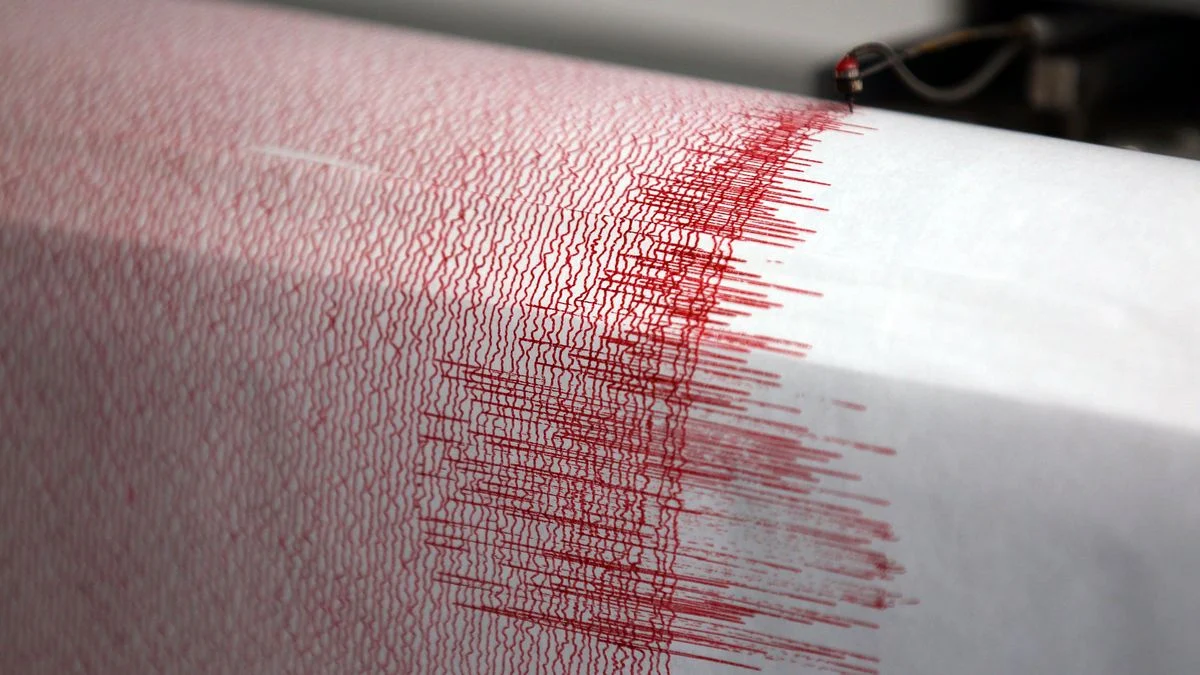
Introduction: A Night of Unrest
The peaceful silence of the early morning hours on Friday was abruptly shattered for residents living along the border between the Czech Republic and Germany’s Bavaria region. A magnitude 3.5 earthquake, centered in the Tachov district of the Czech Republic, sent shockwaves through the borderlands, jolting residents from their sleep and triggering a flurry of calls to emergency services.
While the event was classified as a "light" earthquake in geological terms, the subjective experience of those in the immediate vicinity was one of startling intensity. The seismic event, occurring shortly after 12:30 AM, serves as a sharp reminder of the complex geological activity that characterizes this particular region of Central Europe.
Main Facts and Seismic Data
According to preliminary data released by the Geophysical Institute of the Czech Academy of Sciences, the epicenter of the earthquake was located north of the town of Bělá nad Radbuzou. The institution calculated the magnitude at 3.5 on the Richter scale, with the hypocenter situated at a depth of approximately nine kilometers.
However, seismology is an evolving science, and discrepancies in automated data are common. The European-Mediterranean Seismological Centre (EMSC), which tracks seismic activity across the continent, provided slightly different parameters. The EMSC recorded the magnitude at 3.3 and estimated the depth at 16 kilometers. Despite these technical variations, both institutions agree on the proximity of the epicenter to the German border—estimated to be roughly ten kilometers away.
These seismic measurements remain subject to further verification by geologists, who must cross-reference data from multiple stations to account for crustal density and signal attenuation. Nonetheless, the core consensus remains: a significant enough tremor occurred to be felt across a wide radius spanning both sides of the national border.
Chronology of the Event
The event unfolded with startling speed in the early hours of Friday morning.
- 00:30 AM (CET): The initial seismic rupture occurred deep beneath the earth’s crust in the Tachov district.
- 00:31 AM – 00:40 AM: As the seismic waves radiated outward, residents in nearby Czech towns such as Třemešné and Přimda were awakened by a loud, percussive sound described as a "boom."
- 00:45 AM onwards: Panic began to manifest in the Bavarian Oberpfalz (Upper Palatinate) region. Police stations in the area began receiving an influx of inquiries from concerned citizens who felt the earth move beneath their homes.
- Early Morning: Regional emergency response teams and municipal officials began assessing infrastructure. By dawn, the consensus was clear: while the psychological impact was significant, the physical toll on buildings and infrastructure appeared to be minimal.
The Human Experience: Eyewitness Accounts
For many, the earthquake was not merely a movement of the ground, but a visceral acoustic and tactile experience. In the small community of Třemešné, the impact was profound.
Kristian Ebenhöh, the mayor of Třemešné, provided a vivid description of the event to the Czech newspaper Právo. "It was a shot like a cannon," he remarked, noting that the vibration was powerful enough to shake entire houses. He noted that nearly all his neighbors were roused from their sleep, caught in a moment of confusion and alarm.
In the nearby town of Přimda, the experience was described as an "unpleasant feeling." One resident likened the low-frequency rumble to the sound of heavy cargo trucks passing by in the distance—a common sensory comparison for earthquakes of this intensity. Meanwhile, in the larger town of Domažlice, the confusion was palpable. Residents reported initial fears of industrial accidents, with many speculating that a heating boiler had exploded or that a low-flying helicopter had landed directly on their property.
Official Responses and Safety Assessments
Law enforcement agencies on the German side of the border were quick to manage the situation. A spokesperson for the Upper Palatinate police confirmed that while calls were received, particularly from the eastern part of the region, there were no reports of casualties or structural damage by the time the sun rose.
Emergency services remained on high alert throughout the morning, though the lack of emergency calls regarding collapsed masonry or gas leaks provided relief to municipal planners. Because the magnitude remained within the "light" category (typically defined as being felt by many, but causing little damage), the emergency response remained largely focused on information dissemination rather than active search and rescue operations.
Geological Context and Regional History
The region near the border of the Czech Republic and Bavaria is no stranger to seismic activity. It is part of a complex tectonic zone that has historically experienced "earthquake swarms"—sequences of tremors that can last for days or weeks.
The most recent notable activity occurred in October 2022, when a 2.2 magnitude tremor was recorded in the same Tachov district. However, the region’s geological memory is dominated by a much more destructive event: the 1985 earthquake near the city of Cheb (Eger). That event, which reached a magnitude of 4.6, remains the benchmark for seismic risk in the area. During the 1985 quake, the structural integrity of older buildings was severely compromised; chimneys collapsed, roof tiles fell, and deep fissures appeared in the walls of houses.
Geologists study this region closely because it lies near the Eger Rift, a major geological structure associated with the volcanic history of the Bohemian Massif. While the recent 3.5 magnitude quake was significantly weaker than the 1985 event, it serves as a reminder of the latent energy stored in these crustal faults.
Implications for the Future
The event on Friday morning raises important questions about disaster preparedness in border regions. When seismic events cross international lines, communication between agencies becomes paramount. In this instance, the flow of information between Czech geological authorities and German law enforcement appeared effective, preventing rumors from spiraling into mass panic.
1. Structural Resilience
While modern building codes in both Germany and the Czech Republic are designed to withstand minor seismic activity, the older housing stock—common in many of the historic villages along the border—remains a point of vulnerability. Local governments may use this event as an impetus to conduct updated structural integrity surveys of historical buildings.
2. Public Awareness and Education
The confusion expressed by citizens in Domažlice and Přimda suggests a need for better public education regarding seismic events. When residents mistake an earthquake for a boiler explosion or a landing helicopter, it highlights a lack of familiarity with the sensory cues of an earthquake. Future municipal planning could include informational campaigns on what to do during and after a tremor to ensure public safety.
3. Scientific Monitoring
The discrepancy between the data provided by the Czech Academy of Sciences and the EMSC underscores the importance of a dense network of seismic sensors. Increased investment in cross-border scientific cooperation could allow for a more unified, real-time response, ensuring that residents on both sides of the border receive consistent and accurate information within minutes of an event.
Conclusion
The earthquake of Friday morning was a minor event in the grand scale of global tectonics, yet it left a significant impression on the communities of the Czech-Bavarian border. It was a reminder of the fragility of our environment and the importance of preparedness. As scientists continue to analyze the data from this latest tremor, the residents of the region can take comfort in the fact that, this time, the earth’s movement resulted in little more than a wake-up call.
For the people of the Tachov and Upper Palatinate regions, life has largely returned to normal. However, the event remains a stark reminder that the ground beneath our feet is rarely as stable as it seems, and that in the quiet borderlands of Central Europe, the earth occasionally has a voice of its own.