On October 25, Serbia will head to the polls in a parliamentary election that many observers describe as a watershed moment for the nation’s democratic trajectory. Across the globe, from the bustling streets of Belgrade to the suburbs of Frankfurt, a surge of political energy is challenging the long-standing dominance of President Aleksandar Vučić and his Serbian Progressive Party (SNS). In Germany, a dedicated diaspora movement is working tirelessly, not only to mobilize voters but to ensure that the electoral process remains transparent, despite deep-seated skepticism regarding the integrity of the state’s institutions.
The Winds of Change: From Protests to the Ballot Box
For activists like 55-year-old Olivera Stojić-Rakić, the day after the election holds only two possibilities. "We will either be throwing a party or we will be protesting," she says. For those in the Serbian diaspora, particularly in Germany, the outcome of this election is viewed as a "fate-defining" moment.
The current political fervor is the culmination of two years of intense civil unrest. The catalyst for this movement was a tragedy in the northern city of Novi Sad: the collapse of a freshly renovated railway station canopy, which resulted in the deaths of 16 people. What began as a spontaneous outcry against systemic corruption and administrative negligence quickly morphed into the largest protest movement in Serbia’s recent history.
This momentum has now shifted from the streets to the political arena. For the first time, a unified list titled "The Students Win" is competing in the parliamentary elections. Their platform is clear: break the SNS majority and install a government of experts tasked with restoring democratic norms, rule of law, and institutional independence.
Chronology of the Struggle: A Two-Year Journey
The timeline of the current opposition movement is marked by a steady escalation of public dissatisfaction:
- 2023: Initial protests erupt following the Novi Sad tragedy, with students and civil society groups demanding accountability from the government for the corruption that led to the infrastructure failure.
- 2024: The movement solidifies, organizing mass demonstrations across major Serbian cities and gaining significant traction within the diaspora in Europe and North America.
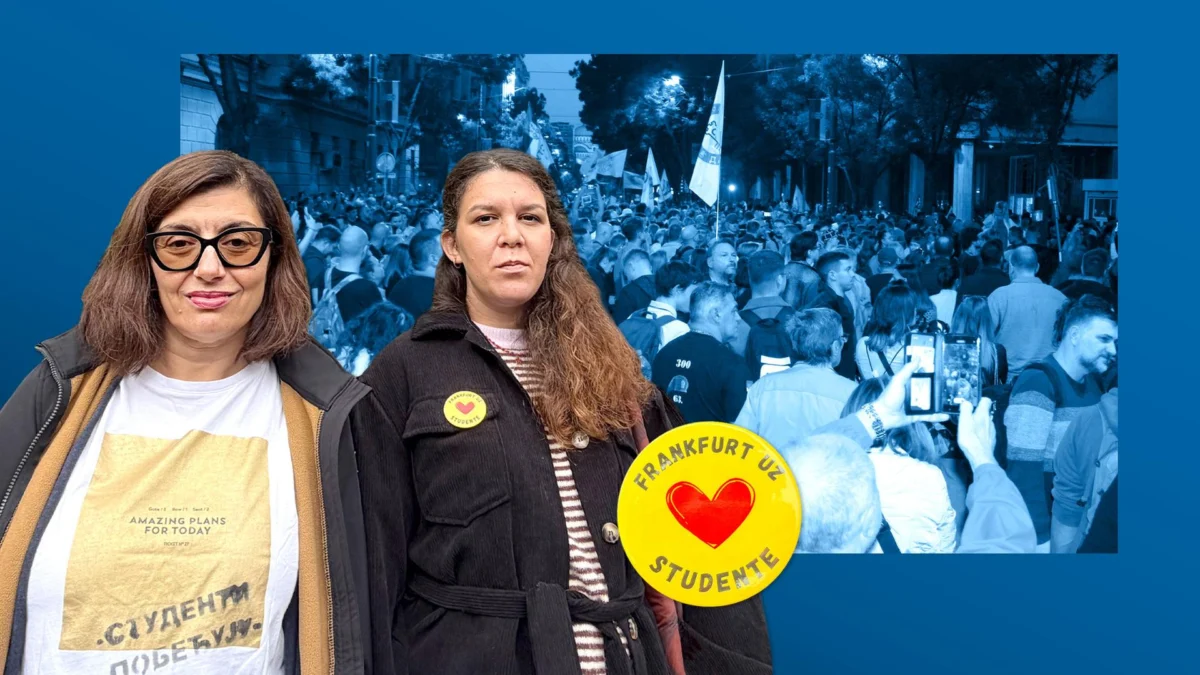
- Early 2025: The "Frankfurt for the Students" (Frankfurt uz studente) group organizes its largest protest to date, drawing an estimated 1,000 participants to the Serbian consulate in Frankfurt.
- October 2025: The focus shifts entirely to electoral participation. Diaspora groups pivot their resources toward navigating the complex, often bureaucratic, registration process required for overseas voters.
The Challenge of "State Capturing"
At the heart of the activists’ grievances is the phenomenon of "state capturing." Critics and international observers alike have long argued that under Aleksandar Vučić—who has steered Serbian politics as either Prime Minister or President for over 13 years—the distinction between the state and the ruling party has all but vanished.
"We have an authoritarian and autocratic government," says Stojić-Rakić. "The conditions under which people live are becoming unbearable." The opposition alleges that every position of political, economic, or media power is either directly or indirectly controlled by the SNS. By attempting to win seats in parliament, the opposition hopes to dismantle this vertical of power from the inside, restoring the checks and balances that characterize a functioning democracy.
Supporting the Diaspora: Logistics of Democracy
One of the most significant barriers for the Serbian diaspora has been the arduous process of exercising their right to vote. Because Serbia does not permit postal voting, citizens living abroad must navigate a two-step administrative process: verifying their status in the electoral register and requesting to vote at a diplomatic mission.
Ivona Basara, a Frankfurt-based activist who has lived in Germany for seven years, explains that the complexity of these rules often disenfranchises older citizens. "Many people, especially the elderly, are overwhelmed by the bureaucracy," she notes.
In response, groups like "Frankfurt uz studente" have become de facto administrative support centers. Operating through encrypted messenger services and a dedicated web portal, they provide step-by-step guidance. This mobilization has been undeniably effective: according to the Serbian State Election Commission, 110,000 citizens registered to vote abroad—nearly triple the number from previous cycles. In Germany, roughly 20,000 citizens have registered across six diplomatic locations, including Berlin, Munich, Stuttgart, and Frankfurt.
The increased activity at the Frankfurt consulate is particularly notable. Plans to open two separate polling stations at the facility suggest that the number of registered voters in that district alone exceeds 2,500.
Official Responses and Institutional Skepticism
The Serbian government has maintained a stance of official compliance with international standards, frequently dismissing claims of autocracy as partisan rhetoric. However, the opposition remains deeply suspicious of the government’s willingness to accept an electoral defeat.
This distrust has led to a grassroots initiative to monitor the voting process. The Frankfurt-based activists have trained a team of election observers who have spent months studying the intricacies of Serbian electoral law. They intend to be present at the polls to ensure that the process adheres to legal standards.
"If people turn out in large numbers, I see no way for Vučić to hold onto power," says Stojić-Rakić, "unless, of course, he refuses to acknowledge the results."
Implications: A Crossroads for Serbia
The stakes of the October 25 election extend far beyond the composition of the next parliament. For the European Union and regional neighbors, the election serves as a barometer for the health of democratic institutions in the Western Balkans. If the opposition succeeds in securing a foothold, it could signal a reversal of the democratic backsliding that has characterized the region in the last decade. Conversely, a continued consolidation of power by the SNS would likely further deepen the divide between the government and a growing segment of the population that feels alienated from the state.
For the diaspora, the effort is as much about reclaiming their connection to their homeland as it is about politics. By facilitating the participation of thousands of citizens, these groups have transformed from mere observers into active stakeholders in the national dialogue.
As the election date approaches, the mood in the German-Serbian community is a mixture of hope and anxiety. Whether the outcome results in celebration or a new phase of civil protest, the events of October 25 will undoubtedly mark a definitive chapter in Serbia’s post-socialist history. For the activists in Frankfurt, the mission is simple: "We just want the people to be heard," says Basara. "Even if they vote for the status quo, the act of participating is the first step toward reclaiming our country."
As the sun sets on the evening of October 25, the world will be watching to see if the ballot box proves to be the ultimate instrument of change in a nation yearning for a new direction.