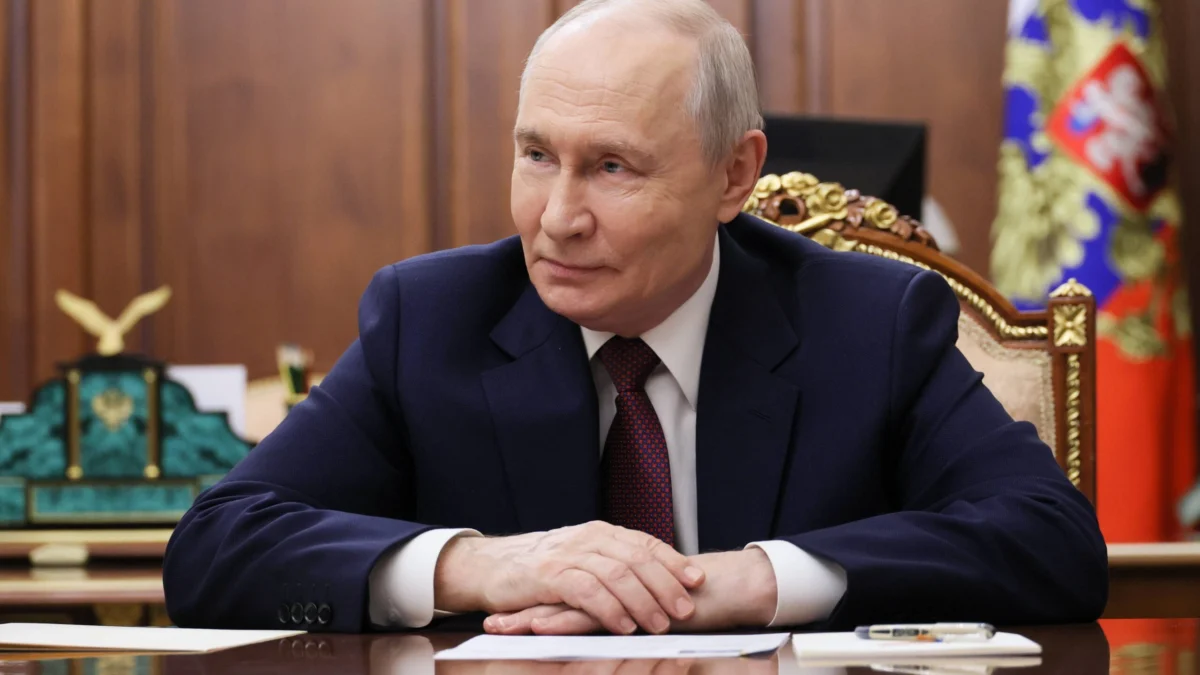
NEW YORK — In a development that has sent ripples through international diplomatic circles, Russian President Vladimir Putin has signaled a newfound openness to resuming high-level negotiations regarding the conflict in Ukraine. Following a pivotal meeting in St. Petersburg with Steve Witkoff, a key envoy acting on behalf of the United States, the Kremlin leader indicated that Russia is prepared to re-engage in a tripartite dialogue involving Washington, Kyiv, and Moscow.
While the rhetoric marks a distinct shift from months of icy silence, analysts remain divided on whether this represents a genuine path toward a sustainable peace or a calculated strategic maneuver intended to consolidate territorial gains.
The Core Developments: A New Tripartite Framework
The breakthrough emerged following intensive shuttle diplomacy by Steve Witkoff. After conducting high-stakes consultations with Ukrainian President Volodymyr Zelenskyy and various European stakeholders, Witkoff traveled to St. Petersburg for a direct audience with President Putin.
Speaking to Pavel Zarubin, a correspondent for Russian state media, Putin confirmed the substance of the discussions: "We have agreed that we are ready to resume our tripartite contacts," the Russian leader stated. This framework aims to bring the three central powers—the U.S., Russia, and Ukraine—back to the negotiating table to address the fundamental issues that have fueled the conflict since February 2022.
Yuri Ushakov, a senior foreign policy aide to Putin, suggested that the groundwork for these negotiations is already being laid, with a potential timeline for a meeting of representatives from Moscow, Kyiv, and Washington as early as mid-November.
Chronology of the Diplomatic Shift
The path to these recent discussions was neither swift nor straightforward. To understand the significance of this moment, one must examine the sequence of events that led to the St. Petersburg meeting:
- Early Autumn 2024: Diplomatic backchannels began intensifying as international fatigue regarding the protracted nature of the war reached a boiling point. European capitals, increasingly concerned about the economic and security fallout of the conflict, began pressuring for a more formalized mediation process.
- The Witkoff Mission: Tasked with gauging the feasibility of a peace summit, Steve Witkoff initiated a series of whirlwind meetings. His itinerary began in Kyiv, where he reportedly reviewed security guarantees with President Zelenskyy, before moving to European capitals to align on a unified Western position.
- The St. Petersburg Summit: The meeting between Witkoff and Putin served as the climax of this diplomatic tour. It was the first time in recent months that a high-level American representative had secured such an extensive, face-to-face dialogue with the Russian head of state regarding the specifics of a post-war security architecture.
- Post-Meeting Declarations: Following the meeting, both sides began to publicly acknowledge the possibility of a "third way"—a diplomatic resolution that avoids the binary of total victory or total surrender.
Redefining Security: The "Final Variant"
One of the most critical aspects of Putin’s recent statements is the scope of the proposed negotiations. The Russian President emphasized that the objective is not a temporary ceasefire or a "frozen conflict."
"We are talking about a ‘final variant’," Putin remarked, explicitly distancing his administration from any agreement that would merely pause the hostilities. By rejecting a ceasefire, the Kremlin is setting the stage for a comprehensive treaty that would likely require significant concessions from all parties.
The focus, according to Putin, is the "ensurance of security for both Ukraine and Russia." This is a complex diplomatic pivot. For Russia, this implies a long-term guarantee against the expansion of NATO influence in its immediate periphery. For Ukraine, it entails a binding, ironclad security agreement that ensures its territorial sovereignty and protects it from future incursions.
Implications for European Security
In a significant expansion of the dialogue’s scope, Putin noted that Witkoff had proposed integrating the topic of broader European security into the discussions. Putin, in a departure from his previously isolationist stance, indicated he was "fundamentally in agreement" with this approach.
This shift suggests that the conversation is moving beyond the immediate borders of Ukraine and toward a broader re-evaluation of the post-Cold War security architecture.
The Strategic Context
The inclusion of European security as a pillar of these talks signals a potential recognition in Moscow that a localized peace deal is insufficient to guarantee stability. However, this also presents a massive hurdle. European nations, particularly those on the Eastern Flank, have been staunch in their support for Ukraine’s full territorial integrity. The inclusion of these nations in a tripartite dialogue—or their absence from it—will be a point of significant contention.
Official Responses and Skepticism
The international reaction to the news has been one of cautious, yet profound, skepticism.
The Ukrainian Perspective:
Kyiv has maintained a policy of "nothing about us without us." While the government has expressed a willingness to engage in diplomacy, officials remain deeply wary of any agreement that could be interpreted as a surrender. The Ukrainian administration has signaled that they will only consider "final variants" that involve the total withdrawal of Russian forces from internationally recognized borders.
The Western Alliance:
U.S. and European officials have welcomed the resumption of contact, noting that diplomacy is the only viable exit strategy. However, there is a lingering fear that Putin is using these talks to buy time, replenish military resources, and sow division between the U.S. and its European partners. "We are looking for actions, not just words," a spokesperson for a major European defense ministry stated.
Analysis: The Hurdles to Peace
Despite the positive momentum, the path to a lasting settlement remains obstructed by deep-seated structural issues:
- Territorial Sovereignty: Russia’s annexation of various Ukrainian regions remains a non-starter for Kyiv. Any "final variant" of a peace treaty must address how these regions are governed, a topic on which neither side has shown a willingness to compromise.
- Security Guarantees: Ukraine’s demand for membership in Western alliances (or, at minimum, robust bilateral security pacts) clashes directly with Russia’s insistence on a neutral Ukraine.
- The "Frozen Conflict" Trap: Western intelligence agencies have long warned that Moscow often uses peace negotiations as a tactical ruse to reorganize its forces. Putin’s explicit rejection of a ceasefire may be a way to avoid this accusation, but it also increases the pressure on the current talks to produce immediate, high-stakes results.
Conclusion: The Road Ahead
As the world looks toward mid-November, the diplomatic landscape remains volatile. President Putin’s readiness to discuss a "final variant" suggests that the Kremlin is feeling the pressure of the ongoing conflict, whether through economic sanctions, military attrition, or internal political considerations.
However, the history of this conflict warns against optimism. The success of these upcoming talks will depend entirely on the ability of the participants to bridge the chasm between Russia’s desire for a sphere of influence and Ukraine’s fundamental right to national self-determination.
"We will see how the situation develops in the next few days," Putin concluded in his remarks to the state media. The world is watching. For now, the prospect of a negotiated end to the most significant conflict in Europe since 1945 rests on a precarious, fragile thread of diplomatic hope.
The coming weeks will likely determine if this is a genuine inflection point in the history of the 21st century, or merely another chapter in a long and tragic struggle for power, sovereignty, and security on the European continent.