Market Report – October 15, 2026
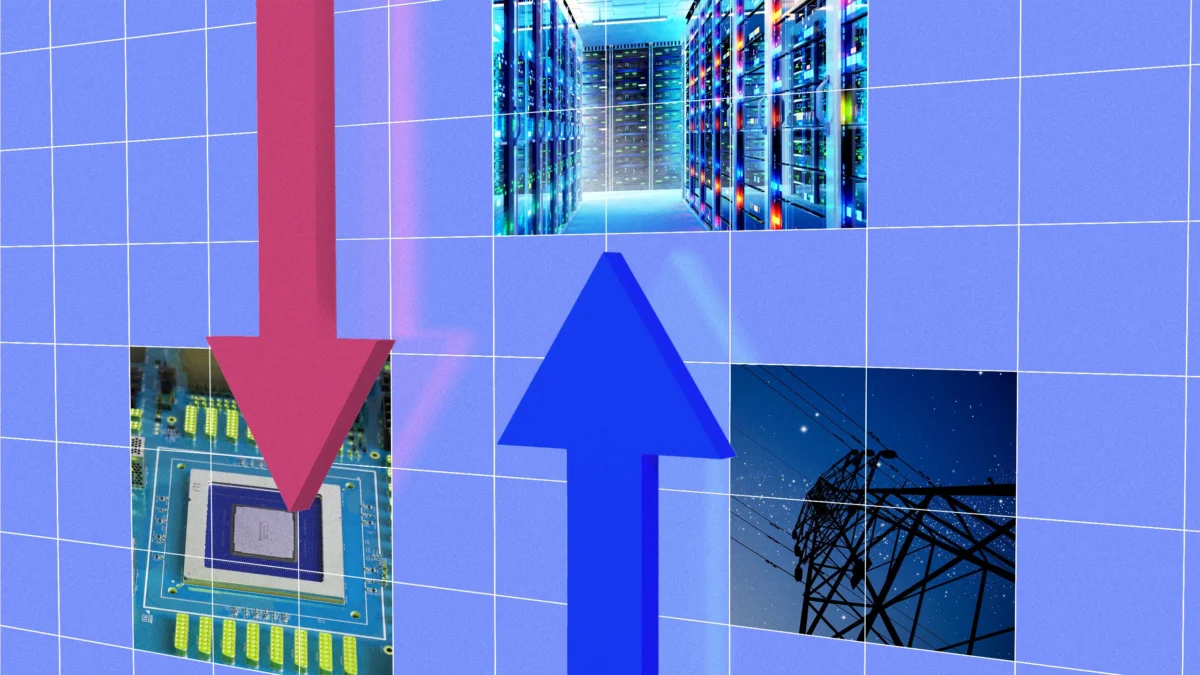
In the high-stakes world of global finance, few sectors have dictated the market narrative as decisively as the semiconductor industry. As the world accelerates its transition toward an artificial intelligence-integrated economy, the companies powering this revolution have enjoyed unprecedented growth. However, a jarring disconnect has emerged: while the balance sheets of industry titans are painting a picture of unparalleled prosperity, the stock market is signaling profound anxiety.
The latest focal point of this dichotomy is TSMC (Taiwan Semiconductor Manufacturing Company), the world’s most critical contract chip manufacturer. Despite reporting a sixth consecutive record-breaking quarter, TSMC finds its share price—and the broader tech sector—under immense pressure. The tension between stellar operational results and mounting macroeconomic fears has created a volatile environment for investors, highlighting a fundamental uncertainty: can the current pace of growth be sustained when the global cost of capital is rising?
The Facts: A Triumph of Operational Scale
The numbers reported by TSMC are nothing short of extraordinary. Last week, the company announced a staggering 50% surge in revenue, reaching an all-time high of €41.66 billion. Looking ahead, the company’s guidance suggests that the momentum is not merely holding; it is accelerating. TSMC has projected revenue growth between 55% and 61% for the current quarter, with a full-year revenue increase forecasted at a remarkable 44%.
Today, the company confirmed its profitability, announcing a quarterly profit of approximately €21 billion. This marks the sixth consecutive quarter in which the company has shattered its own profit records. For traditional industrial firms, such figures are the stuff of fantasy, yet for TSMC, they are the byproduct of a relentless, insatiable global demand for high-performance computing power.
"We are working with all our might to expand our production capacities," the company stated, confirming that it remains committed to its massive 2026 capital expenditure target of $64 billion. By doubling down on infrastructure, TSMC is attempting to bridge the gap between supply and demand, yet the sheer scale of the global AI build-out continues to outpace even the most aggressive manufacturing ramp-ups.
Chronology: From Euphoria to Market Skepticism
The current market sentiment is a stark departure from the optimism that defined the first half of 2026.
- Mid-2026: A wave of positive earnings reports from industry giants like Nvidia and Samsung established a "Goldilocks" scenario for the chip sector. Investors viewed the AI infrastructure boom as an unstoppable locomotive.
- Early October 2026: As US inflation data began to trend higher than anticipated, market sentiment shifted. The prospect of "higher for longer" interest rates began to weigh on capital-intensive technology stocks.
- Yesterday (October 14, 2026): Global markets witnessed a sharp correction. The Nasdaq Composite retreated as investors began to question the long-term viability of debt-financed data center expansion.
- Today (October 15, 2026): TSMC released its record-breaking profit figures. However, instead of triggering a rally, the news was met with a lukewarm response, and in some regions, a further sell-off, signaling that "good news" is no longer enough to satisfy an increasingly risk-averse investor base.
Supporting Data: The Cost of the AI Revolution
The core of the investor anxiety lies not in the performance of the chips, but in the economics of the infrastructure required to run them. The construction of massive hyperscale data centers requires billions in capital, much of which is financed through debt.
Analyst Gil Luria of D.A. Davidson has been among the most vocal skeptics regarding this capital expenditure cycle. "The procurement of debt at very high interest rates to build data centers—which are increasingly becoming a commodity outside of the major hyperscalers—could ultimately prove to be a poor investment," Luria noted. "The more leverage we introduce into the system to build these facilities, the more systemic risk we are creating."
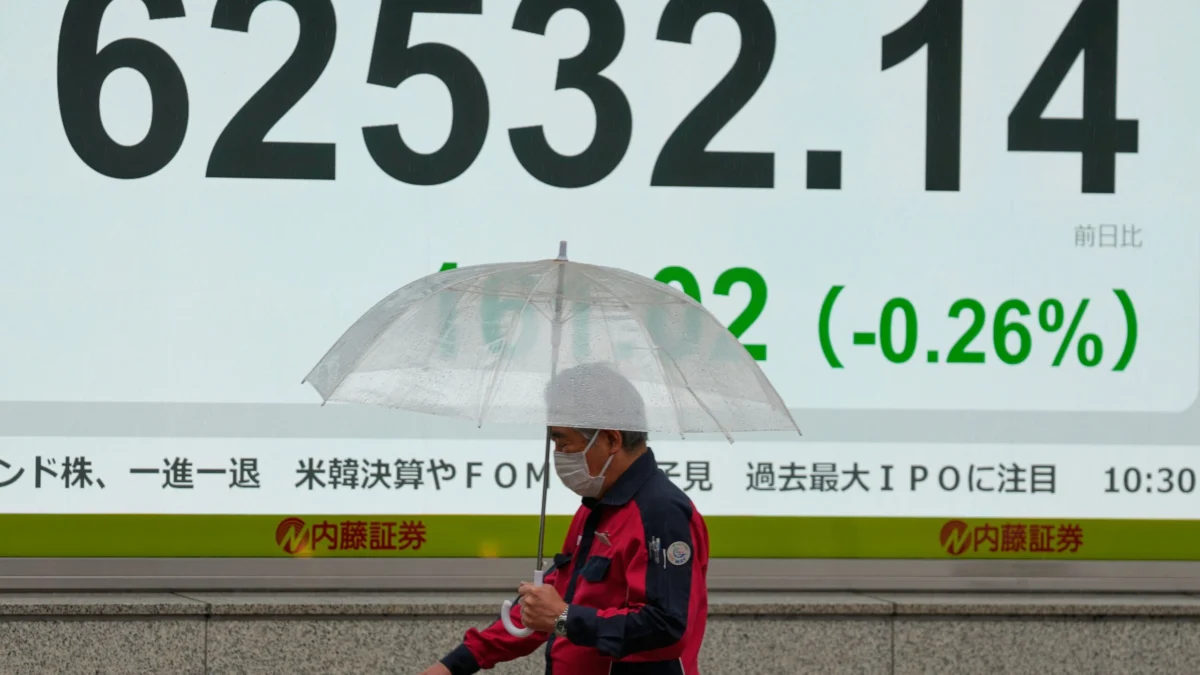
This sentiment is reflected in the recent performance of indices across Asia and the West. In South Korea, the KOSPI index plummeted by approximately 9%, while Japan’s Nikkei index shed nearly 5%. Even Chinese markets in Shanghai and Shenzhen saw drops of over 2%, suggesting that the "tech-sell-off" is a global phenomenon rather than a regional one.
The Global Implications: A Structural Shift?
The implications of this market behavior are significant. We are witnessing a decoupling of "fundamental health" and "market valuation." Typically, record profits lead to rising share prices. Today, however, investors are looking past the current profit margins to the long-term macroeconomic environment.
Charu Chanana, an investment strategist at Saxo Bank, captured the mood of the trading floor: "Investors are not doubting the demand for AI. They are increasingly asking what price they should pay for this growth when interest rates are high and potentially rising further."
This shift has direct consequences for the European market as well. The DAX, while typically resilient, has felt the pressure of the overseas tech sell-off. Companies like Infineon and Siemens Energy—the latter being a significant player in the infrastructure required to power these massive data centers—have seen their stock prices tumble. Andreas Lipkow, chief analyst at CMC Markets, observed, "When even good news is no longer bought, but instead used as an opportunity to exit positions, that is a clear warning signal for the markets."
The Outlook: Is the Bubble Bursting or Just Adjusting?
The "TSMC Paradox"—where the company delivers the best numbers in its history while its stock struggles to maintain momentum—is a litmus test for the entire technology sector.
There are two schools of thought regarding the current environment:
- The Correction Theory: Proponents of this view argue that the market is simply adjusting for the reality of higher interest rates. The "AI Premium" that was baked into valuations earlier this year was perhaps too optimistic. A period of consolidation is necessary to align stock prices with the long-term cost of borrowing.
- The Structural Concern Theory: This school of thought suggests that we are approaching a "peak AI" moment where the marginal utility of additional data centers is beginning to diminish. If the demand for the end-products of AI does not scale as quickly as the demand for the hardware to power it, we could be looking at a future glut of capacity.
TSMC’s management remains steadfast. By confirming their $64 billion investment plan, they are betting that the demand for AI-driven computing is a long-term structural change, not a cyclical fad. They are positioning themselves to be the backbone of the next decade of digital transformation, regardless of short-term stock market volatility.
Conclusion: A New Era of Scrutiny
As we move through the final quarter of 2026, the semiconductor industry finds itself at a crossroads. The fundamental demand for chips remains the strongest in history, fueled by a relentless global digital transformation. Yet, the era of "easy money" and blind investment in technology is clearly over.
Investors are no longer looking just at the top line or the bottom line; they are looking at the balance sheet, the debt-to-equity ratios, and the sensitivity of the entire AI supply chain to interest rate fluctuations. TSMC’s record-breaking performance serves as a reminder that the technology itself is sound, but the financial architecture supporting its rapid deployment is under the microscope. For the foreseeable future, market participants should prepare for a period where operational excellence may not be enough to shield stocks from the broader gravity of macroeconomic reality.
The growth is real, the profits are record-breaking, but the price of entry into the future has, for the first time in years, become a matter of intense debate.