By Editorial Staff
Updated: October 4, 2026
In the shadow of the colossal container cranes at the Port of Hamburg, where massive steel vessels define the horizon, a different kind of industry operates. It is not one of logistics or cargo, but of human endurance. For 140 years, the German Seamen’s Mission (Deutsche Seemannsmission) has served as a sanctuary for the men and women who keep the global economy afloat. Yet, as geopolitical tensions rise and the pace of global trade accelerates, the lives of seafarers have become increasingly precarious, making spaces like the "Duckdalben" international sailors’ club more essential than ever.
The Modern Reality: A Life of Accelerated Stress
Jan Burow, a 75-year-old volunteer with the Seamen’s Mission, stands before a towering black wall of steel. He is waiting for the crew of the Guayaquil Express, a 300-meter container giant that has just docked. In his white helmet, he scans the gangway, hoping to offer a brief respite to the crew. But today, the silence is heavy. His colleague, Franz Taucher, brings the news: the ship is in a state of operational chaos. With back-to-back cargo operations and immediate crew rotations, the sailors are effectively confined to the vessel.
For Burow, a former seafarer himself, this is a familiar scene. "In my day, ships would stay in port for days, sometimes weeks," he reflects. "Today, with the pressure of just-in-time logistics, the turnaround is blistering. Most ships are here for less than 36 hours. The crew doesn’t have the luxury of time, and the pressure on them to maintain this pace is immense."
A Chronology of Care: From 1886 to the Present
The history of the German Seamen’s Mission is intrinsically linked to the industrial evolution of the maritime sector.
- 1886: The organization was founded on September 29 by a group of Protestant associations. At the time, the primary concern was the exploitation and safety of German sailors abroad. Without secure accommodation, sailors were often preyed upon by unscrupulous landlords or criminals in foreign ports.
- The Mid-20th Century: The mission expanded its physical footprint, creating dedicated clubs—like the Duckdalben in Hamburg—to provide a home away from home.
- The Digital Age: The late 20th and early 21st centuries saw the mission adapt to the needs of a globalized, multilingual crew. Telephone booths, once the lifeblood of the mission, were replaced by high-speed Wi-Fi hubs.
- The Current Era: Today, the mission operates in 33 ports worldwide, from Rotterdam to Douala, Cameroon, offering everything from psychological support to medical assistance and simple amenities like hot meals and recreation.
Supporting Data: The Human Cost of Maritime Trade
The maritime industry transports roughly 90% of the world’s goods. However, the data surrounding the workforce reveals a sobering reality. According to recent maritime labor reports, the average contract duration for a seafarer ranges from six to nine months, often characterized by extreme isolation.
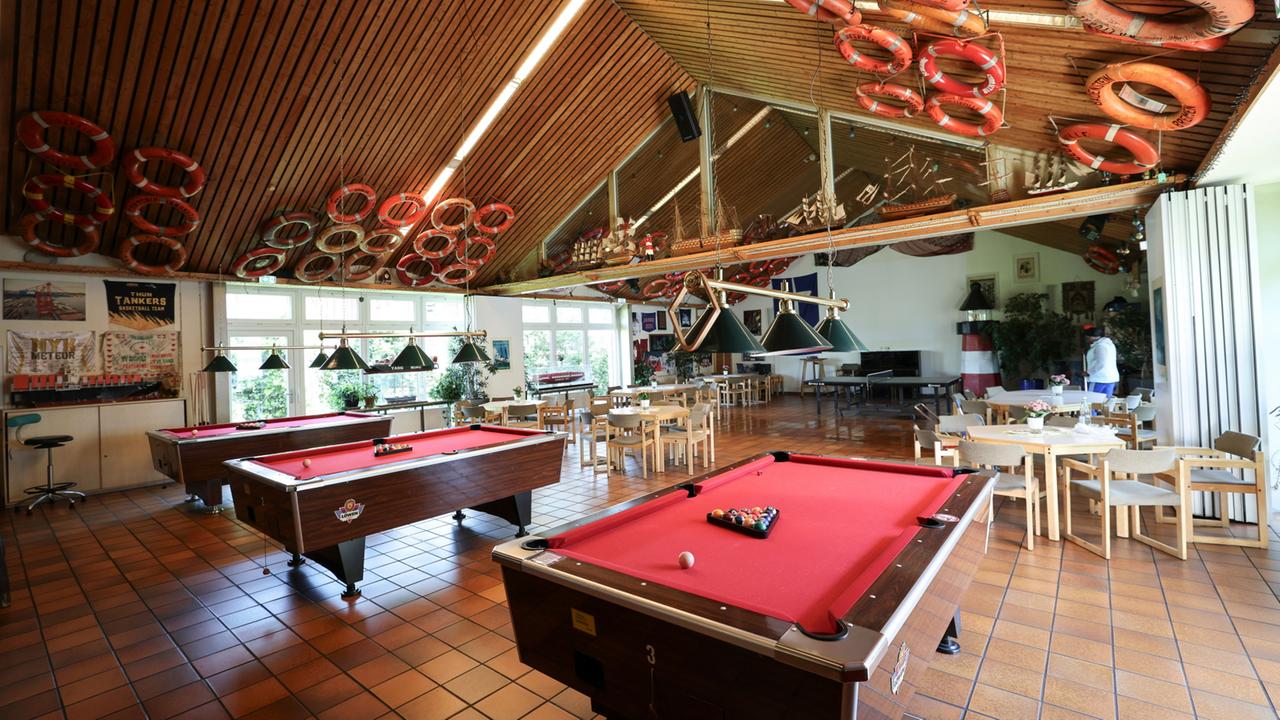
The "Duckdalben," named after the wooden mooring piles found in the harbor, acts as a critical interface between the ship and the shore. For many sailors, it is the only place where they can escape the confined, often sterile environment of a container ship. Anji Kirankumar, an Indian seaman visiting the club, notes the disparity in access. "There are far too few places like this in the ports of the world," he says. "Here, we see new faces. We can have a beer, we can laugh. Onboard, the alcohol restrictions and the monotony are suffocating."
Official Responses and Strategic Expansion
Matthias Ristau, General Secretary of the German Seamen’s Mission, oversees a vast network that is currently facing significant challenges. "We are in 33 ports, but the demand is growing," Ristau explains. "We would like to open more locations in the coming years, particularly in emerging maritime hubs where infrastructure for crew welfare is non-existent."
However, Ristau acknowledges that the mission is fighting an uphill battle against modern port security. "The primary obstacle is not a lack of will, but a lack of access," he says. "Strict ISPS (International Ship and Port Facility Security) codes often mean that sailors are essentially trapped. Even when we are parked right outside the terminal, the bureaucracy required to obtain shore leave is becoming an insurmountable barrier for many."
The Psychological Burden: War, Piracy, and Isolation
The implications of the current geopolitical climate are profound. The ongoing conflicts in the Red Sea and the Black Sea (Ukraine) have turned the ocean into a high-risk zone.
"We see more than just physical exhaustion," says Julia Hagelstein, a staff member at the Duckdalben. "We see trauma." Hagelstein frequently sits with sailors who have survived pirate attacks, witnessed drone strikes near their vessels, or are suffering from deep anxiety due to the political instability in their home countries.
The role of the mission has shifted from mere "hospitality" to "crisis intervention." When a sailor walks into the Duckdalben, they are often carrying the weight of six months of isolation, compounded by the fear of war in their home waters. "Sometimes, they don’t want to talk about their work," Hagelstein adds. "They just want to sit in a room where they aren’t being watched by a supervisor, where they can call their families on a stable line and pretend, for an hour, that they are already home."
Broader Implications for Global Trade
The sustainability of the global supply chain depends entirely on the health and morale of the seafarer. If the industry continues to prioritize rapid turnaround times at the expense of human welfare, it faces a looming crisis of recruitment and retention.
The Seamen’s Mission argues that "crew welfare" should be a standard component of maritime logistics, not an afterthought. As port authorities implement more restrictive policies, the "humanizing" element of the port call is being eroded. The mission’s presence—offering a game of billiards, a phone call home, or a sympathetic ear—is not just an act of charity; it is a vital support system for the people who maintain the physical infrastructure of our global economy.
As the Guayaquil Express prepares to depart for Antwerp, the crew remains onboard, their opportunity for a few hours of normalcy lost to the demands of the schedule. But for those who did make it to the Duckdalben, the memory of a few hours of humanity will serve as an anchor, helping them endure the next few weeks of the open sea. In a world of cold, hard data and steel containers, the German Seamen’s Mission remains a necessary, warm, and human constant.