By International Arts Correspondent
September 5, 2026
The German cultural landscape has lost one of its most versatile and respected faces. Michael Mendl, the venerable character actor whose career spanned over five decades, has passed away at the age of 82. His agent confirmed that the actor “fell asleep peacefully,” ending a long and courageous battle against cancer, a diagnosis he had faced multiple times in his later years.
With a filmography encompassing more than 200 credits, Mendl was a titan of German television and cinema. From the gritty realism of the Tatort crime series to the high-stakes drama of international political thrillers and the atmospheric depth of Netflix’s Dark, Mendl’s work was characterized by an uncanny ability to inhabit the internal lives of complex figures. His passing marks the end of an era for a generation of actors who championed the craft of subtlety over spectacle.
A Life Defined by Complexity
Born in 1944 in Lünen, Westphalia, Michael Mendl’s early life was marked by the unconventional; he was the son of a Catholic priest, a fact that perhaps contributed to his lifelong fascination with the human condition’s darker, more hidden corners. Taking the name of his stepfather, he navigated a path that eventually led him away from the Ruhr region and toward the prestigious Folkwangschule in Essen, following a brief formative period in Vienna.
Mendl was never a man who sought the spotlight for the sake of fame. His approach to acting was rooted in the theater, where he spent years honing his craft on stages in Darmstadt, Stuttgart, and across Germany. It was a rigorous education that served him well when he finally pivoted to the screen.
While his television breakthrough came in 1989 with his role as “Koslowski” in the iconic Tatort series, Mendl was already 49 years old when he made his feature film debut. This late arrival to the big screen became his greatest strength; he approached film roles not with the hunger of a young starlet, but with the weary, layered wisdom of a man who had already lived a full life.
Chronology of a Storied Career
- 1944: Born in Lünen, Westphalia.
- Early Career: Spent decades performing in German theaters, establishing himself as a formidable stage presence.
- 1989: Achieved widespread public recognition with his breakthrough role in the Tatort crime series.
- 1993: Made his transition into feature film acting at age 49.
- 2000s: Reached the pinnacle of critical acclaim, winning the Goldene Kamera for his portrayal of Willy Brandt in Im Schatten der Macht (In the Shadow of Power).
- 2004: Appeared in the Oscar-nominated Der Untergang (Downfall).
- 2005: Starred in the popular comedy Barfuss (Barefoot).
- 2017–2020: Gained international recognition for his role in the Netflix global hit Dark.
- 2026: Passed away at the age of 82.
Mastery of the Historical and the Human
Mendl’s career was defined by his range. He was perhaps best known for his portrayals of historical figures, where he brought an anthropological curiosity to his work. Whether portraying the complex political burden of Willy Brandt, the spiritual gravity of Pope John Paul II in the docudrama Karol Wojtyla, or the desperate authority of a captain in 1945 in Die Gustloff, Mendl avoided mimicry. Instead, he sought the "leise Zwischentöne"—the quiet nuances—that made these titans feel like flesh-and-blood human beings.
Yet, he refused to be typecast as the stoic or the statesman. He found equal satisfaction in lighter fare, such as his work in Eine Chance für die Liebe alongside the legendary Hannelore Elsner. When asked about his eclectic choice of roles, Mendl was characteristically humble: “Nothing would be more boring for me than to always play the same type of person.”
This philosophy allowed him to move seamlessly between the intense, apocalyptic atmosphere of Dark and the intimate, domestic struggles of television dramas. He was a chameleon, not because he changed his face, but because he changed his soul for every performance.
Official Responses and National Mourning
The news of Mendl’s death prompted an outpouring of grief from the highest echelons of the German state, reflecting his status as a national treasure.
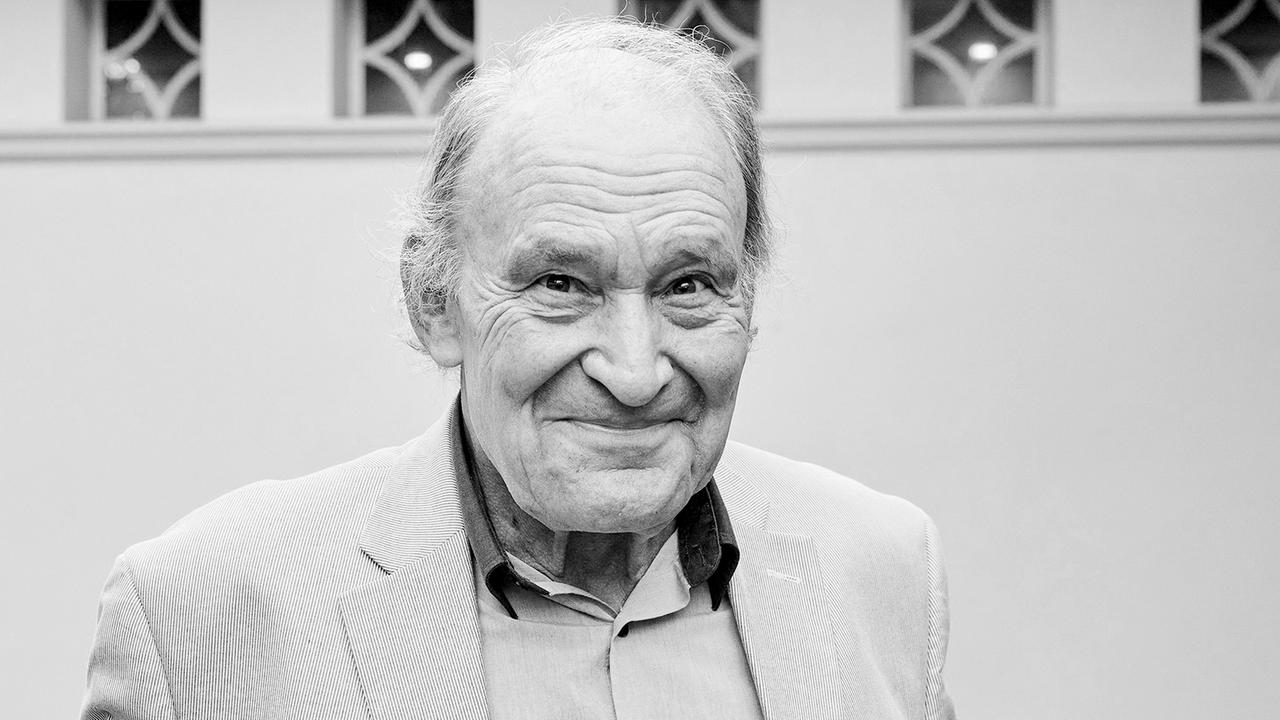
Federal President Frank-Walter Steinmeier was among the first to offer a formal tribute, noting that Germany has lost a "preeminent character actor." In a statement, Steinmeier observed: "In his figures, Michael Mendl often showed the darker, even the fragile sides of humanity—with great precision and a fine sense for the quiet nuances."
Wolfram Weimer, the Minister of State for Culture, echoed these sentiments, highlighting Mendl’s enduring influence on the German film industry. "He was one of the most defining faces of the German film landscape," Weimer stated. "He captivated his audience with countless mysterious characters. His nuanced, multi-layered acting was rewarded with many well-deserved prizes and honors. His outstanding work was always a testament to the quality of German film and will be painfully missed."
Colleagues throughout the industry have also taken to social media and press releases to remember a man who was as kind off-screen as he was formidable on-screen. Directors have described him as a "director’s dream," an actor who arrived on set fully prepared, fully present, and entirely devoid of ego.
The Implications of a Lost Voice
The loss of Michael Mendl is not merely the loss of a performer; it is the loss of a specific kind of artistic integrity. In an age of rapidly changing media, where algorithms often dictate casting and performance styles, Mendl represented the "old guard"—the actors who prioritized psychological depth and theatrical discipline over social media presence or trend-chasing.
His career trajectory offers a profound lesson for aspiring actors: that it is never too late to reinvent oneself. By waiting until middle age to pivot to cinema, he entered the industry with a maturity that allowed him to play roles of great depth immediately. He proved that the most compelling stories are not told through action, but through the tension held in a glance or the weight of a silence.
As the German film industry looks to the future, it faces a challenge: maintaining the standard of excellence that Mendl helped set. He was a bridge between the post-war generation of theater practitioners and the modern, internationalized era of streaming television. His ability to anchor high-concept narratives like Dark while maintaining his credibility as a classic character actor is a rare feat that will likely be studied for years to come.
A Final Curtain Call
Michael Mendl’s life was a testament to the power of artistic curiosity. From his humble, unconventional beginnings in Lünen to the red carpets of international film festivals, he remained committed to the idea that acting is an act of empathy. He lived many lives so that his audience could better understand their own.
As tributes continue to flow in from across the globe, the consensus is clear: Michael Mendl has left behind a body of work that is as enduring as it is vast. Whether he was standing on the bridge of a sinking ship, navigating the halls of the Chancellery, or exploring the time-bending mysteries of Winden, Mendl brought a sense of humanity to every frame.
He often spoke of his desire to avoid the "boring" path of repetition, and in that, he succeeded beyond measure. He leaves behind a legacy of integrity, a library of performances that will continue to resonate, and a void in the German cultural heart that will be difficult to fill. He did not just act; he observed, he felt, and he shared—and for that, he will be remembered as one of the true greats of the stage and screen.