Introduction: The Fragility of Rooting
What remains of a life once the ground beneath it has been forcibly shifted? How does one reconcile the precision of a German garden with the harsh, arid reality of the Judean Hills? These questions form the emotional and historical epicenter of the exhibition “Berlin/Jerusalem. Schocken’s Gardens,” currently presented by the Simon Dubnow Institute for Jewish History and Culture in Leipzig.
The exhibition is more than a botanical study; it is a profound meditation on the attempt to impose order on a world characterized by systemic destruction. Through the lens of the entrepreneurial and cultural giant Salman Schocken, the Dubnow Institute invites visitors to explore the intimate intersection of personal trauma, cultural displacement, and the human compulsion to cultivate beauty amidst catastrophe.
Main Facts: The Entrepreneur and the Architect
Salman Schocken was one of the most significant figures of the Weimar Republic. As the head of a sprawling department store empire, his name was synonymous with modern consumer culture—clean lines, functional design, and an unwavering commitment to quality. Yet, his ambitions extended far beyond commerce. In 1931, he founded the Schocken Verlag, a publishing house that would become a cornerstone of Jewish intellectual life.

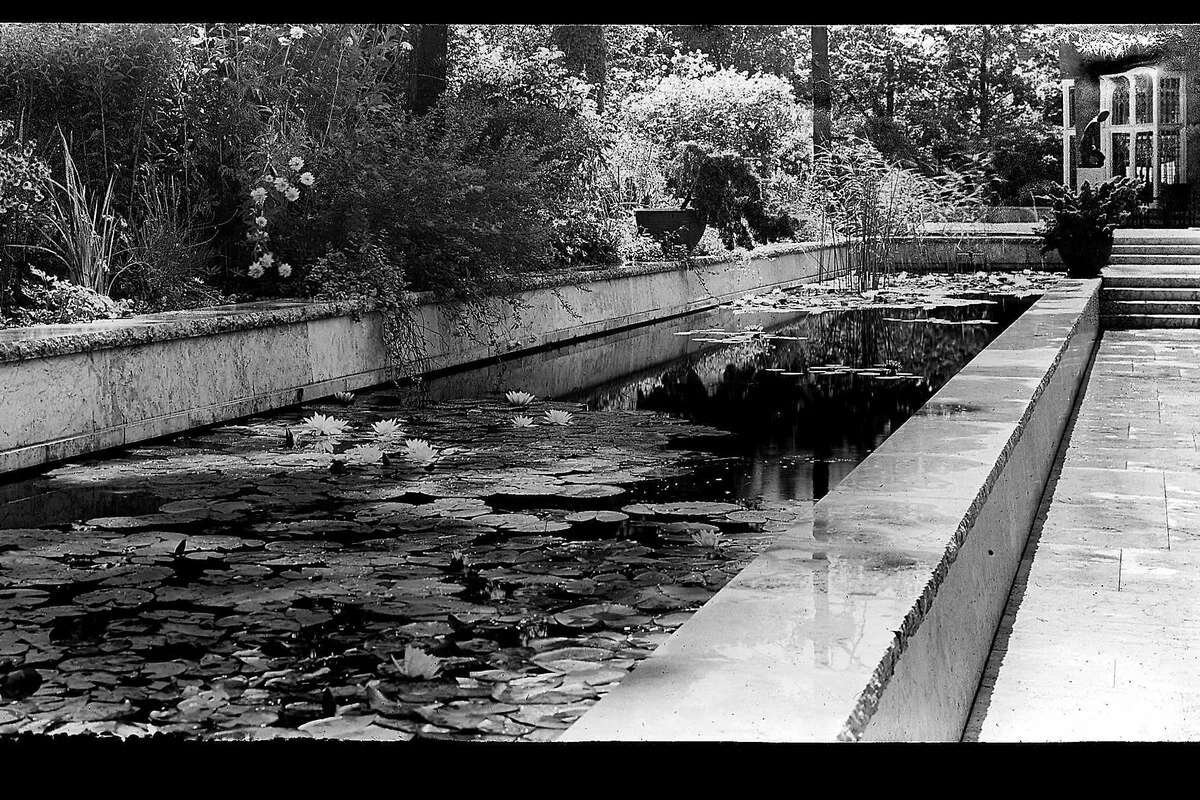
His private life was marked by the same rigor. In his Berlin-Zehlendorf villa, Schocken commissioned the renowned landscape architect Heinrich Wiepking to design a garden that reflected the modernist aesthetic: symmetrical, disciplined, and harmoniously structured. Wiepking, who would later become a key figure in Nazi landscape planning, shared Schocken’s vision for the integration of form and function. However, the political reality of 1930s Germany soon rendered such aesthetic harmony impossible for a Jewish family.
Chronology: From Berlin Prosperity to Palestinian Exile
The trajectory of the Schocken family is a stark reflection of the broader collapse of European Jewry.
- 1920s: Salman Schocken solidifies his status as a titan of the German retail industry. The Schocken department stores become icons of modern architecture, featuring revolutionary window displays.
- 1931: The founding of Schocken Verlag. Simultaneously, construction of the Zehlendorf garden begins under the supervision of Heinrich Wiepking.
- 1933: Following the Nazi seizure of power and the intensification of state-sponsored antisemitism, the Schocken family faces unbearable pressure. The decision is made to leave Germany.
- 1933–1938: The family emigrates to Mandatory Palestine. Salman Schocken begins the arduous process of rebuilding his life in Jerusalem, including the commission of a new, sprawling garden.
- 1938: The Schocken business empire in Germany is liquidated, sold far below its actual value under duress as part of the "Aryanization" of Jewish assets.
- Post-1938: Schocken continues to operate his archive and intellectual endeavors from Jerusalem, attempting to maintain a sense of continuity while his European world is systematically dismantled.
Supporting Data: The Archive as Resistance
A central element of the Dubnow Institute’s exhibition is the Schocken Archive. Salman Schocken was a man of detail; he understood that when a life is threatened, the preservation of one’s history is an act of survival. He meticulously collected everything: newspaper clippings detailing antisemitic attacks, business correspondence, legal documents regarding the sale of his properties, and, perhaps most poignant, the botanical records of his gardens.

The archive reveals a man who, while losing control over his political and social standing, sought refuge in the management of his private environment. In Jerusalem, he demanded that his gardeners keep rigorous data sheets for every plant. He insisted on assurances that imported European flora would thrive in the subtropical climate—a request that exposes the tragic, perhaps impossible, desire to transplant a lost reality into a new, hostile soil.
Official Perspectives and Academic Analysis
Historians at the Dubnow Institute emphasize that the exhibition does not seek to generalize the "Jewish experience of displacement." Instead, it uses the specific, documented life of the Schocken family to ask universal questions about the nature of loss.
Dr. [Name/Representative], speaking on the curation of the exhibition, notes: "The documents from the Schocken Archive are not merely records of a business; they are artifacts of a shattered world. By focusing on the garden—a space of growth and regeneration—we highlight the psychological strain of the exile. The plants, forcibly adapted to the climate of Jerusalem, serve as a living metaphor for the refugee experience: What can take root after being uprooted? And what is lost forever in the transition?"

The exhibition highlights the irony of Schocken’s aesthetic partnerships. Heinrich Wiepking, the man who designed his sanctuary in Berlin, would go on to hold high-ranking positions in the Nazi regime. This uncomfortable juxtaposition forces viewers to confront the complicity of the German professional class during the rise of the Third Reich.
Implications: The Architecture of Control
The most striking aspect of the Schocken gardens in Jerusalem was their size: 5,000 square meters of controlled, ordered space. As the world outside became increasingly chaotic and as the Nazi regime stripped him of his wealth and status, the garden became an island of absolute sovereignty.
The implications for the viewer are clear: the creation of a garden was not merely a hobby; it was a political statement. It was an attempt to assert a "civilized" order against the encroaching barbarism of the era. Whether it was the precisely pruned roses or the intentional placement of cypress trees, Schocken was constructing a reality that he could still influence.

However, the exhibition is careful not to romanticize this control. It notes that Schocken’s belief in the human capacity to dictate the growth of nature—to guarantee that "every plant will take root"—was ultimately a defiance of nature itself, a final, fragile attempt to hold the reins of a life that had spiraled out of his hands.
Conclusion: A Legacy of Resilience
"Berlin/Jerusalem. Schocken’s Gardens" is a somber yet beautiful inquiry into the human psyche. By moving the focus away from the typical narrative of statistics and mass violence, the Dubnow Institute provides a rare, intimate look at the private life of a man whose name once defined the German commercial landscape.
The exhibition invites us to consider our own relationship with "place." In an age of increasing global displacement, the question of what we carry with us—our books, our archives, our memories, our aesthetic sensibilities—remains as relevant as ever. The Schocken archive, saved from the flames of the 1930s, stands as a testament to the fact that while houses can be confiscated and businesses liquidated, the intellectual and cultural framework of a person—if protected with enough determination—can survive the most violent of uprootings.

The garden in Jerusalem may not have been the same as the one in Zehlendorf, and the strawberries of Rügen might have struggled under the Levantine sun, but the act of planting was a victory in itself. It was the refusal to let the chaos of history dictate the total erasure of a legacy. As the exhibition concludes, the visitor is left with the haunting realization that while we may never fully "transplant" a life, the effort to do so is the most defining characteristic of our humanity.
The exhibition is open for visitors in Leipzig, serving as a quiet, powerful reminder that behind every grand historical narrative are thousands of small, private gardens, each holding a story of what was lost, what was saved, and what was forced to grow anew.