Limoges, France – October 20, 2026 – The heart of Limoges, its historic Hôtel de Ville, now stands as a smoldering testament to the widespread civil unrest that has gripped France in recent weeks. In a significant development following the devastating fire that consumed the centuries-old building, French authorities have announced the arrest of a key suspect, reportedly a known far-left extremist with a history of violence. The blaze, which reduced the magnificent Gothic Revival structure to a charred shell and sent its iconic bell tower crashing down, has become a potent symbol of the nation’s deepening societal divisions and the escalating anger over socio-economic disparities.
The arrest marks a crucial step in the investigation into the deliberate act of arson that has sent shockwaves through France and beyond. The suspect, identified by law enforcement as a person of interest to national security agencies, was apprehended in a pre-dawn raid in a town within the neighboring department of Creuse. Reports indicate the individual has prior convictions for violence against public officials, underscoring the gravity of the charges they are likely to face. The Anti-Terrorism Unit of the Public Prosecutor’s Office has taken charge of the investigation, signaling the perceived severity of the incident and its potential links to broader extremist networks.
The Devastation of a Historic Icon
The inferno that engulfed the Limoges Town Hall erupted during a weekend marked by widespread demonstrations across France. What began as protests against the soaring cost of living and perceived inadequacies in the education system rapidly devolved into widespread riots, looting, and acts of vandalism. Thousands of businesses were targeted, with municipal buildings and police stations becoming focal points of violent confrontations. The government has consistently attributed the surge in violence to far-left extremist elements, a claim that now gains further traction with this arrest.
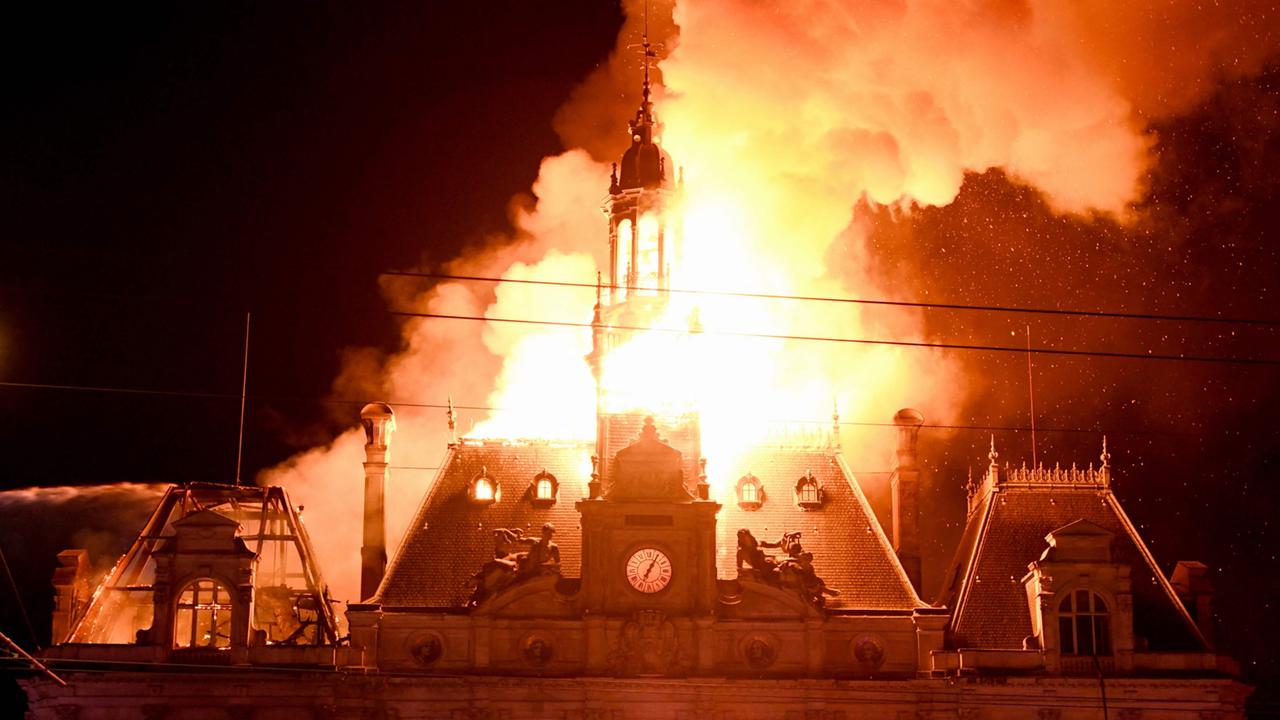
The Limoges Town Hall, a majestic 143-year-old edifice and a protected historical monument, was a particularly egregious target. Eyewitness accounts suggest that masked individuals forcibly entered the building before setting multiple fires. The flames quickly took hold, engulfing the structure and leading to the dramatic collapse of its bell tower, a sight that was broadcast globally, becoming an indelible image of the chaos. The scale of the destruction is immense, leaving a gaping void in the city’s architectural and civic landscape.
Chronology of Destruction and Investigation
The events leading to the destruction of the Limoges Town Hall unfolded rapidly amidst a backdrop of escalating national protests. For days leading up to the weekend in question, France had been experiencing significant social unrest. The specific protests that spilled over into Limoges on Saturday and Sunday were initially centered around economic hardship and perceived systemic failures.
Saturday, October 17, 2026: Protests in Limoges, mirroring those in other major French cities, begin peacefully but soon turn violent. Reports emerge of clashes between protesters and law enforcement.
Sunday, October 18, 2026: The situation in Limoges deteriorates significantly. Groups of individuals, reportedly masked and organized, are seen moving towards the city center. The historic Town Hall becomes a target. Reports of break-ins and the deployment of accelerants begin to surface.
Sunday Evening: The fire at the Town Hall intensifies, with flames visible for miles. Firefighting efforts are hampered by the scale of the blaze and, according to some reports, by ongoing disturbances in the vicinity. The bell tower of the building collapses.
Monday, October 19, 2026: The full extent of the devastation becomes apparent. Officials declare the building "largely lost." Investigations into the cause of the fire commence immediately, with arson suspected.
Tuesday, October 20, 2026: The breakthrough. Special police units, acting on intelligence, conduct raids in the surrounding region. A suspect is apprehended in the department of Creuse. Authorities confirm the suspect is a known far-left extremist with a history of violence. The Anti-Terrorism Unit takes over the investigation.
Supporting Data and Context
The burning of the Limoges Town Hall is not an isolated incident. The unrest across France has been characterized by a widespread pattern of destruction. Official figures released by the Ministry of the Interior detail the scale of the damage nationwide:
- Businesses Looted: Over 5,000 commercial establishments across France reported significant damage or looting.
- Public Buildings Targeted: More than 150 town halls, police stations, and administrative buildings were attacked, with dozens suffering severe damage.
- Infrastructure Disruption: Major transport hubs and public utilities experienced targeted disruptions, leading to significant economic losses.
- Injuries: Hundreds of law enforcement officers and civilians sustained injuries during the clashes.
The specific context of the Limoges incident highlights the symbolic nature of the target. The Town Hall, a center of civic administration and a repository of the city’s history, represents the authority and stability that the rioters appeared to be challenging. The choice of such a prominent and historically significant building underscores a deliberate attempt to inflict maximum psychological and symbolic damage. The age and architectural significance of the 143-year-old structure, a prime example of Gothic Revival architecture, made its destruction particularly poignant for the local community and heritage preservationists.
Official Responses and Political Ramifications
The destruction of the Limoges Town Hall has elicited strong reactions from government officials, who have condemned the act in the strongest possible terms.
Maurice Barate, Prefect of Haute-Vienne: Immediately after assessing the damage, Prefect Barate stated that the building was "largely lost," emphasizing the catastrophic nature of the fire. He highlighted the challenges faced by emergency services in containing the blaze.
Guillaume Guérin, Mayor of Limoges: Mayor Guérin expressed profound disappointment and anger, directly criticizing the perceived lack of resources available to the police to effectively manage the escalating violence. He stated that law enforcement officers, "like in other cities," felt compelled to withdraw in the face of overwhelming numbers of rioters. Crucially, Mayor Guérin has issued a resounding call for the reconstruction of the Town Hall, positioning it as a symbol of resilience.
Sébastien Lecornu, Prime Minister of France: Prime Minister Lecornu has pledged significant state aid for the reconstruction efforts. In a televised address, he described the Limoges Town Hall as "a symbol of a nation that will neither be defeated nor intimidated." His commitment to supporting the rebuilding process underscores the government’s determination to project an image of strength and unity in the face of these challenges. The Prime Minister is scheduled to visit Limoges on Friday to personally assess the situation and meet with local officials, a visit that will be closely watched for its political implications.
The government’s attribution of the violence primarily to far-left extremists has become a central theme in the national discourse. This narrative, reinforced by the arrest of a suspect with known links to such groups, is likely to shape the government’s response and potentially influence future policy decisions regarding domestic security and the monitoring of extremist organizations.
Implications and Future Outlook
The burning of the Limoges Town Hall and the subsequent arrest carry significant implications for France.
Erosion of Trust: The widespread destruction and the perceived inability of authorities to fully contain it have undoubtedly eroded public trust in the government’s capacity to maintain order. The criticism leveled by Mayor Guérin regarding police resources reflects a broader concern about the state’s preparedness for large-scale civil unrest.
Deepening Societal Divides: The unrest and the targeting of symbolic civic buildings exacerbate existing societal divisions. The government’s narrative of blaming extremist elements, while potentially accurate in part, risks alienating broader segments of the population who may feel unheard or disenfranchised.
The Challenge of Reconstruction: The call for the reconstruction of the Town Hall presents a formidable challenge, both financially and logistically. The Prime Minister’s promise of state aid is a crucial first step, but the long road to rebuilding a historic landmark will require sustained commitment and significant investment. The symbolic act of rebuilding will be closely scrutinized as a measure of the nation’s resolve.
Security and Extremism: The arrest of a suspect linked to far-left extremism will likely intensify scrutiny of such groups. The investigation will need to determine the extent of any organized network and the motivations behind the attack. This will undoubtedly shape the government’s approach to combating domestic extremism in the coming months and years.
The fire at the Limoges Town Hall is more than just the destruction of a building; it is a stark illustration of the profound challenges facing France. As the nation grapples with the aftermath, the path forward will involve not only rebuilding physical structures but also addressing the underlying socio-economic grievances and political tensions that fueled this devastating wave of unrest. The coming weeks and months will be critical in determining whether France can emerge from this crisis stronger and more united, or if the flames that consumed its historic town hall will cast a long shadow over its future.