At this year’s GTC Berlin, Google Cloud, in a strategic partnership with Nvidia, announced a sweeping transformation of its AI infrastructure stack. The collaboration marks a definitive shift toward supporting "agentic AI"—autonomous systems capable of complex, multi-step reasoning and execution. By integrating Nvidia’s cutting-edge Vera Rubin architecture and expanding sovereign, confidential cloud capabilities, Google aims to provide the backbone for the next era of enterprise-scale AI.
Main Facts: A New Paradigm for Massive Compute
The core of the announcement centers on the integration of Nvidia’s Vera Rubin platform into Google’s AI Hypercomputer. This isn’t merely an incremental hardware update; it is a total overhaul of how data, compute, and networking intersect in the cloud.
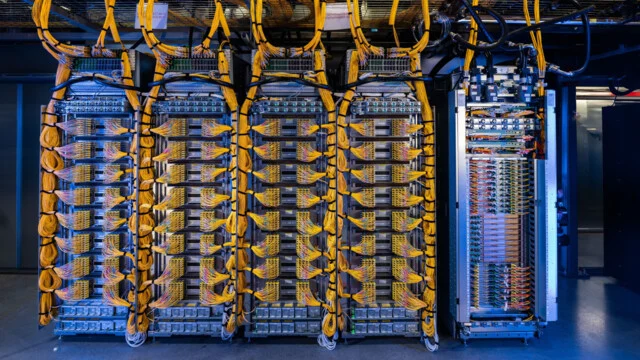
The flagship A5X instances, powered by Vera Rubin GPUs, are slated for general availability starting next month. These instances are designed specifically to handle the massive parameter counts of modern foundation models. To support this, Google introduced the "Virgo Network," a groundbreaking data center fabric that enables non-blocking, high-speed connectivity between data center buildings.
With this networking breakthrough, Google can now link up to 80,000 GPUs at a single site, with the ability to scale up to a staggering 960,000 GPUs across multiple geographical locations. This massive cluster density is intended to slash training times for frontier models from months to weeks, or even days.
Chronology: The Road to GTC Berlin
The partnership between Google and Nvidia has accelerated significantly over the past 24 months.
- Late 2023: Google began integrating its custom TPUs with Nvidia H100 clusters, signaling a hybrid approach to AI hardware.
- Q3 2024: Google expanded Confidential Computing to A4 instances using Intel TDX, laying the groundwork for hardware-level security in the cloud.
- GTC Berlin (Current): The formal announcement of the Vera Rubin-based A5X instances, the Virgo Network fabric, and the expansion of Google Distributed Cloud (GDC) with local B300-based processing.
- Immediate Future: A5X instances will enter general availability next month, with regional rollouts focusing on EMEA to meet the stringent data residency requirements of European regulators.
Supporting Data: Infrastructure and Performance Metrics
The technical enhancements unveiled at GTC Berlin go beyond raw GPU power. Google has focused heavily on reducing latency and bottlenecks in data retrieval.
The Role of Managed Lustre and GPUDirect
Google Cloud Managed Lustre now supports GPUDirect Storage on A5X instances. By allowing training and inference data to bypass traditional CPU-based memory bottlenecks and stream directly into GPU memory via RDMA (Remote Direct Memory Access), the throughput is significantly increased.
KV-Caching and Efficiency
To further enhance inference performance, Google is implementing multi-tier KV-Caching. By keeping context information available across various storage layers, the system minimizes redundant calculations. This is particularly vital for agentic AI, which requires high-speed access to long-term memory and prior interaction states to function effectively.
Scheduling and Orchestration
Managing 960,000 GPUs is a Herculean task. To address this, Google has optimized the Google Kubernetes Engine (GKE) with two key features:
- Managed DRANET: A specialized network management layer for high-performance RDMA environments.
- Kueue: A job queueing and scheduling system that allows for "site-aware" planning. This ensures that massive AI workloads are scheduled in locations that optimize for power availability, latency, and data residency compliance.
Official Responses and Strategic Implications
"The shift to agentic AI requires more than just raw compute; it requires a holistic approach to data sovereignty, security, and infrastructure reliability," a Google Cloud spokesperson stated during the GTC keynote.
For enterprises, the implications are profound. Businesses are no longer choosing between "cloud scale" and "local control." With the expansion of Google Distributed Cloud (GDC) and the availability of local B300-based processing, companies can now run complex, multimodal models—including Gemini 3.5 Flash—entirely on-premises. This is critical for sectors like healthcare, defense, and finance, where data must remain within a physical perimeter.
Sovereign Cloud and Data Boundary
Google’s commitment to "Sovereign Cloud" is reinforced by the "Cloud Data Boundary," which forces regional data residency. Furthermore, through partnerships with companies like S3NS (France) and Thales (Germany), Google Cloud Dedicated offers an isolated environment where the infrastructure is managed by local entities, providing a dual layer of trust: the technological stack of Google and the regulatory compliance of local partners.
Implications: The Future of Agentic AI
The transition from simple chatbot interfaces to autonomous agents is the current "holy grail" of AI development. Agentic AI needs to be fast, accurate, and incredibly secure because these agents will be granted access to internal company systems.
Confidential Computing: Protecting the "Brain"
A major highlight of the announcement is the expansion of Confidential Computing to Nvidia GPUs. By utilizing RTX Pro 6000 Blackwell Server Edition and B200 GPUs with hardware-based attestation, Google ensures that model weights and user prompts are encrypted even while being processed in memory. This "Nvidia Confidential Bare Metal" approach essentially closes the last remaining vulnerability in cloud-based AI: the exposure of data during the active compute phase.
Multimodal Local Intelligence
The introduction of Gemini 3.5 Flash for GDC allows for the local processing of text, audio, video, and images. For an enterprise, this means a private, air-gapped system can now "watch" security footage, "listen" to support calls, and "read" internal documents to provide summaries—all without the data ever leaving the corporate network.
The Enterprise Search Evolution
The new enterprise search capability for GDC, currently in preview, is a direct application of this local power. It allows for natural language querying of internal repositories. Because the indexing and embedding occur within the secure boundary, organizations can leverage their proprietary data to train or fine-tune models without the risk of intellectual property leakage into public model training sets.
Conclusion
The announcements at GTC Berlin represent a maturing of the AI industry. We are moving away from the "hype phase" of generative AI into a phase of deep integration and industrialization. By providing a scalable, secure, and sovereign infrastructure, Google Cloud and Nvidia are building the foundation upon which the next generation of enterprise agents will operate.
As these technologies reach general availability, the barrier to entry for highly secure, complex, and autonomous AI systems will drop significantly. Organizations that can leverage these new, massive GPU clusters while maintaining strict data control will likely define the competitive landscape of the next decade.
Note: This report incorporates information provided by Google Cloud under NDA. All performance claims are based on current testing parameters provided by the vendor.