The volleyball players of Schwarz-Weiß Erfurt endured a sobering evening in the Bundesliga on Tuesday, suffering a comprehensive 0:3 defeat at the hands of SSC Palmberg Schwerin. In a match that lasted just 78 minutes, the Thuringian side found themselves unable to counter the clinical precision and physical dominance of their hosts, leaving the court with significant questions to answer regarding their form and tactical execution.
Main Facts: A Total Collapse in the North
In their fourth match of the 2026/27 Bundesliga season, the expectations for Schwarz-Weiß Erfurt were tempered by the reality of the league’s power hierarchy. Facing one of the division’s perennial heavyweights in Schwerin, the visitors hoped to put up a spirited fight. Instead, they were swept aside in straight sets: 18:25, 11:25, 15:25.
From the opening whistle, it was clear that the Erfurter side struggled with both consistency and composure. The high error rate—a recurring theme in their early-season performances—served as a catalyst for their downfall. While Schwerin displayed the confidence of a team in rhythm, Erfurt looked disjointed, struggling to find a solution to the relentless pressure applied by the home side. The match concluded in a brisk 78 minutes, highlighting the one-sided nature of the contest and the lack of resistance offered by the visiting team.
Chronology of the Defeat
The match began with a glimmer of optimism for Erfurt, but it quickly faded. In the first set, the visitors attempted to keep pace, but the structural deficiencies in their reception and passing became apparent early on. Schwerin’s aggressive serving pushed the Erfurter defense onto their back heels, resulting in an 18:25 outcome that, while not a total disaster, set the tone for the evening.
The second set proved to be the most damaging period of the match. Whatever tactical adjustments the coaching staff had discussed during the break failed to manifest on the court. A complete breakdown in communication and defensive discipline saw the scoreline widen rapidly. Erfurt managed only 11 points in this set, a statistic that reflects a team losing faith in its own game plan. The fluidity of Schwerin’s offense, combined with an increasing number of unforced errors from the Erfurt side, turned the set into a rout.
By the third set, the psychological gap between the two teams was insurmountable. Though Erfurt showed slight improvements in their side-out efficiency, they never truly threatened to extend the match. Schwerin continued to control the net, ending the final set at 25:15 to seal a decisive victory.
Supporting Data: The Statistical Reality
The box score tells a grim story for the Thuringian squad. The standout individual performance of the night came from Schwerin’s Devin Robinson, who served as the primary executioner. Robinson recorded 18 direct points, consistently finding holes in the Erfurt block and floor defense.
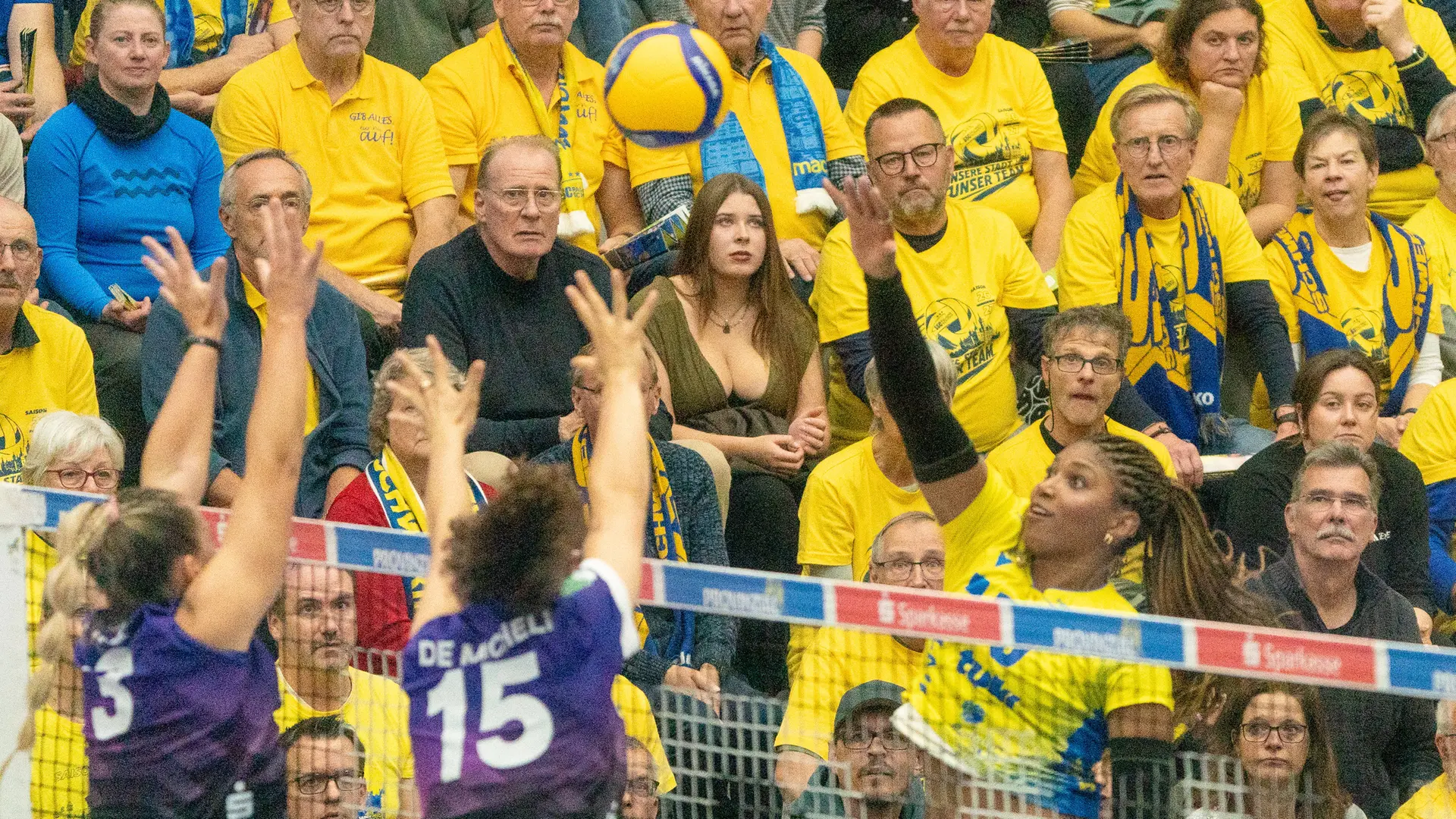
The dominance of the home team was further reflected in the auxiliary stats:
- Offensive Output: Schwerin secured 44 total attack points, a testament to their superior ball distribution and spiking power.
- Defensive Wall: The Schwerin block was a significant factor, accounting for 11 points. This stifled the Erfurt hitters, who found themselves constantly hitting into a wall or adjusting their shots under pressure.
- Efficiency Gap: The disparity in error rates was the most alarming takeaway for the Erfurt technical staff. While Schwerin played with calculated risk, Erfurt’s errors often came in clusters, preventing them from building any meaningful momentum.
Official Responses: A Call for Accountability
Speaking to the sports broadcaster Dyn after the match, Erfurt player Teresa Ziegenbalg offered a candid assessment of her team’s performance. Her comments were devoid of excuses, focusing instead on the systemic issues that plagued the team throughout the evening.
"We came here with the intention of playing tight sets or perhaps stealing one," Ziegenbalg admitted. "But today, nothing worked—neither at the front nor at the back. We have to work on our service game; we need to exert much more pressure on the opponent. There are so many points, both technical and mental, that we have to work on moving forward."
Ziegenbalg’s honesty underscores the frustration within the squad. While losing to a team of Schwerin’s caliber is a "priced-in" possibility in the Bundesliga, the manner of the defeat—characterized by a lack of competitive intensity—is what concerns the team leadership most.
The Broader Context: A Challenging Path Ahead
This defeat is more than just a notch in the loss column; it is a wake-up call for the squad. The team entered this match buoyed by a relatively strong performance against Stuttgart in their previous outing, which had provided a false sense of security. The stark contrast between that performance and this one suggests that consistency remains the elusive "holy grail" for this roster.
The challenge for head coach and management is now to rebuild the team’s confidence before the schedule intensifies. The league does not offer the luxury of a prolonged recovery period. The calendar is unforgiving, and the next obstacle is arguably one of the most difficult: the arrival of the Dresdner SC in Erfurt this coming Wednesday.
The match against Dresden carries significant weight. It is not merely a contest for points, but a litmus test for the team’s psychological resilience. If they can correct the service errors and stabilize their passing, they may be able to regain their footing. However, another poor performance could trigger a period of instability that would be difficult to arrest early in the season.

Implications for the Season
For Schwarz-Weiß Erfurt, this season was supposed to be one of growth and consolidation. To achieve this, the team must demonstrate that they can learn from these lopsided defeats. The technical staff will undoubtedly spend the next few days in the film room, analyzing the breakdown of the block-defense transition that allowed Robinson and her teammates to thrive.
Furthermore, the pressure is on the players to internalize Ziegenbalg’s call for increased pressure on the serve. In the modern Bundesliga, the serve is the primary weapon to dictate the tempo of the game. By failing to force opponents out of their system, Erfurt allowed Schwerin to dictate play at will.
As the club looks toward the future, the integration of new strategies and the improvement of individual fundamentals are paramount. The road back to respectability in the league standings is steep, and it requires a collective effort to shift the culture from one of "playing for points" to "playing with intent."
Conclusion
The match at Schwerin serves as a stark reminder of the level required to compete at the top of the German women’s volleyball pyramid. While the defeat was emphatic and painful, it provides a clear roadmap for what must be addressed. For the players and coaching staff of Schwarz-Weiß Erfurt, the focus now shifts entirely to the upcoming clash with Dresden. The season is still in its infancy, and there is ample time for redemption, but it must start with a fundamental change in the approach to the game—a shift from the hesitation seen in Schwerin to the aggression required for success in the Bundesliga.
The fans in Thuringia will be looking for a response on Wednesday. Whether the team can internalize the lessons of this defeat and present a more formidable challenge to Dresden will define the trajectory of their 2026/27 campaign. In professional sports, one result does not define a season, but it certainly sets the tone for the weeks that follow. Erfurt finds itself at a crossroads, and the next seven days will reveal much about the character and potential of this group.