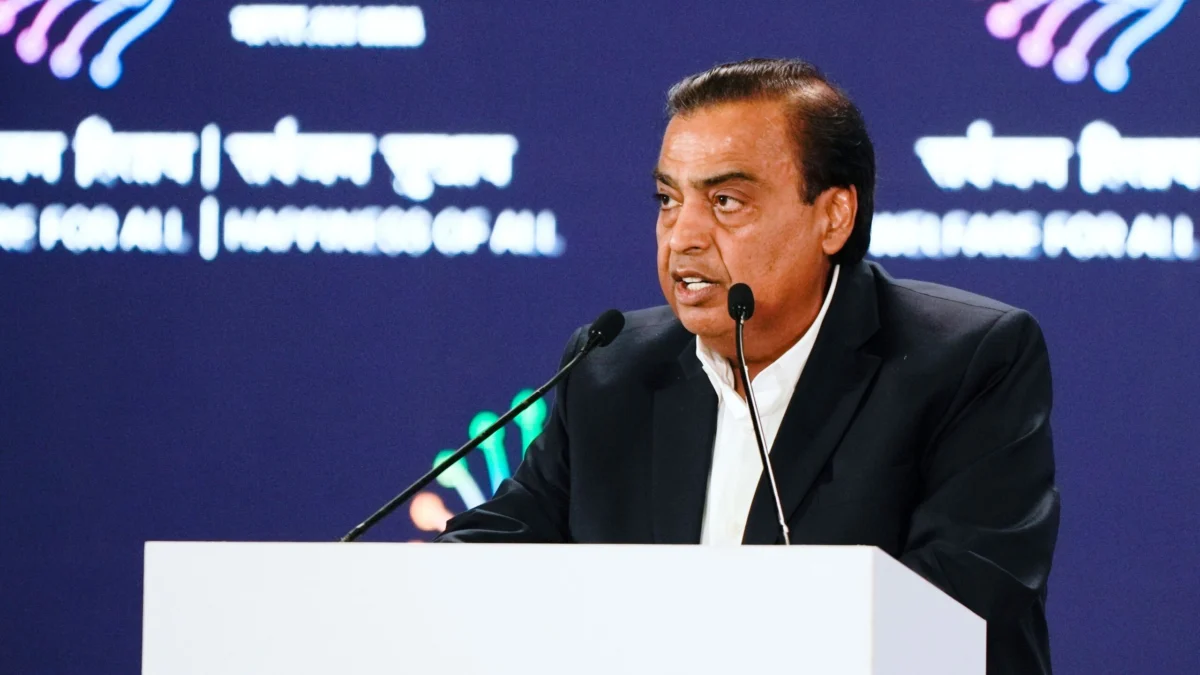
Bangkok/Mumbai – In a move that signals a tectonic shift in the South Asian financial landscape, Indian industrialist Mukesh Ambani has once again demonstrated his formidable influence over the markets. His telecommunications and digital services juggernaut, Jio Platforms, has officially launched what is poised to become the largest Initial Public Offering (IPO) in the history of the Indian stock market.
The reception was immediate and overwhelming: within just 100 minutes of the subscription window opening this past Wednesday, the offering was already oversubscribed. This frenzy of investor interest serves as a definitive validation of Ambani’s pivot from traditional heavy industry to the digital frontier.
The Main Facts: A Landmark Offering
The scale of this IPO is unprecedented. By seeking to raise approximately 300 billion rupees—a figure equivalent to more than 3.2 billion US dollars—Jio Platforms is shattering existing records for domestic capital raising in India.
The fervor surrounding the launch is not merely a product of hype but a calculation of institutional confidence. Investors are clamoring for a stake in a company that has effectively rewritten the rules of the Indian telecommunications market. With the debut scheduled for next Wednesday on the Mumbai Stock Exchange, the company is aiming for a gargantuan initial valuation of approximately 107 billion dollars. This listing is not just an IPO; it is a coronation of Jio as the primary engine of India’s burgeoning digital economy.
Chronology: The Road to the Market
The path to this record-breaking Wednesday was paved over several years of aggressive expansion and strategic capital allocation.
- 2016 – The Disruption: Jio entered the Indian market with a strategy that decimated competitors: offering virtually free data and low-cost voice services. This triggered a price war that forced several legacy players to consolidate or exit the market.
- 2020 – The Strategic Partnerships: Recognizing the potential of the user base, Ambani opened the doors to international investors. Multi-billion dollar cash injections from heavyweights such as Meta (formerly Facebook) and Google signaled to the world that Jio was the gateway to the "Next Billion" internet users.
- 2023–2024 – The Consolidation: Throughout the last 18 months, Reliance Industries, the parent company, began streamlining its corporate structure to prepare the digital unit for a standalone listing.
- The Launch Day: This past Wednesday, at 10:00 AM local time, the subscription window opened. By 11:40 AM, the massive inflow of institutional and retail orders had already surpassed the total shares on offer, signaling a historic level of demand.
Supporting Data: Why Jio Dominates
To understand the investor frenzy, one must look at the numbers underpinning the Reliance Industries empire. Reliance, which historically built its fortune on the back of the world’s largest oil refining complex in Jamnagar, has successfully transitioned into a data-driven conglomerate.
The Digital Monopoly
Jio currently serves over 450 million subscribers. In a country with a population of 1.4 billion, the company has effectively captured the middle class and rural demographics alike, providing the essential infrastructure for everything from e-commerce to digital payments and streaming media.
Diversification Metrics
For decades, Reliance was tethered to the volatility of global crude oil prices. However, the rise of Jio has provided a consistent, recurring revenue stream that is decoupled from energy markets. Analysts point out that Jio’s EBITDA margins have consistently outperformed regional peers, supported by a state-of-the-art 5G rollout that blankets almost every major urban center in India.
Official Responses and Market Sentiment
While Mukesh Ambani has remained characteristically measured in his public statements, the sentiment emanating from the boardrooms of Mumbai’s financial district is one of near-unanimous optimism.
"This is the inflection point for the Indian digital narrative," noted a senior analyst at a leading Mumbai brokerage. "By bringing Jio to the public markets, Ambani is inviting the average Indian citizen to own a piece of the infrastructure that is literally building the nation’s digital future."
However, not all feedback is celebratory. Critics have pointed to the sheer scale of the IPO as a potential "liquidity vacuum," warning that the massive inflow of capital into Jio could lead to a temporary drying up of funds for smaller, emerging tech startups in India. Despite these concerns, the overwhelming demand on Wednesday suggests that institutional investors are far more focused on the long-term growth potential of the Jio ecosystem than on short-term liquidity concerns.
Implications: A New Era for Indian Enterprise
Shifting the Corporate Paradigm
The successful listing of Jio will fundamentally change how Indian conglomerates view the value of digital services. We are likely to see a "Reliance-style" spin-off trend, where other major Indian industrial houses attempt to carve out their digital and service-based subsidiaries to unlock shareholder value.
The Global Tech Proxy
For global investors, Jio acts as a proxy for the Indian growth story. Because foreign investors often find it difficult to gain direct exposure to India’s fragmented digital markets, Jio offers a singular, high-liquidity vehicle to tap into India’s internet penetration. It is, in effect, the "Alphabet" or "Meta" of the Indian subcontinent.
Geopolitical and Economic Influence
Ambani’s ability to draw billions in capital amidst global economic uncertainty speaks volumes about the perceived stability of the Indian market. The IPO solidifies the "Reliance-Jio" axis as a central pillar of India’s geopolitical and economic strategy, particularly as the country positions itself as the primary alternative to China in the global supply and digital services chain.
Risk Factors
Despite the optimism, the road ahead is not without obstacles. Regulatory scrutiny regarding data privacy, potential antitrust challenges as the firm expands into retail and finance, and the persistent need for massive capital expenditure to maintain 5G lead times are factors that will require management’s constant attention. Furthermore, the volatility of the Indian Rupee remains a lingering concern for international institutional investors holding dollar-denominated funds.
Conclusion
As the countdown to next Wednesday’s trading debut begins, the atmosphere in Mumbai is electric. Mukesh Ambani has once again proven his uncanny ability to read the zeitgeist of the Indian economy. By successfully transforming a traditional energy company into a digital superpower, he has not only secured the future of his conglomerate but has also set a high-water mark for what Indian corporate enterprise can achieve on the global stage.
The "Jio IPO" will be studied for years to come—not just as a financial transaction, but as the moment the Indian market officially moved from the industrial age into the era of hyper-connected digital dominance. Whether this valuation can be sustained in the long term remains to be seen, but for now, the markets have spoken: the future is digital, and in India, that future is firmly under the Reliance umbrella.