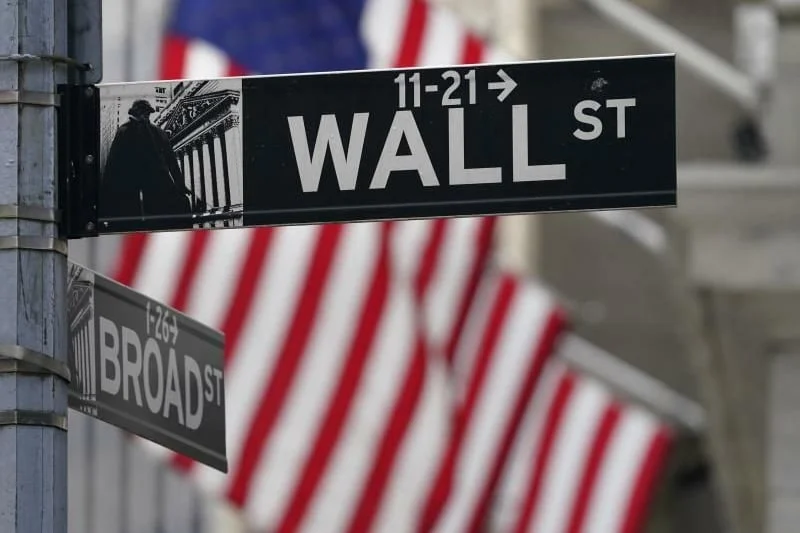
The technology-heavy Nasdaq Composite Index saw a turbulent trading session on Thursday, as investors grappled with growing skepticism regarding the massive capital expenditures poured into artificial intelligence (AI). While tech stocks faced significant pressure throughout the day, a late-session recovery offered a glimmer of hope to a market clearly struggling to find its footing.
The current climate at the Wall Street exchange is characterized by a "wait-and-see" approach, as the initial euphoria surrounding the AI revolution is being tempered by cold, hard financial analysis. Investors are increasingly questioning whether the multi-billion-dollar investments in data centers, high-end semiconductors, and infrastructure will yield the promised returns in the near term.
Main Facts: The Anatomy of the Sell-Off
The primary driver of Thursday’s volatility was a sustained retreat in semiconductor and hardware stocks. According to data provided by Bloomberg, the market capitalization of major U.S. chip manufacturers has shrunk by more than one trillion dollars in just one week. This historic evaporation of value highlights a sudden shift in market sentiment: the "AI trade," which has been the primary engine of the stock market’s bull run for the past eighteen months, is undergoing a painful reassessment.

The sell-off was not confined to a single entity but rippled across the sector, affecting everything from hardware manufacturers to software developers deeply integrated with AI technologies. While the Nasdaq managed to claw back some of its losses by the closing bell, the underlying anxiety remains palpable. Investors are no longer merely looking at growth potential; they are looking at margins, debt levels, and the sustainability of corporate spending.
Chronology of the Market Turbulence
The current volatility is the latest chapter in a series of market corrections that began earlier this week.
- Monday and Tuesday: The week opened with heavy selling pressure in both U.S. and Asian markets. Investors began to rotate out of high-growth tech stocks, driven by a combination of profit-taking and fears that the economy might be heading toward a "hard landing."
- Wednesday: Markets attempted a stabilization, but the recovery was fragile. Analysts warned that the volatility was not a temporary blip but a reflection of a broader structural change in how capital is allocated.
- Thursday Morning (Local Time): The market was hit by a second wave of selling. As trading began, the Nasdaq plummeted, dragging down major benchmarks, including the S&P 500 and the Dow Jones Industrial Average.
- Thursday Afternoon: A late-session rally, often attributed to "bottom-fishing" by institutional investors, allowed the Nasdaq to recover from its intraday lows, ending the day on a more stable note, though still well below recent highs.
Supporting Data: Why Investors Are Getting Nervous
Several key factors have contributed to this atmosphere of uncertainty, creating a "perfect storm" for investors.
The AI Capex Question
The primary concern is the sheer scale of investment in AI. Companies like Nvidia, Microsoft, Alphabet, and Meta have committed hundreds of billions of dollars to AI infrastructure. While these investments are meant to build the foundation for the next industrial revolution, Wall Street is increasingly asking: "Where is the revenue?" The disconnect between the massive capital expenditure (Capex) and the actual monetization of AI services is beginning to worry institutional shareholders.
Economic Mixed Signals
The United States is currently delivering conflicting economic data. On one hand, unemployment remains relatively low, and consumer spending has shown resilience. On the other hand, manufacturing data has been sluggish, and there are growing fears that the Federal Reserve may have kept interest rates too high for too long, potentially triggering an unnecessary recession.
The Return of Inflationary Fears
Perhaps the most significant development is the consensus that inflation is unlikely to return to the 2% target as quickly as once hoped. Recent data suggests that inflationary pressures are becoming structural rather than transitory. A persistent increase in inflation—often referred to as "sticky inflation"—would force the Federal Reserve to maintain higher interest rates, which is inherently negative for high-growth tech stocks that rely on cheap capital for expansion.
The Broader Implications for Global Markets
The ripple effects of this sell-off are being felt far beyond New York. In Asian markets, tech-heavy exchanges such as the Nikkei and the Hang Seng have seen significant declines, as global supply chains are deeply integrated with the U.S. semiconductor industry. When U.S. tech giants pull back on orders, the impact is felt immediately in the manufacturing hubs of Taiwan, South Korea, and Japan.
A Pivot to Value?
We are witnessing a potential shift in investor strategy. For years, the "growth at any price" mantra dominated the markets. Now, we are seeing a rotation toward "value" stocks—companies with strong cash flows, dividends, and defensive business models. This rotation is not necessarily a sign of a market crash, but rather a sign of market maturity.
The Role of Central Banks
The Federal Reserve finds itself in a difficult position. If it cuts interest rates too aggressively, it risks fueling further inflation. If it keeps rates high, it risks choking off the investment cycle that is currently driving the AI boom. The market is waiting for clear guidance, but the latest data suggests the central bank remains in a wait-and-see mode, prioritizing price stability over market growth.

Analysis: Is the AI Bubble About to Burst?
The term "bubble" is frequently thrown around on Wall Street, but it is important to distinguish between irrational exuberance and a sector-wide price correction.
The companies involved in the current sell-off are, for the most part, highly profitable. They are not the speculative startups of the dot-com era. However, the valuations of these companies were built on the assumption of exponential growth. When that growth trajectory is questioned, even slightly, the stock prices are hit disproportionately hard.
Investors are now looking for "proof of concept." They want to see tangible evidence that AI is improving the bottom line—not just through cost-cutting, but through new revenue streams. Until companies can prove that their massive investments are yielding tangible ROI (Return on Investment), the volatility in the tech sector is likely to continue.

Summary and Outlook
As we look toward the coming weeks, the market will be hyper-focused on upcoming earnings reports and economic indicators, particularly the monthly jobs report and the Consumer Price Index (CPI).
If the data continues to show a cooling economy combined with persistent inflation, the pressure on tech stocks will likely remain. Conversely, if we see signs of a "soft landing"—where inflation drops while growth remains stable—the tech sector could regain its momentum.
For the individual investor, the current environment serves as a stark reminder of the importance of diversification. The "all-in" strategy on AI that served many investors well in 2023 and early 2024 is currently being tested. The market is not necessarily signaling the end of the AI era, but rather the end of the "easy money" phase of the AI investment cycle.

The road ahead will be defined by volatility, skepticism, and a flight to quality. Investors who can navigate this period with a disciplined, long-term approach will likely be the ones to thrive as the market eventually finds a new, more sustainable equilibrium. The technology giants have deep pockets and strong balance sheets, but they are no longer immune to the fundamental laws of supply, demand, and interest-rate sensitivity that govern the broader economy.