By Editorial Staff
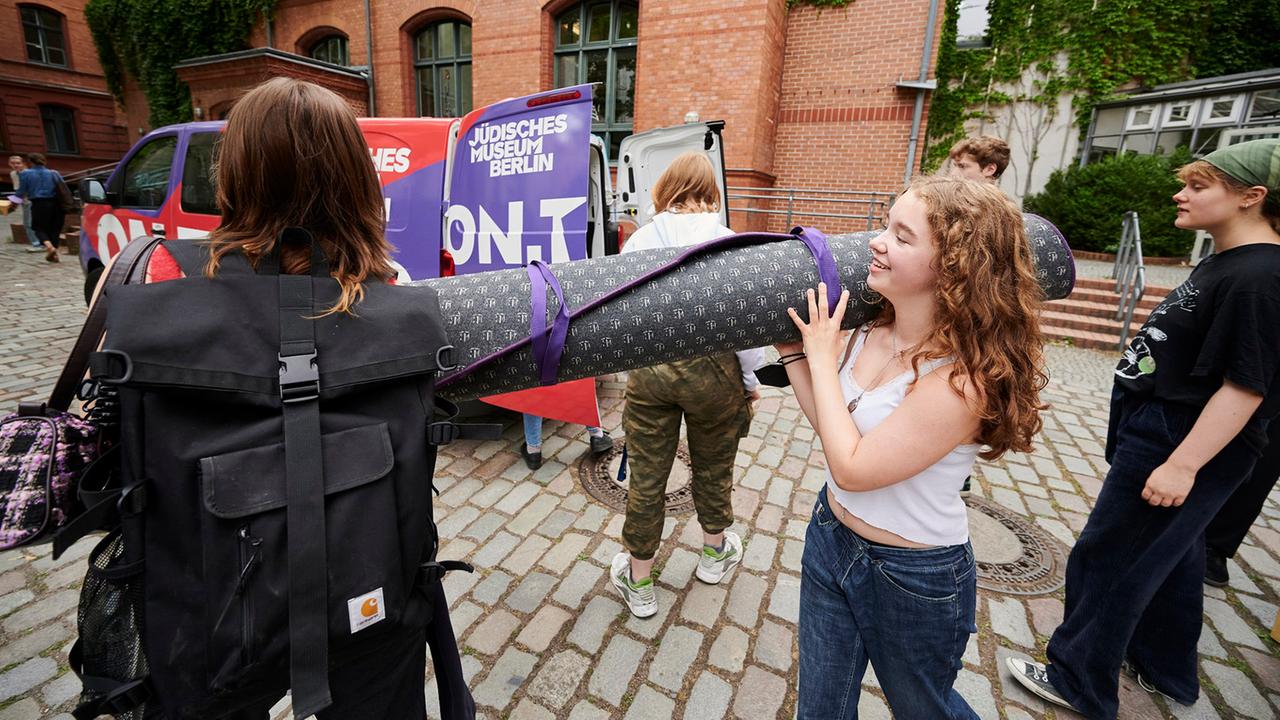
In the quiet corridors of the Theodor-Wuppermann-Schule in Leverkusen, a transformation is taking place. A classroom, typically reserved for standard curriculum, has been converted into a space of discovery. On a vibrant purple rug, sixth-graders sit comfortably, surrounded by wooden crates that hold the weight of history and the sweetness of everyday life. When Johannes Schwarz, a museum educator, begins to unveil the contents of these boxes—a kippah, a commemorative Stolperstein, and, perhaps most surprisingly, a bag of kosher gummy bears—the students lean in. "This is our shrunk-down museum," Schwarz says with a smile, breaking the ice.
This scene is not an isolated experiment. It is part of "on.tour," a sophisticated, mobile educational program operated by the Jewish Museum Berlin. For over 15 years, this initiative has traversed Germany, bringing the complexities, beauty, and history of Jewish life directly into the classrooms of students who might otherwise never encounter them.
The Mission: Bringing the Museum to the Student
The philosophy behind "on.tour" is rooted in the vision of W. Michael Blumenthal, the founding director of the Jewish Museum Berlin. Blumenthal held a firm conviction: that every student in Germany should have the opportunity to engage with the Jewish experience at least once during their education. Recognizing that geographical barriers, financial constraints, and logistical hurdles often prevent schools from making the trip to Berlin, the museum decided to take a different approach. If the students could not come to the museum, the museum would come to them.
To date, the program has reached nearly 80,000 young people across more than 600 schools. The tour is not a static lecture; it is an interactive, tactile experience designed to demystify Jewish culture and provide a human connection to historical and contemporary narratives.
Chronology of a Traveling Classroom
The success of "on.tour" lies in its ability to adapt to the specific social fabric of the schools it visits. Recent stops in North Rhine-Westphalia—specifically Bonn, Duisburg, and Leverkusen—highlight the program’s methodology:
- The Tactile Hook: The sessions begin with sensory engagement. Educators use objects to bridge the gap between abstract concepts and personal experience. By offering kosher, halal, and vegan gummy bears, the team initiates a dialogue about religious dietary laws in a non-threatening, relatable way. It is a simple, effective exercise in comparing traditions and finding common ground.
- The Co-Creation Phase: Unlike traditional museum visits where visitors are passive observers, "on.tour" encourages students to contribute. They are invited to bring objects from home that carry personal meaning. These items are placed alongside museum artifacts in glass cabinets, allowing the educators to draw direct parallels between the students’ personal histories and the broader Jewish experience.
- Deepening the Dialogue: The final phase of the workshop moves into critical discussions. These are not merely history lessons; they are sessions on migration, identity, loss, and the fundamental values of a democratic society.
Personal Narratives as a Catalyst for Empathy
The power of the program is best illustrated through the students themselves. During the Leverkusen session, twelve-year-old Shahad pulled out a pair of golden earrings—a gift from her grandmother when she was an infant. They were among the few items her family could salvage during their flight from the war-torn regions of the Middle East. "We had war there, my mother had to pack our things very quickly," she recounts.
For many students in these classrooms, migration and displacement are not abstract concepts found in history books; they are the lived realities of their families. By sharing these stories, the "on.tour" educators provide a safe space where students can discuss their own experiences of loss and heritage. This creates a bridge to the Jewish experience, where concepts of exile, resilience, and memory are central.
Supporting Data: The Rising Tide of Antisemitism
The necessity for such educational outreach has arguably never been higher. According to a recent study by the Bertelsmann Stiftung, antisemitic attitudes in Germany have shown a worrying increase since 2021. The report highlights a particularly troubling trend: the conflation of Jewish identity with the policies of the State of Israel.
Data shows that 28 percent of respondents under the age of 40 now claim that the political actions of Israel make them view "Jews in general" more negatively—a sharp increase from 14 percent in 2021. These statistics underscore the urgency of the Jewish Museum Berlin’s work. The "on.tour" program acts as a counterweight to these trends, providing nuanced information that challenges stereotypes and prevents the dehumanization of Jewish people through the lens of current geopolitical conflicts.
Official Responses and Strategic Vision
Hetty Berg, the current director of the Jewish Museum Berlin, emphasizes that the program is more than just a mobile exhibition; it is a vital component of the museum’s role in the democratic education of Germany’s youth.
"The school visits are immensly important," Berg stated, particularly in the wake of the October 7, 2023, Hamas attacks on Israel and the subsequent rise in antisemitic rhetoric across Europe. The program is designed to be a "safe harbor" for difficult conversations. Sarah Hiron, the project leader for "on.tour," underscores that the goal is to create an environment where nothing is off-limits. "No one is judged for what they say," Hiron notes. "We want to provide the tools to discuss, debate, and understand."
The staff behind the program—a diverse group of historians, theater pedagogues, and experts with Jewish backgrounds—are trained to handle the complexities of these interactions. They understand that every classroom is different. Some are eager and curious, while others present a "frozen atmosphere"—a defensive or hostile reception that requires patience and high emotional intelligence to navigate.
Implications for the Future of Civic Education
The "on.tour" program holds profound implications for how museums and cultural institutions engage with the public. Its model suggests several key takeaways for the future of civic education:
- Meet People Where They Are: Digital engagement is important, but physical presence and tactile experiences remain the most potent tools for breaking down prejudice.
- Encourage Personal Participation: By asking students to bring their own objects, the program shifts the power dynamic. It transforms the student from a passive recipient of information into an active contributor to the collective memory.
- Address Controversies Head-On: The willingness of the "on.tour" team to field questions about Israel, Palestine, and antisemitism—even when it creates tension—demonstrates that education in a democratic society cannot shy away from the most difficult questions.
- Integration of Values: The program successfully links Jewish history to universal values like human rights, the rejection of racism, and the importance of democratic discourse, making it relevant to students regardless of their personal, religious, or cultural backgrounds.
As the "on.tour" bus prepares for its next leg of the journey through Baden-Württemberg, the impact it leaves behind is not measured in foot traffic or ticket sales, but in the shifts in perspective among the students it touches. By fostering a sense of shared humanity, the Jewish Museum Berlin is not just teaching history; it is actively shaping the future of a more inclusive and understanding society.
In a world increasingly polarized by digital echo chambers, the simple, radical act of sitting on a purple rug and talking about personal stories remains one of the most effective ways to combat the darkness of prejudice. The mobile museum serves as a reminder that understanding begins with a conversation, and that sometimes, all it takes to open a mind is a cup of curiosity and the courage to listen.