The compact crossover segment in Europe is arguably the most fiercely contested battleground in the automotive industry. It is a space defined by narrow margins, high customer expectations, and a rapid, tectonic shift toward electrification. Into this arena steps the second generation of the Hyundai Bayon. Despite its functional appeal, the Bayon has historically struggled to gain significant traction in the German market, recording only about 2,000 sales in the first eight months of the year—a modest figure that underlines the uphill battle Hyundai faces with this specific nameplate. With the arrival of its second iteration, the Bayon is growing in size and diversifying its powertrain options. However, as the automotive landscape shifts toward battery-electric vehicles (BEVs), the critical question remains: Is a combustion-heavy lineup enough to capture the hearts and wallets of modern European buyers?
Main Facts: A Refined Identity
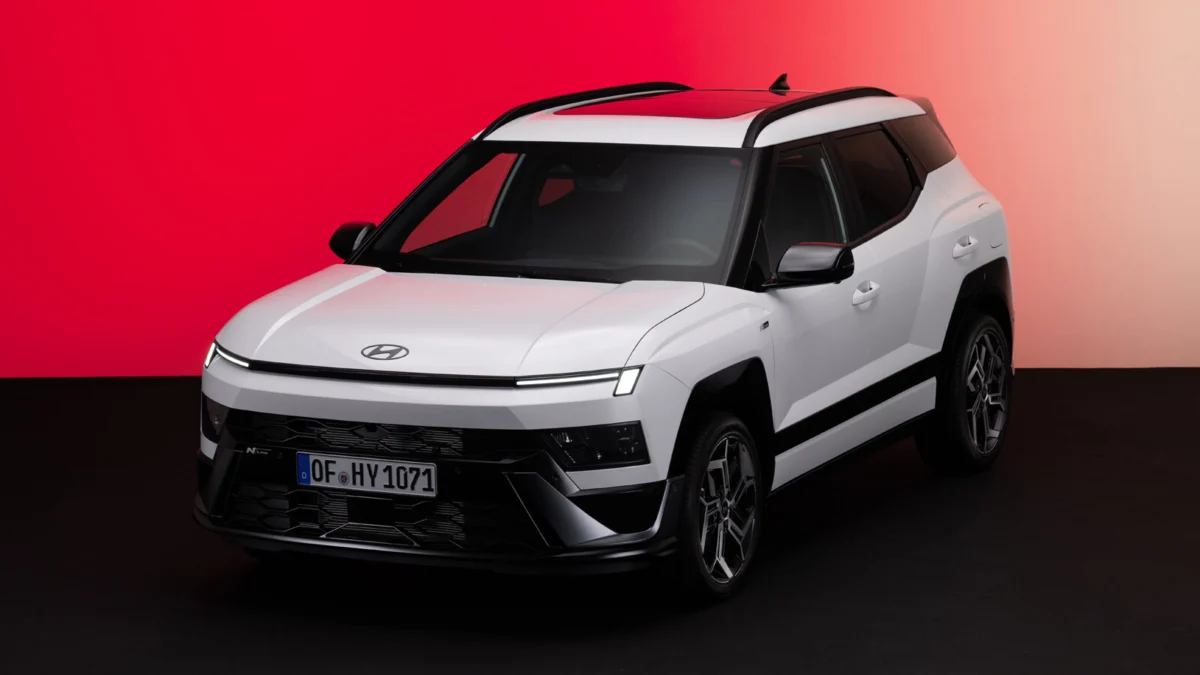
The second-generation Hyundai Bayon has undergone a purposeful evolution rather than a complete revolution. Measuring 4.25 meters in length, the new model has stretched by approximately 7 centimeters compared to its predecessor. This adjustment places it strategically between established rivals like the Opel Mokka and the Peugeot 2008. The wheelbase has also seen a modest increase of 2 centimeters, reaching 2.6 meters, which promises a marginal improvement in cabin ergonomics.
Storage capacity, a key metric for crossover buyers, has also been optimized. The internal combustion engine (ICE) versions now boast 440 liters of cargo space—an increase of 29 liters—while the upcoming hybrid model will offer 397 liters, reflecting the space requirements of the battery pack.
Visually, the vehicle adopts a sharper design language. Hyundai has moved away from the softer, more rounded lines of the original model, opting for a design characterized by more pronounced edges and a bolder stance. This design shift is aimed at giving the Bayon a more assertive presence on the road, distancing it from the "budget-entry" aesthetic that often plagues smaller crossovers.
Chronology and Market Entry
The roadmap for the Bayon’s rollout is staggered, reflecting the current supply chain and development cycles within Hyundai’s manufacturing network. Produced in Turkey to serve the European market, the vehicle is scheduled for a phased introduction.
- Initial Launch: The standard internal combustion variants are expected to hit European dealerships before the end of the current calendar year.
- Hybrid Expansion: Hyundai has confirmed that the full-hybrid (HEV) variant, which serves as the technological flagship of this generation, is slated for a 2027 market release.
This timeline creates a curious gap in the product lifecycle. By the time the hybrid variant arrives in 2027, the market’s appetite for non-plugged electrification may have shifted even further toward pure BEVs, potentially making the hybrid’s late entry a difficult sell against more modern, fully electric competitors.
Supporting Data: Powertrain Efficiency and Performance
Hyundai is launching the new Bayon with a focused engine lineup, centering on its proven 1.0-liter turbocharged three-cylinder engine. The strategy here is a balance between performance tiers and transmission flexibility.
The 1.0 T-GDI engine will be available in two output levels: 66 kW (approx. 90 hp) and 85 kW (approx. 115 hp). Both versions offer customers the choice between a traditional six-speed manual transmission and a seven-speed dual-clutch transmission (DCT).
Interestingly, preliminary data from the WLTP cycle reveals a counterintuitive performance metric: the lower-output 66 kW engine consumes slightly more fuel than its more powerful 85 kW sibling. This highlights the efficiency benefits of optimizing power-to-weight ratios in small-displacement engines. Furthermore, the upcoming 1.6-liter HEV (101 kW) is positioned as the clear efficiency winner.
| Powertrain | Power (kW) | WLTP CO2 Emissions (g/km) |
|---|---|---|
| 1.0 T-GDI | 66 kW | 139 – 149 |
| 1.0 T-GDI | 85 kW | 134 – 144 |
| 1.6 HEV | 101 kW | 102 – 113 |
The significant reduction in CO2 emissions for the hybrid model underscores why this version will be the linchpin of the Bayon’s appeal once it reaches the market in 2027.

Interior Philosophy: A Stand Against Trend
Perhaps the most distinctive aspect of the new Bayon is its interior. In an era where manufacturers are racing to digitize every interaction—often to the detriment of usability—Hyundai has taken a refreshingly pragmatic approach.
The gear selector for the automatic transmission remains a substantial, physical lever, providing a tactile experience that is increasingly rare in modern vehicles. Furthermore, Hyundai has resisted the industry-wide trend of replacing physical buttons on the steering wheel with capacitive touch surfaces. By retaining physical controls, the company is prioritizing intuitive, eyes-free operation.
The dashboard layout features two large screens, yet critical adjustments for the climate control system are handled by an array of physical buttons. A unique quirk is the placement of an additional, smaller display specifically for temperature readouts, rather than integrating that data into the main infotainment screens. The center air vents are mounted noticeably low, a design choice that may require a period of adjustment for drivers accustomed to traditional ergonomics. While the interior might not be described as "fashion-forward," it is clearly designed for functional longevity and ease of use.
Implications: The Missing Link and Market Pressure
The most significant "missing piece" in the Bayon’s puzzle is the total absence of a battery-electric (BEV) option. In the context of the current European automotive landscape, this is a glaring omission.
Hyundai’s own performance data illustrates the urgency of the shift. Between January and September, the Hyundai group (Hyundai, Kia, Genesis) registered 121,447 new vehicles in Germany. Of that total, 47,267 were battery-electric. This represents a significant portion of their sales volume, highlighting that a substantial segment of their customer base is already exclusively looking for EVs.
By failing to offer an electric Bayon, Hyundai is essentially sidelining the model from a major growth segment. As fuel prices remain volatile and government incentives—such as those historically seen in Germany—continue to tilt the financial scales in favor of EVs, the Bayon faces a structural disadvantage.
For the Bayon to compete, Hyundai will likely be forced into a "race to the bottom" regarding pricing. While the current base model starts at 23,900 euros, the second-generation pricing remains unconfirmed. If the list price does not offer significant value compared to the rapidly evolving electric competition, the Bayon risks becoming a niche product rather than a volume driver.
Conclusion: A Difficult Path Forward
The new Hyundai Bayon is a testament to the fact that internal combustion, even when refined, is fighting an uphill battle against the momentum of the energy transition. The vehicle itself is a competent, well-thought-out piece of engineering that prioritizes usability and build quality. However, its success will not be determined by the quality of its gear lever or the clarity of its infotainment display, but by its position in a market that is moving away from the very fuel-based systems that power it.
For Hyundai, the Bayon represents a bridge to a past that still provides revenue but offers little in the way of future-proofing. Whether the brand can sustain this model’s relevance in a landscape dominated by the electric revolution remains one of the most interesting automotive narratives of the coming years. For now, the Bayon remains a solid choice for the traditionalist, but a questionable proposition for the forward-thinking consumer.