


Main Facts
Bremm, Rheinland-Pfalz – October 13, 2026 – German winemakers are concluding the 2026 harvest with a bittersweet assessment: while the quantity of wine produced is expected to be significantly lower than average, the quality is being hailed as "exceptional." Initial forecasts from the German Wine Institute (DWI) indicate a yield roughly 20 percent below the ten-year average, a figure not seen since 2010. This reduction, largely attributed to prolonged periods of drought and intense heat during the growing season, has paradoxically led to smaller, highly concentrated grapes, promising a vintage of remarkable character and intensity.
The dichotomy of diminished volume and elevated quality sets a unique tone for the 2026 German wine market. While consumers may face potentially higher prices due to scarcity, connoisseurs are already anticipating a vintage that could be remembered for its depth and finesse. Ernst Büscher, spokesperson for the DWI, encapsulated the industry’s sentiment, stating, "The winemakers here are expecting comparatively small overall quantities, but of top qualities." This outlook underscores the resilience and adaptive strategies employed by Germany’s viticulture sector in the face of increasingly challenging climatic conditions.
Chronology: A Season of Sun and Scarcity
The 2026 growing season presented German vintners with a unique set of meteorological challenges, dictating the eventual outcome of the harvest. From early bud break to the final days of picking, weather patterns played a decisive role, shaping both the quantity and the intrinsic quality of the grapes.
The year began with a relatively mild winter, leading to an early bud break across many of Germany’s 13 wine regions. While this initially promised an early start to the season, it also brought with it the perennial threat of late spring frosts. Fortunately, widespread devastating frost events were largely avoided, allowing the nascent shoots to develop without major setbacks.
As spring transitioned into summer, a distinct pattern of dry and increasingly hot weather began to emerge. June and July saw extended periods of sunshine and minimal rainfall, pushing temperatures consistently above seasonal averages. This initial phase of drought stress, while concerning for vine health and grape development, inadvertently began the process of concentration within the berries. Vines, in an effort to conserve moisture, produced smaller grapes with thicker skins and a higher ratio of solids to water.
The peak of the summer brought sustained heatwaves, particularly in August and early September. These conditions, while accelerating ripening, also intensified the water deficit in many vineyards. The impact was twofold: on one hand, the heat ensured optimal sugar development and phenolic ripeness; on the other, it limited the overall berry size and, consequently, the juice yield. The absence of significant rainfall during this crucial period meant that grapes continued to concentrate their sugars, acids, and aromatic compounds, laying the groundwork for wines of exceptional intensity.
Despite the widespread drought, German vineyards largely escaped major damage from other extreme weather events such as hailstorms or severe thunderstorms, which can decimate crops in a matter of minutes. This relative calm on the storm front allowed the concentrated grapes to ripen uniformly and healthily, preserving their pristine condition.
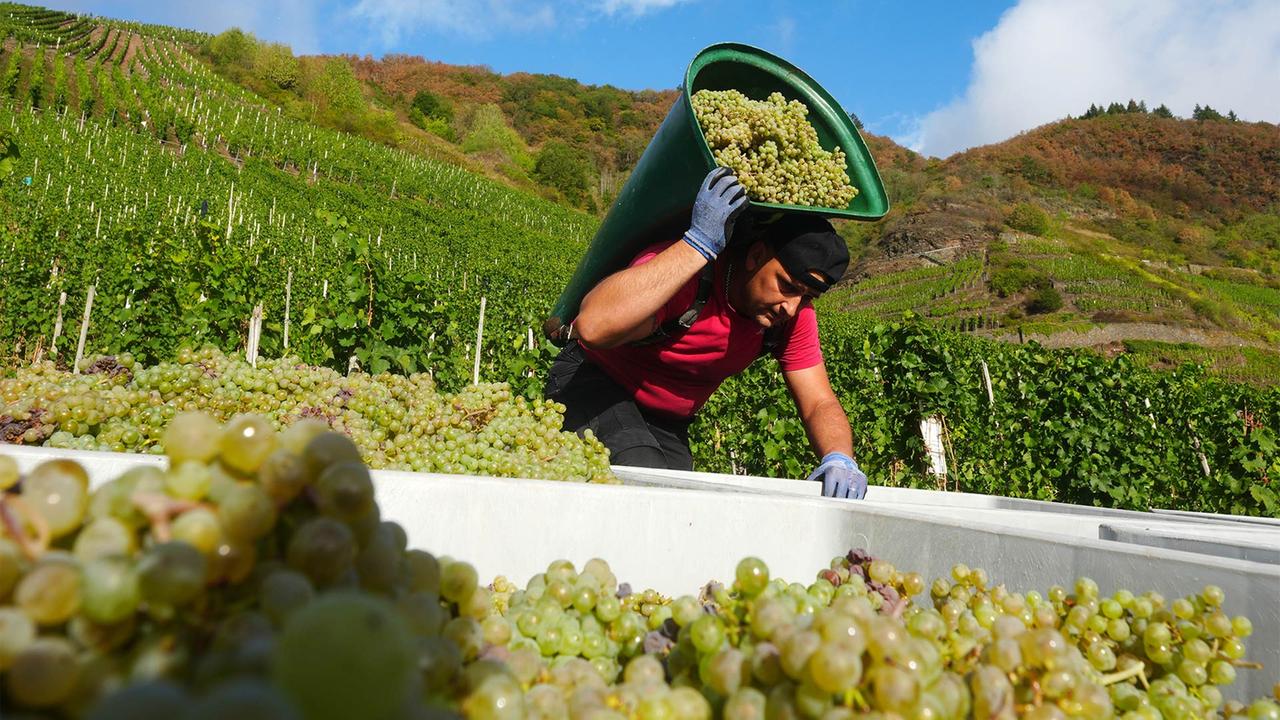
The harvest itself commenced earlier than usual in many regions, driven by the rapid ripening fostered by the summer heat. Winemakers adopted a meticulous approach, carefully monitoring ripeness levels to ensure optimal balance between sugar, acidity, and aromatic maturity. The smaller berry size meant more labor-intensive picking, but the exceptional health and concentration of the fruit motivated the harvest teams. By mid-October, most regions had successfully brought in their crops, concluding a season that was defined by its climatic extremes and the remarkable resilience of the vines. The story of the 2026 vintage, therefore, is one of nature’s formidable challenges met with expert viticultural management, culminating in a harvest that prioritizes quality over sheer volume.
Supporting Data: The Numbers Behind the Quality
The initial quantitative assessments from leading German viticultural bodies paint a clear picture of a vintage characterized by lower yields, albeit with nuanced regional and varietal variations. Both the German Wine Institute (DWI) and the Federal Statistical Office (Destatis) have released their preliminary findings, providing crucial insights into the 2026 harvest.
According to the German Wine Institute (DWI), the total volume of the 2026 harvest is projected to be approximately 20 percent below the ten-year average of 8.7 million hectoliters. This translates to an estimated yield in the range of 6.9 to 7.0 million hectoliters. To put this into historical context, DWI spokesperson Ernst Büscher noted that such a low yield has not been observed since 2010, when the total production reached 7.1 million hectoliters. The previous year, 2025, saw a slightly higher yield of 7.7 million hectoliters, underscoring the significant dip in 2026. This pronounced reduction is a direct consequence of the dry and hot summer, which favored concentration over volume.
The Federal Statistical Office (Destatis), in its earlier assessment based on estimates as of September 20th, before the full completion of the grape harvest, projected a slightly less severe reduction. Destatis reported an expected harvest of 8.0 million hectoliters, which would represent a four percent decrease compared to the average of the preceding five years (2020 to 2025). While 8.0 million hectoliters would still be an improvement over the 7.7 million hectoliters recorded in 2025, it remains below the long-term averages. The slight difference between the DWI and Destatis figures can likely be attributed to the timing of their respective data collection, with DWI’s post-harvest prognosis offering a more finalized picture. The Destatis estimate translates to a reduction of approximately 30 million liters compared to the recent five-year average.
Breaking down the harvest by grape variety reveals interesting trends. Approximately 70 percent of the total harvest consists of white wine grapes (Weissmost), with the remaining 30 percent being red wine grapes. Notably, the iconic Riesling, Germany’s flagship grape, along with Dornfelder, a prominent red variety, are expected to show "Zuwächse" (increases) in their harvest volume compared to some other varieties. This resilience can be attributed to several factors, including the inherent adaptability of these varieties to certain soil types and growing conditions, as well as strategic vineyard management. Conversely, traditional varieties such as Grüner Silvaner and Blauer Portugieser are anticipated to yield "Rückgänge" (decreases), possibly due to their specific physiological responses to drought stress or their prevalence in regions more severely impacted by water scarcity.
Regional variations further highlight the diverse impact of the 2026 growing season. According to Destatis, some of Germany’s largest and most renowned wine regions experienced comparatively larger harvests than the previous year. Rheinhessen, the Pfalz, and Baden reported increases, suggesting that factors such as soil composition with better water retention capabilities, or a higher proportion of older, deep-rooted vines, provided a buffer against the drought. In contrast, regions like the Mosel and Franken recorded "Rückgänge" (decreases). The steep, slate-rich slopes of the Mosel, while offering excellent drainage and sun exposure, can sometimes struggle with water retention during prolonged dry spells, while certain soil types in Franken may also have been more susceptible to the drought’s effects. These regional disparities underscore the microclimatic complexities and the varied responses of different viticultural landscapes to the overarching weather patterns of 2026.
Official Responses: Industry Leaders Weigh In
The German viticultural community, represented by its leading institutions, has provided a consistent message regarding the 2026 harvest: a challenging year for quantity, but an exceptional one for quality. This sentiment is echoed across official statements and industry communications, highlighting both the difficulties faced and the ultimate success in producing a high-caliber vintage.
Ernst Büscher, spokesperson for the German Wine Institute (DWI), has been a key voice in articulating the industry’s perspective. "The winemakers here are expecting comparatively small overall quantities, but of top qualities," Büscher reiterated, emphasizing the positive trade-off. He elaborated on the reasons behind this qualitative success, pointing to the dry and hot summer conditions. "Trockenheit und Hitze haben zudem kleinere Weintrauben mit konzentrierten Inhaltsstoffen reifen lassen," he noted, explaining that the smaller grape size naturally leads to a higher concentration of sugars, acids, and aromatic compounds, which are the building blocks of complex and flavorful wines. This natural concentration, a direct result of environmental stress, is precisely what contributes to the "Spitzenqualitäten" (top qualities) anticipated for the 2026 vintage.
Büscher also provided crucial insights into the regional differences and the resilience of the vines. He specifically highlighted the role of vine age and soil characteristics in mitigating the effects of the drought. "Insbesondere ältere Reben haben sich in den letzten Jahren an die zunehmende Trockenheit in den Weinregionen angepasst und dank ihrer tiefen Wurzeln die diesjährige Dürre erstaunlich gut überstanden," he explained. Older vines, with their established and extensive root systems, were better able to tap into deeper water reserves, making them more resilient to surface-level drought. This adaptability, he stressed, is a testament to the long-term health and management of many German vineyards.
However, Büscher also acknowledged the challenges faced by other vineyard types. "Jüngere Weinberge und Anlagen auf leichten Böden hätten dagegen sichtbar unter der Wasserknappheit gelitten. Sie mussten, wenn möglich, bewässert werden." This statement underscores the increasing need for targeted irrigation in vulnerable areas, particularly for younger vines that have not yet developed deep root systems, or those planted on sandy or gravelly soils with poor water retention. This highlights a growing operational consideration for many vintners.
The Federal Statistical Office (Destatis) corroborated the DWI’s assessment regarding quality. In its press release, Destatis stated that "Großflächige Schäden durch Wetterereignisse seien 2026 ausgeblieben und die Trauben ließen einen qualitativ guten Jahrgang erwarten." This confirms that despite the challenging dry conditions, there were no widespread destructive weather events like severe hailstorms or unseasonal frosts that could have compromised the overall health and quality of the grapes. The absence of such damage further solidified the potential for a high-quality vintage.
Collectively, these official responses convey a message of pragmatic optimism. While the reduced yield presents economic challenges, the focus remains firmly on the exceptional quality that has been achieved. The 2026 vintage is being presented as a testament to the skill and adaptability of German winemakers, who have successfully navigated a difficult growing season to produce wines that are expected to delight discerning consumers worldwide. The insights also provide a glimpse into the ongoing evolution of viticultural practices in Germany, driven by the imperative to adapt to a changing climate.
Implications: Navigating a Future of Premium and Adaptation
The 2026 German wine harvest, characterized by its significantly reduced volume but exceptional quality, carries profound implications for the industry, consumers, and the future trajectory of viticulture in Germany. This vintage serves as a poignant case study, highlighting both the resilience of traditional practices and the urgent need for adaptive strategies in the face of climate change.
Economic Ramifications:
The most immediate consequence of a smaller harvest is its economic impact. With an estimated 20 percent reduction in volume compared to the ten-year average, the supply of German wine will be constrained. This scarcity is likely to translate into higher prices for consumers, particularly for the most sought-after wines and regions. For wineries, especially smaller and medium-sized operations, the reduced yield means less product to sell, potentially impacting their overall revenue and profitability. While the "Spitzenqualitäten" might command premium prices, the sheer volume reduction could still pose financial pressures. This scenario might also encourage wineries to focus more intently on direct sales, wine tourism, and developing loyal customer bases to secure stable income streams. The export market, a crucial component for German wine, will also feel the pinch, with less wine available for international distribution. However, a reputation for exceptional quality in a limited vintage could also elevate Germany’s standing as a producer of fine wines, potentially attracting new, high-value consumers.
Climate Change Adaptation: A New Normal?
The 2026 vintage, marked by "Trockenheit und Hitze," is not an isolated incident but rather a symptom of broader climate trends impacting viticulture globally. This year’s experience reinforces the urgent need for German winemakers to continue adapting their practices to a warmer, drier climate with more frequent extreme weather events.
- Water Management: The need for "Bewässerung" (irrigation) for younger vines and those on lighter soils, as highlighted by the DWI, will become increasingly critical. This necessitates investment in irrigation infrastructure, potentially challenging traditional regulations that historically limited irrigation in some regions. Sustainable water sourcing and efficient application methods will be paramount.
- Vineyard Management: Practices such as canopy management (optimizing leaf cover to shade grapes and reduce water evaporation), improved soil health (increasing organic matter to enhance water retention), and cover cropping (planting vegetation between vine rows to improve soil structure and moisture) will gain further importance.
- Varietal Selection: While traditional varieties like Riesling have demonstrated resilience, ongoing research into more drought-resistant grape varieties or clones might become more prevalent. There could be a gradual shift in varietal mix in certain regions to better suit changing conditions, though maintaining regional typicity remains a high priority.
- Research and Development: Investment in viticultural research will be crucial for developing new strategies, from genetic improvements in vines to advanced meteorological forecasting models that allow for proactive management.
Consumer Perspective and Market Perception:
For consumers, the 2026 vintage will likely be a year to seek out. The promise of "Spitzenqualitäten" suggests wines with remarkable depth, complexity, and longevity. Wine enthusiasts will be keen to explore how the unique growing conditions have shaped the character of their favorite German wines. This could lead to an increased appreciation for the nuances of vintage variation and the impact of climate on wine production. However, higher prices might also make these wines less accessible to a broader market, potentially shifting consumption patterns.
The Future of German Viticulture:
The 2026 harvest underscores the ongoing evolution of German viticulture. It highlights the deep knowledge and adaptability of its winemakers, who have skillfully managed to produce high-quality wines even under challenging circumstances. The experience of this vintage will undoubtedly feed into future decision-making, accelerating the adoption of sustainable practices and climate-resilient viticulture. It reinforces Germany’s position not just as a producer of world-class wines, but also as a leader in adapting traditional agriculture to modern environmental challenges. The story of the 2026 German vintage is ultimately one of nature’s formidable tests, met with human ingenuity and a steadfast commitment to quality, promising a collection of wines that will be both a pleasure to drink and a testament to the resilience of an enduring industry.





















