The Unseen Champion: A Riddle in the Ring
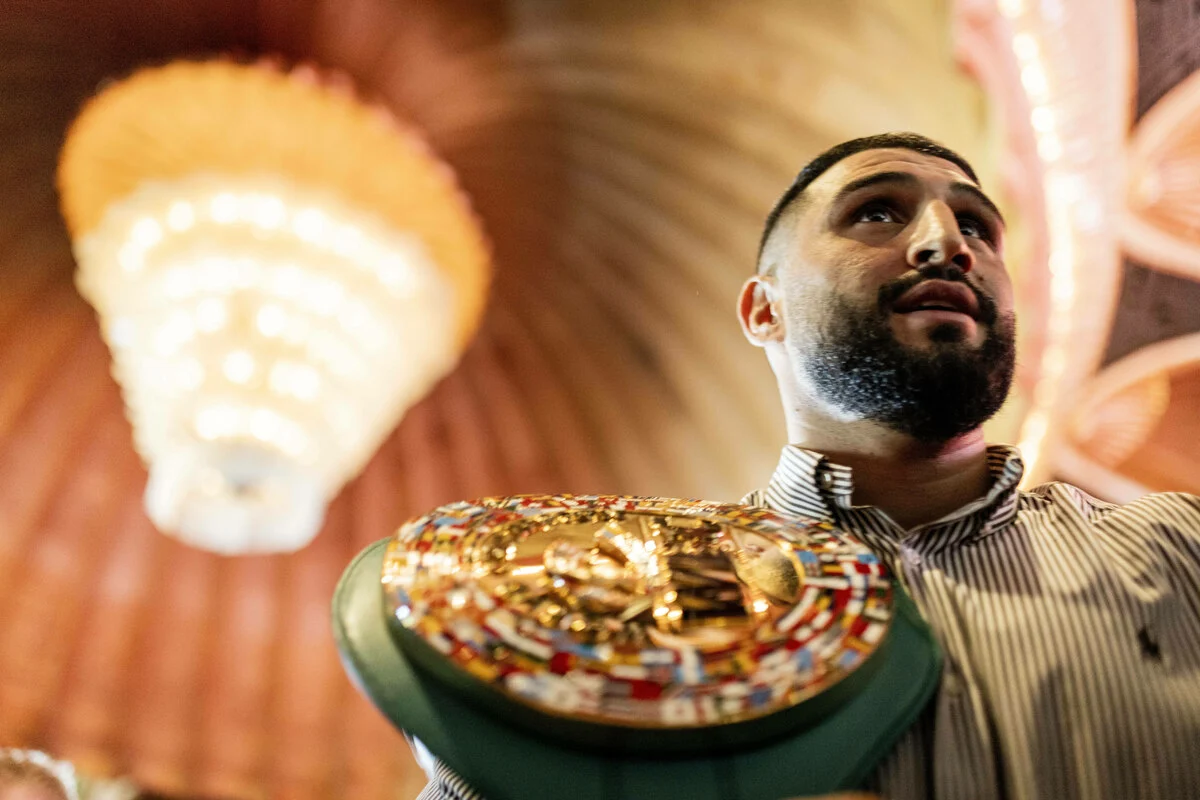
In the fiercely competitive world of professional boxing, the heavyweight division has always held a special, almost mythical, allure. It’s where legends are forged, and national heroes are crowned. Germany, a nation with a rich, if sometimes complicated, boxing history, currently boasts a heavyweight champion who, by all accounts, should be a household name: Agit Kabayel. Yet, despite holding significant WBC heavyweight titles and positioning himself as a mandatory challenger for the ultimate world crown, Kabayel remains largely unknown to the broader German public. This paradox forms the crux of a profound question: Why does a fighter of such caliber, born and raised in the heart of Germany, struggle for mainstream recognition?
A recent, informal survey conducted among eleven colleagues at the taz newspaper’s fourth floor yielded a telling result: only one person recognized the name Agit Kabayel. This anecdotal evidence, while not scientific, starkly illustrates the disparity between his professional achievements and his public profile. In the dry prose of Wikipedia, Agit Kabayel is defined as "a German professional heavyweight boxer. He is the current WBC Heavyweight Champion in this weight class" (referring to his status as a mandatory challenger and holder of significant WBC belts like the European and Continental Americas titles). In essence, he has accomplished what the celebrated Axel Schulz attempted three times without success: reaching the pinnacle of heavyweight boxing. More profoundly, he represents what Germany has arguably sought for over 90 years—a successor to the legendary Max Schmeling. American author Norman Mailer once eloquently captured the essence of such a champion, stating, "It is as if you are God’s big toe. There is nothing left with which to measure yourself." This sentiment perfectly encapsulates the unique position of a heavyweight champion, a figure who stands alone at the apex of his sport.
A Chronology of Underrated Excellence
Agit Kabayel’s journey to the summit of heavyweight boxing is one marked by consistent victories and an unwavering dedication to his craft, yet it has unfolded largely outside the glare of mainstream media.
Early Life and Formative Years
Born in Leverkusen in 1992, Agit Kabayel grew up in Wattenscheid, a district of Bochum in the industrial heartland of Germany’s Ruhrgebiet. His roots lie in a Kurdish family, a detail that, as the article later posits, may play a significant role in his struggle for broader recognition within a predominantly "white majority society." The Ruhrgebiet, known for its working-class ethos and diverse population, has historically been a melting pot of cultures. It’s a region where grit and determination are valued, qualities that Kabayel has demonstrated in abundance throughout his career. His upbringing instilled in him a resilient spirit, a fundamental requirement for any aspiring boxer.
The Professional Ascent
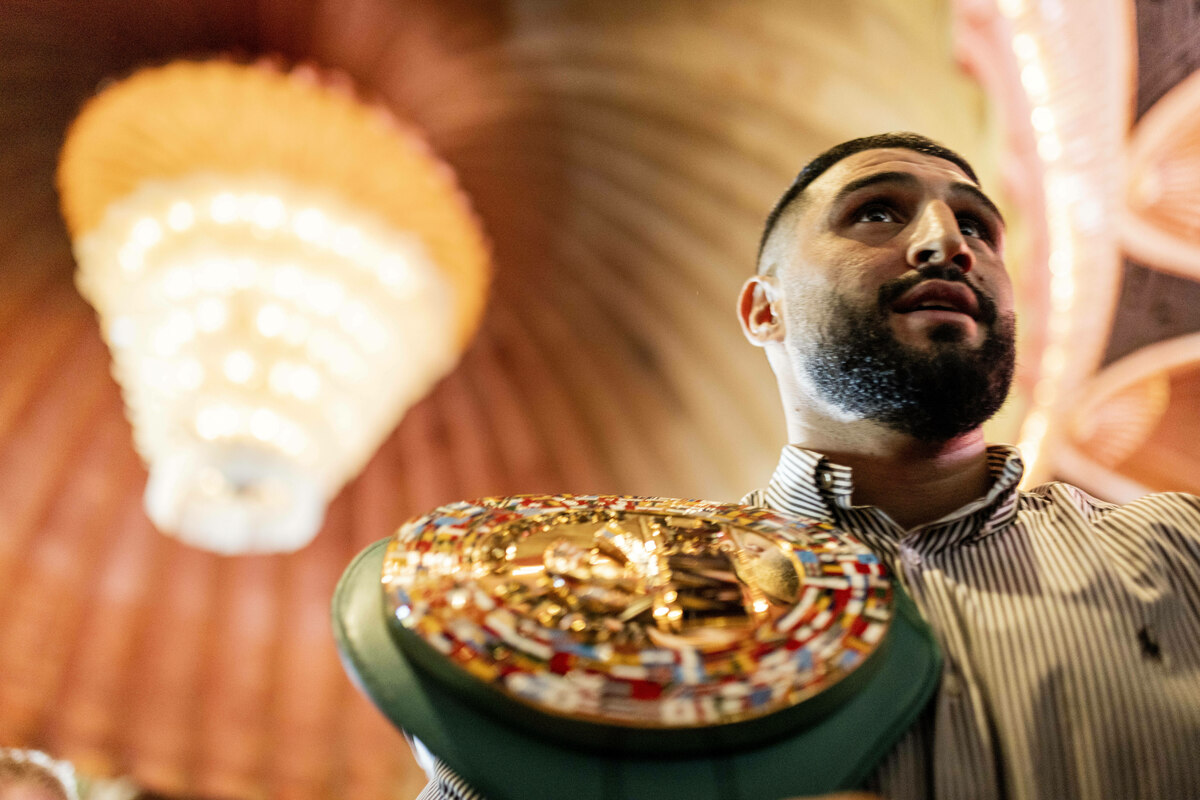
Kabayel made his professional debut in 2011 and quickly established himself as a force to be reckoned with. His career trajectory has been nothing short of impressive, maintaining an undefeated record through numerous bouts. He systematically climbed the ranks, accumulating regional and continental titles that underscored his burgeoning talent. Among his most significant achievements was capturing the WBC European Heavyweight title, a prestigious belt that serves as a crucial stepping stone to world championship contention. He defended this title successfully multiple times, solidifying his reputation as one of Europe’s premier heavyweights.
His recent victory over the formidable Arslanbek Makhmudov in December 2023 was a watershed moment. This bout was a WBC final eliminator, meaning the winner would become the mandatory challenger for the coveted WBC World Heavyweight Championship, currently held by Tyson Fury. Kabayel’s dominant performance against Makhmudov, who was previously undefeated and considered a dangerous knockout artist, catapulted him into the elite tier of heavyweight boxing. By securing this mandatory challenger status, Kabayel is not just a WBC champion, but the designated challenger for the undisputed WBC world title, placing him at the very pinnacle of the division. This achievement is a testament to his skill, discipline, and strategic fighting style, which combines power with astute ring generalship.
The Megafight: A Stadium Awaits
On November 28th, Agit Kabayel is set to defend his WBC title in what promises to be a spectacular event. His opponent is the undefeated Albanian boxer, Nelson Hysa. The significance of this fight extends beyond the ring. Originally, the bout was slated to take place in a smaller arena in Oberhausen. However, due to overwhelming demand and the sheer scale of interest, the event has been relocated to a football stadium in Düsseldorf. This move is a clear indicator of Kabayel’s drawing power within certain communities and among boxing aficionados, even if it hasn’t fully translated into mainstream German recognition. The stadium setting underscores the magnitude of the event, placing Kabayel on a stage befitting a fighter of his stature. It’s an opportunity for him to not only defend his title but also to potentially break through the barrier of anonymity and finally command the national attention his achievements warrant.
Supporting Data: The Enduring Allure and Societal Reflections
The narrative of Agit Kabayel’s under-recognition prompts a deeper examination of the boxing world, its historical significance, and its intricate relationship with society.

The Pantheon of Heavyweights
Heavyweight champions occupy a unique place in sports lore. Their names echo through history, synonymous with raw power, courage, and often, profound cultural impact. Muhammad Ali, Joe Louis, Evander Holyfield, Mike Tyson, George Foreman, Jack Johnson, Rocky Marciano, Joe Frazier, Sonny Liston – these are names etched into eternity. They transcended sport, becoming symbols of aspiration, resistance, and national pride. In this revered lineage, Germany has one true icon: Max Schmeling. Schmeling’s fights against Joe Louis in the 1930s were not merely boxing matches; they were global events imbued with geopolitical significance, reflecting the clash of ideologies on the eve of World War II. Post-war, Schmeling remained a figure of integrity and sportsmanship, a solid piece of nature embodying German resilience.
More recently, the Klitschko brothers, Wladimir and Vitali, though Ukrainian, achieved immense popularity and media presence in Germany. Their articulate demeanor, strategic prowess, and dominance in the division made them adopted heroes, significantly boosting boxing’s profile in the country. Their success highlights how media savvy and a certain public persona can elevate boxers to superstar status, regardless of their nationality, if they resonate with the German audience.
The Enduring Questions: Why Boxing? Why Men? Why Heavyweight?
The fascination with boxing itself is a complex phenomenon. American author Joyce Carol Oates, in her profound essays on the sport, articulated its essence by stating, "I can accept the idea that life is a metaphor for boxing." This quote beautifully encapsulates the primal appeal of the sport, mirroring life’s struggles, triumphs, and the solitary nature of ultimate confrontation. The ring becomes a microcosm of existence, where individuals face their fears and push the limits of their endurance.
The question of "Why men?" in the context of mainstream heavyweight boxing recognition, while seemingly outdated, has historical roots. While women have participated in prizefighting from its early days, they were systematically marginalized and pushed out of the professional arena during the late 19th and early 20th centuries, a period often referred to as the Fin de Siècle. This historical exclusion entrenched the perception of boxing, particularly heavyweight boxing, as a male-dominated spectacle, shaping public perception for generations. Although women’s boxing has seen a resurgence and increased recognition in recent decades, the deeply ingrained historical narrative continues to influence mainstream perceptions of the "classic" heavyweight champion.

The "Why heavyweight?" question is perhaps the most difficult to fully unpack. There’s an undeniable allure to the biggest, strongest athletes facing off. The sheer power, the potential for a one-punch knockout, and the dramatic narratives often associated with the division seem to captivate audiences like no other weight class. It’s where the stakes feel highest, and the physical embodiment of raw human power is most evident.
The Legacy of the 1990s Boxing Boom
The 1990s marked a significant period for boxing in Germany, largely driven by broadcasters like RTL. This era saw the rise of figures like Henry Maske, Graciano Rocchigiani, and Axel Schulz. These boxers, particularly Maske and Schulz, became national icons. Maske, known for his gentlemanly demeanor and technical skill, captivated East German audiences, while Schulz, despite never winning a world title, became the "people’s champion," admired for his heart and tenacity. In the aftermath of German reunification, these fights took on a profound societal significance, often serving as a symbolic arena where the relationship between East and West Germans was metaphorically negotiated. The public, eager for new heroes and shared experiences, embraced these fighters, elevating them to a level of fame that transcended the sport itself. This period demonstrated the immense power of media promotion and a compelling national narrative in shaping public perception and creating sports superstars.
Official Responses and Societal Perceptions
While "official responses" in the traditional sense from government bodies or specific boxing federations are not the focus here, the broader societal reaction—or lack thereof—to Agit Kabayel’s success serves as a crucial indicator of underlying currents in German society.
The Fight for Acceptance
Boxing, throughout its history, has often been a sport where marginalized social groups have fought for acceptance and upward mobility. From Irish immigrants in 19th-century America to African Americans during the Civil Rights era, and various immigrant communities across Europe, the boxing ring has provided a platform for individuals to prove their worth, earn respect, and achieve success against societal odds. Agit Kabayel’s story is deeply embedded in this tradition. He is undoubtedly a star, not only within the Kurdish community from which he hails but also among Turkish and other migrant communities in Germany. For these groups, Kabayel represents a powerful symbol of aspiration, resilience, and success against the backdrop of challenges in a new homeland. He is "one of us," a source of immense pride and inspiration.

However, this fervent support within specific communities contrasts sharply with his relative invisibility to the broader "white majority society." This disparity highlights a critical issue: the ongoing struggle for integration and acceptance of individuals with non-traditional German names or backgrounds. The implicit bias, as the article suggests, is that "An Agit is not a Max or Axel." This isn’t necessarily a conscious rejection, but rather a subtle societal mechanism that determines who receives mainstream media attention, who is celebrated as a national hero, and whose story becomes part of the collective consciousness.
The boxing boom of the 1990s, with figures like Maske and Schulz, thrived on a clear national narrative – the negotiation of East and West German identities. For Agit Kabayel, the narrative is different, touching on themes of multiculturalism, immigration, and the evolving definition of German identity. For many in the majority, this narrative might be less immediately relatable or, perhaps, less consciously engaged with. His success, therefore, is celebrated within his immediate communities but struggles to transcend these boundaries and capture the imagination of a wider, more diverse national audience.
Implications: Identity, Integration, and the Future of German Boxing
Agit Kabayel’s story is more than just a boxing narrative; it’s a mirror reflecting contemporary Germany’s ongoing dialogue about identity, integration, and who gets to be a national hero.
Redefining German Identity in Sports
The lack of widespread recognition for a German-born, WBC heavyweight champion from a Kurdish background forces a critical look at what constitutes "German identity" in the public imagination, particularly in sports. Historically, national sporting heroes have often embodied a perceived core national identity. As Germany becomes increasingly diverse, the challenge lies in expanding this definition to embrace and celebrate talent from all backgrounds. Kabayel’s success on a global stage should, in an ideal world, be a source of national pride for all Germans. His struggle for recognition underscores that while Germany has made strides in multiculturalism, there remain implicit barriers to full acceptance and mainstream celebration for individuals whose names and backgrounds deviate from traditionally perceived norms. His journey highlights the need for a more inclusive understanding of national belonging and achievement.

Boxing as a Barometer of Societal Change
Boxing has consistently served as a raw and honest barometer of societal conditions. From its early days, it has offered a path to glory for the disenfranchised, a stage where individual merit can, theoretically, overcome social prejudice. In Kabayel’s case, the sport continues to be a battleground, not just for titles, but for the broader principles of integration and acceptance. His rise to prominence within his community, contrasted with his anonymity outside of it, illustrates the work that still needs to be done in fostering a truly inclusive society. The ring might be a place where one person proves their strength, but the reception outside the ropes reveals the strength (or weakness) of societal integration.
The Long Road Ahead for Agit Kabayel
As Agit Kabayel prepares for his stadium fight in Düsseldorf, the question lingers: Will this monumental event finally propel him into the national consciousness in the same way Max Schmeling or Axel Schulz once captured the hearts of millions? The relocation of his fight to a larger venue due to demand is a positive sign, indicating growing interest. However, true mainstream recognition requires more than just a big fight; it demands consistent media coverage, compelling narratives, and a public willingness to embrace new types of heroes.
The sad truth, as the original article poignantly concludes, is that many already know the answer. Despite his undeniable talent, his world-class achievements, and his dedication, the path to becoming a universally recognized German icon remains arduous for Agit Kabayel. It’s a path obstructed not by a lack of skill or heart, but by the subtle, yet powerful, forces of societal perception and the enduring, often unspoken, criteria for who gets to be "one of us." His fight, therefore, extends beyond the ropes, a continuous battle for acceptance, identity, and a rightful place in the pantheon of German sporting legends. The question is not if he will win in the ring, but if society is ready to see him as the champion he truly is.