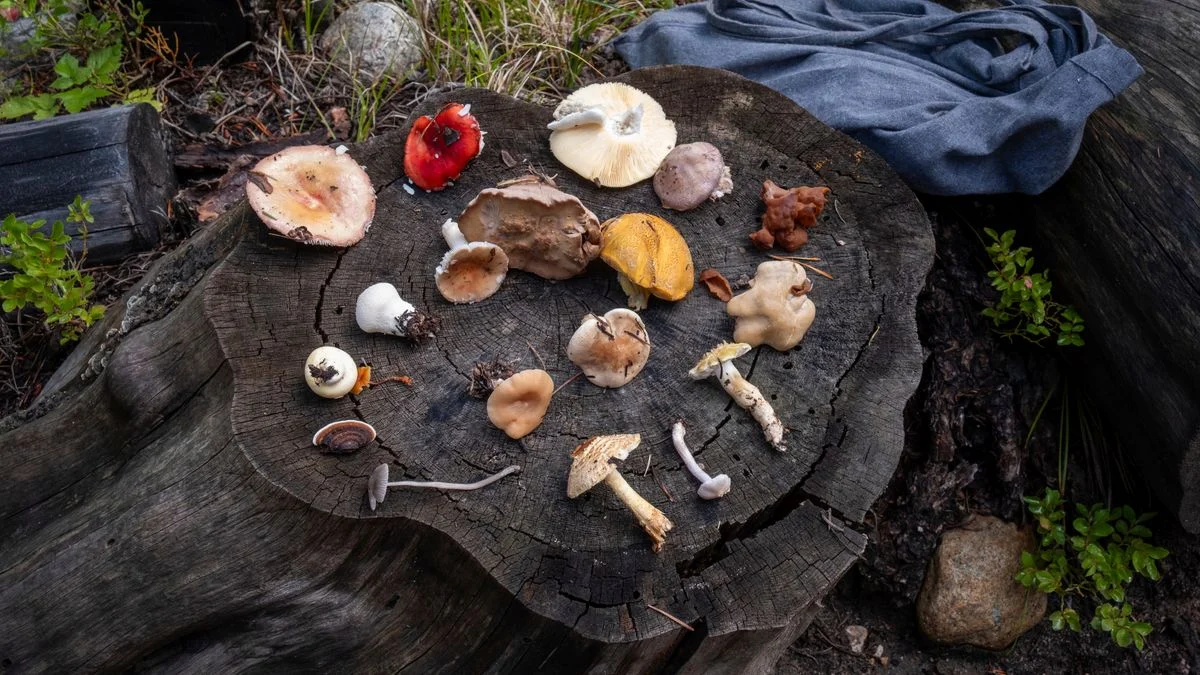
The lure of the forest floor—a tapestry of moss, decaying leaves, and hidden treasures—has captivated humanity for millennia. Yet, for every edible chanterelle or porcini sought by the keen-eyed forager, there exists a lethal doppelgänger lurking in the shadows. As interest in mushroom foraging surges across Europe and North America, health authorities are issuing urgent warnings: the margin for error in mycology is not just thin; it is often fatal.
Main Facts: The Anatomy of a Foraging Crisis
Foraging for wild mushrooms is a practice steeped in tradition, but it is one that requires a level of botanical precision that few casual enthusiasts possess. The primary danger lies in the uncanny physical resemblance between highly prized edible species and their toxic counterparts.
In many cases, the differences are microscopic or chemical rather than visual. For instance, the infamous Death Cap (Amanita phalloides) is frequently mistaken for edible species like the Paddy Straw mushroom (Volvariella volvacea) in its early "button" stage. When ingested, the toxins—specifically amatoxins—do not immediately trigger distress. Instead, they work insidiously, often causing a deceptive sense of recovery before launching a catastrophic assault on the liver and kidneys.
The global medical community defines this as the "False Recovery" phase. A patient may eat a toxic mushroom, suffer gastrointestinal distress that subsides within 24 hours, and believe the danger has passed. Meanwhile, the amatoxins are binding to RNA polymerase, effectively halting protein synthesis in the liver. By the time symptoms of organ failure appear, it is frequently too late for anything other than an emergency transplant.
Chronology: The Evolution of a Deadly Hobby
The history of mushroom poisoning is as old as civilization itself, but the modern context has shifted dramatically due to the digital age.
- Pre-20th Century: Foraging was a localized skill, passed down through generations of rural communities. The "rules of thumb" were strict and cultural, often relying on local knowledge rather than scientific classification.
- 1950s–1980s: The rise of formal mycology led to better classification, but also a disconnect between academic science and the general public. Poisonings were largely attributed to accidental consumption by children or those in extreme poverty.
- 2000s–Present: The "Back-to-the-Land" movement, compounded by social media trends and the rise of foraging influencers, has brought thousands of inexperienced foragers into the woods.
- 2020–2024: The COVID-19 pandemic catalyzed a "foraging boom." With increased time spent outdoors, emergency rooms reported a sharp uptick in calls to poison control centers. The democratization of information, ironically, has led to a rise in "crowdsourced identification," where amateurs use apps or social media forums to identify specimens—a practice that experts describe as a "lethal gamble."
Supporting Data: The Statistics of Risk
While comprehensive global data is difficult to aggregate due to underreporting, the statistics provided by regional poison control centers offer a sobering look at the risk profile.
In Central Europe, for example, studies indicate that approximately 10 to 15 percent of all mushroom-related hospitalizations involve life-threatening species. The economic impact is equally significant; a single case of amatoxin poisoning requiring intensive care and a potential liver transplant can cost the healthcare system hundreds of thousands of euros.
Data from the North American Mycological Association (NAMA) suggests that the vast majority of severe poisonings occur due to:
- Species Misidentification: Mistaking a toxic species for a look-alike.
- Environmental Contamination: Consuming mushrooms that have absorbed heavy metals or pesticides from their surroundings.
- Preparation Errors: Failing to cook mushrooms that are toxic when raw but edible when processed correctly.
Perhaps most tellingly, age-specific data shows a bimodal distribution: toddlers are at the highest risk for accidental ingestion, while adults aged 40–60 represent the largest demographic for foraging-related poisoning.
Official Responses and Safety Protocols
Health agencies, including the European Food Safety Authority (EFSA) and various national mycological societies, have moved to standardize safety protocols. The consensus is clear: if there is any doubt, there is no doubt.
"The rule of thumb is not a rule," says Dr. Elena Vance, a toxicologist specializing in mycology. "There is no ‘silver bullet’ test—no silver spoon that turns black when dipped into a toxic mushroom, and no color test that applies to all species. The only way to be safe is through rigorous, expert-level identification."
Official guidance now emphasizes:
- The Three-Characteristic Rule: Never consume a mushroom unless you can identify at least three distinct characteristics—cap, gills/pores, and stem structure—that match verified edible species.
- Spore Prints: Utilizing the color of a spore print as a secondary diagnostic tool.
- The "No-Go" List: Beginners are urged to avoid all gilled mushrooms entirely, as the most dangerous toxic species (like the Amanita genus) possess gills.
Furthermore, hospitals are increasingly training staff on the "Amanita Protocol," a regimen of aggressive hydration, activated charcoal, and the administration of silibinin (a derivative of milk thistle) to mitigate liver damage if the patient presents early enough.
Implications: The Ethics of Foraging
The surge in popularity of foraging has broader implications for both public health and environmental stewardship. When thousands of amateur foragers descend upon a forest, they often disrupt fragile ecosystems.
The Digital Misinformation Problem
The proliferation of AI-powered identification apps has created a false sense of security. While these algorithms are improving, they are currently incapable of accounting for the subtle regional variations, soil chemistry, or the specific stage of a mushroom’s growth cycle. Relying on an app to make a life-or-death decision is viewed by mycologists as a form of "digital negligence."
Environmental Impact
Beyond human safety, the over-harvesting of wild fungi threatens the subterranean mycelial networks that support entire forest ecosystems. In some regions, authorities have begun implementing permit systems to limit the number of mushrooms a single person can harvest, shifting the focus from "collection" to "observation."
The Cultural Shift
There is a growing call to return to apprenticeship models. Rather than relying on internet tutorials, experts argue that foragers should seek out local mycological societies where they can handle specimens under the supervision of seasoned experts. This shift prioritizes slow, experiential learning over the rapid, consumption-based mindset encouraged by modern social media.
Conclusion: A Call for Caution
The forest remains a sanctuary, a place of wonder and profound biodiversity. However, the bounty it provides is not to be taken lightly. As we navigate a world where information is abundant but wisdom is rare, the imperative for the modern forager remains unchanged: curiosity must be tempered by caution, and expertise must be earned through years of patient study.
To eat from the wild is to enter into a complex dialogue with nature. It is a relationship defined by mutual respect, where the price of a mistake can be the ultimate one. Whether you are an enthusiast seeking the next culinary delight or a scientist tracking the impact of environmental change, the lesson of the toxic mushroom remains universal: in the wild, the most beautiful specimens are often the most dangerous. Proceed with knowledge, proceed with humility, and above all, prioritize safety over the satisfaction of the harvest.
For those interested in learning more about the intricacies of mycology and the essential safety protocols for foraging, access to high-quality, verified scientific data is crucial. Continued professional development in this field is supported by organizations that provide detailed digital archives and expert-led resources. Ensure you are informed by sources that prioritize rigorous evidence-based information over anecdotal internet trends.