By Science Editorial Desk
Updated: October 13, 2026
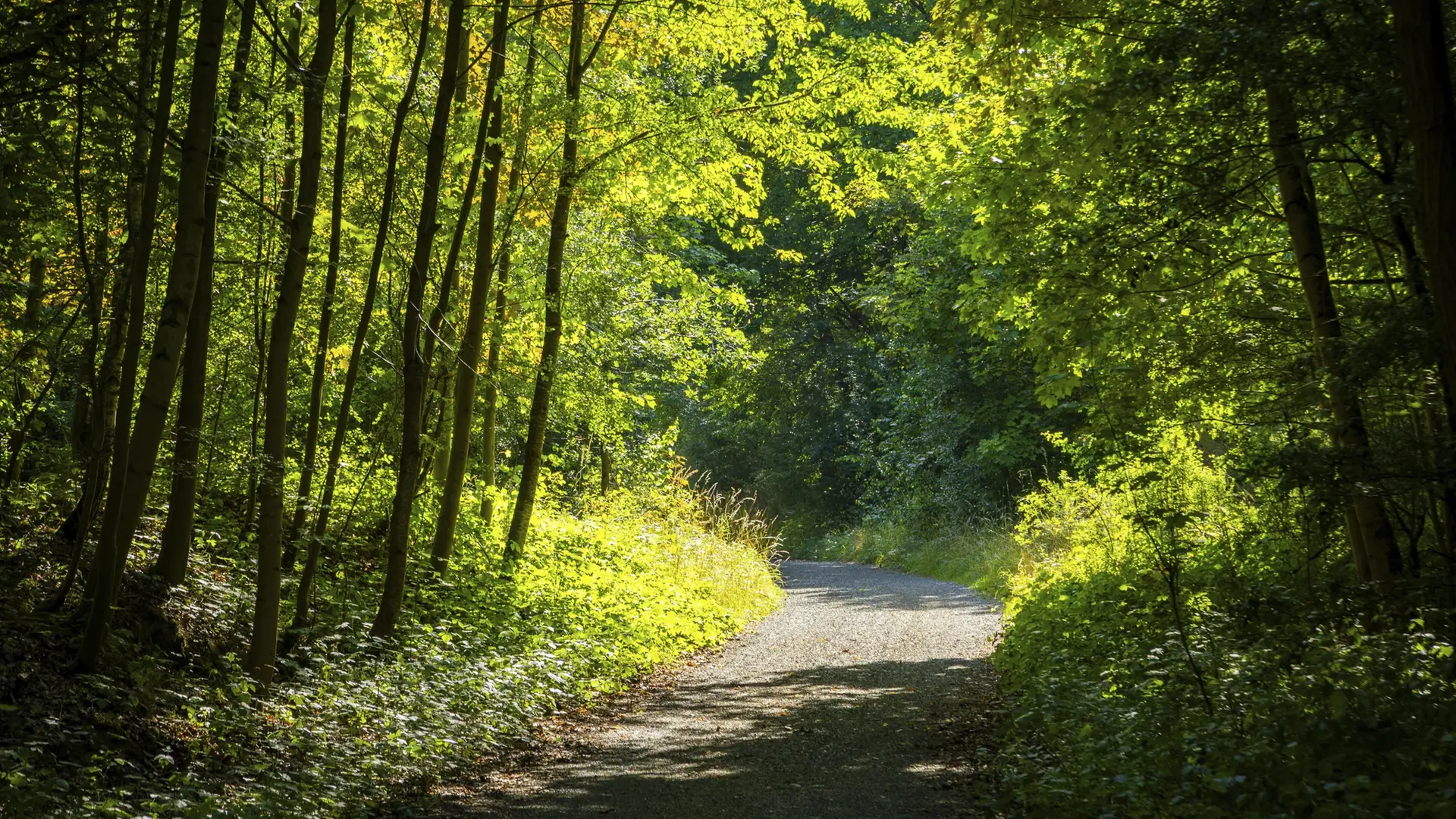
In the ongoing struggle to preserve biological diversity, a critical shift in perspective is taking place. For years, the standard metric for conservation success in Germany and across the European Union has been the total land area designated as a "protected zone." However, a new, provocative discussion paper released by the National Academy of Sciences Leopoldina in Halle suggests that this quantitative approach is fundamentally flawed. According to the academy, the future of Germany’s ecosystem depends not on the mere existence of protected lines on a map, but on the intensity, quality, and management philosophy applied within those boundaries.
The core argument of the Leopoldina researchers is stark: protection status is not a synonym for restoration. To truly halt the decline of species, Germany must pivot toward "process-oriented" conservation—a move that requires more wilderness, buffer zones, and a more rigorous enforcement of environmental legislation.
The Quantitative Trap: Why 30 Percent Isn’t Enough
Germany, in alignment with broader European Union mandates, has committed to a ambitious goal: by 2030, at least 30 percent of the nation’s land and marine areas must be under effective protection. While this goal is essential, the Leopoldina paper warns that it risks becoming a "paper tiger."
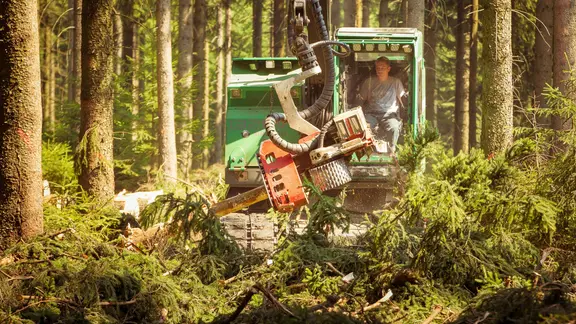
If a protected area is heavily managed, fragmented by infrastructure, or continues to be subject to industrial-scale forestry or agriculture, its biological utility is severely diminished. The researchers argue that current practices are failing because they lack a unified, professional management strategy. A "protected area" in name only, which lacks clear scientific objectives or legal enforcement, cannot serve as a refuge for threatened species.
Understanding "Process Protection": Letting Nature Take the Lead
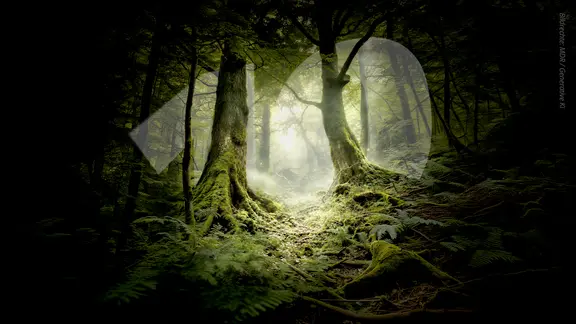
Central to the Leopoldina’s recommendations is the concept of "process protection" (Prozessschutz). This philosophy advocates for a hands-off approach, allowing ecosystems to develop, evolve, and die according to their own natural rhythms. In these designated wilderness zones, human intervention is stripped to an absolute minimum.
The Mechanics of Wilderness
In a true wilderness area, the traditional tools of forest management are abandoned. This means:
- No Commercial Extraction: Forestry, hunting, and fishing are strictly prohibited.
- Structural Complexity: Deadwood is left to decompose on the forest floor, providing essential habitats for fungi, insects, and specialized avian species.
- Natural Disturbance: Events such as windthrow (trees being knocked over by storms) or localized bark beetle outbreaks are viewed as integral parts of the forest’s lifecycle rather than disasters to be mitigated.
- Infrastructure Exclusion: No new roads, buildings, or overhead power lines are permitted, ensuring that the landscape remains unfragmented.
This approach creates "retreat spaces" for biodiversity. When the human thumb is removed from the scale, the complexity of the ecosystem often increases, allowing species that have been pushed to the brink by human activity to re-establish stable populations.
The Success Story: Königsbrücker Heide
If there is a blueprint for the future of German conservation, it is the Königsbrücker Heide, located northeast of Dresden. Spanning roughly 5,600 hectares, this area serves as a living laboratory for what happens when humans step back.
Originally a military training ground, the area was converted into a protected wilderness zone where natural processes are largely left to themselves. The results have been nothing short of transformative. Today, the region supports a thriving ecosystem where apex predators like the wolf roam freely, and keystone species such as beavers and otters have reshaped the hydrological landscape.
In 2023, the International Union for Conservation of Nature (IUCN) officially recognized the Königsbrücker Heide as a premier German wilderness area. It serves as proof that if given the space and time, nature has an incredible capacity for self-healing.
The Dichotomy: Wilderness vs. Cultural Landscapes
The Leopoldina paper is careful to distinguish between the need for "wildness" and the need to preserve "cultural landscapes." Germany is a country shaped by centuries of human activity, and many of its most biodiverse areas—such as species-rich meadows, orchards, and traditional pastures—are, in fact, artifacts of human land use.
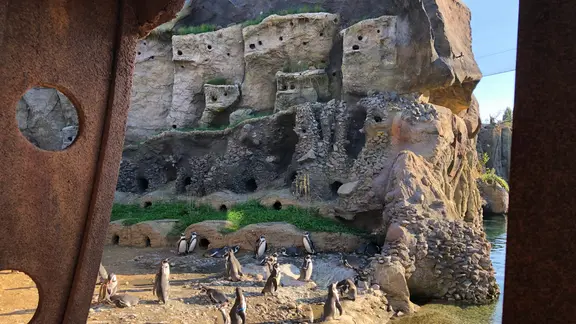
These cultural landscapes require a different kind of management. They cannot be left entirely to "wild" succession, as the unique flora and fauna adapted to these environments would be outcompeted by dense forests if left unchecked. The researchers emphasize that for these areas, the goal is "sustainable development" and maintaining the specific conditions—such as periodic grazing or mowing—that allow rare species to survive.
Statistical Reality: A Bleak Outlook for Central Germany
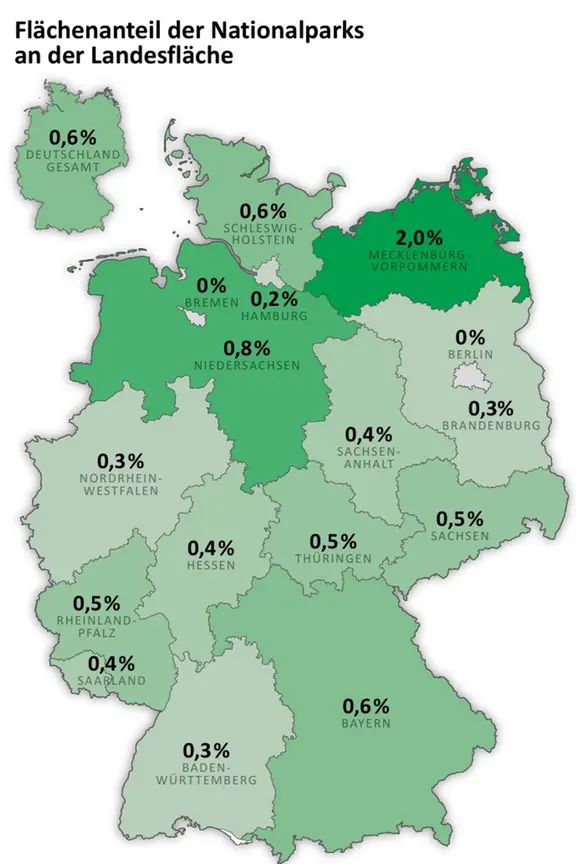
The data provided by the Leopoldina highlights a significant deficit in the current state of German conservation. Currently, only 0.6 percent of Germany’s total land area is designated as a National Park. When looking at marine territories, the situation is even more precarious: only one percent of the North and Baltic Sea areas are fully exempt from human usage.
The situation in Central Germany is particularly concerning:
- Thuringia: National parks account for approximately 0.5 percent of the land.
- Saxony: Also sits at roughly 0.5 percent.
- Saxony-Anhalt: Lags behind at approximately 0.4 percent.
Prominent parks like the Hainich in Thuringia and the cross-border Harz National Park are undoubtedly valuable, but the total surface area remains far below what is required to maintain ecological connectivity and resilience against the accelerating climate crisis.
Implications for Policy: A Roadmap for Change
The Leopoldina does not merely present a critique; it provides a actionable roadmap for policymakers. The academy’s primary recommendation is a significant expansion of "zero-use zones."
Immediate Policy Recommendations:
- Public Forest Conversion: At least 10 percent of all forests currently held in public ownership should be permanently removed from commercial use and transitioned into wilderness areas.
- Marine Null-Zones: Similarly, 10 percent of marine areas must be designated as strictly protected, where fishing, shipping, and infrastructure development are entirely banned.
- Unified Management: Establishing a standardized, nationwide management framework that prioritizes ecological integrity over regional economic interests.
The Broader Context: Why Now?
The urgency of this discussion is underscored by the broader scientific community. The recent, unexpected passing of renowned biodiversity researcher Josef Settele on October 9, 2026, has cast a somber shadow over the German environmental discourse. Settele was a vocal advocate for the complex interplay between human society and the natural world, and his work served as a reminder that biodiversity loss is not just an abstract data point—it is a fundamental threat to the stability of the food webs that sustain human life.

Furthermore, public interest in the state of the German forest remains high. Recent debates, including those explored in popular science media regarding whether "forests were better in the past," reflect a deep public anxiety about the state of the environment. Citizens are increasingly aware that the monocultural, timber-focused forests of the 20th century are no longer viable in the face of climate change.
Conclusion: A Scientific Impuls, Not a Mandate
It is important to note that the Leopoldina’s paper is a "discussion paper." It is designed to spark debate, provide intellectual fodder for policymakers, and challenge the status quo. It does not represent an official, binding statement from the Academy, but rather the collective expertise of its contributing scientists.
The message, however, is clear: we have reached the limits of a strategy based solely on the quantity of protected hectares. If Germany is to honor its commitment to the planet and secure a future for its native flora and fauna, it must move toward a model of quality. This means embracing the "wild," accepting the messiness of natural processes, and making the difficult, long-term political decisions to sacrifice short-term economic yields for the sake of long-term biological survival.
As we look toward 2030, the question is no longer "how much land have we protected?" but "how much of that land are we willing to leave alone?" The answer, according to the latest research, will define the ecological legacy of our generation.