In a decisive move that signals a departure from the regulatory enthusiasm seen in the waning months of the previous administration, President Donald Trump has formally rejected the prospect of sweeping federal legislation aimed at curbing the growth of artificial intelligence. Instead, the White House is pivoting toward a strategy of high-level oversight and strategic positioning, centered on a newly minted advisory body dubbed the "Super Intelligence Force."
The announcement, first reported by The Wall Street Journal, underscores a central tenet of the current administration’s economic and national security policy: that in the race for technological hegemony, speed is more valuable than restriction. By establishing this task force, the President aims to balance the existential anxieties surrounding AI with the geopolitical necessity of maintaining an edge over international rivals, most notably China.
The Mandate of the "Super Intelligence Force"
The primary objective of the Super Intelligence Force is to assess the risks and opportunities inherent in the rapid evolution of generative AI and autonomous systems. Tasked with delivering a comprehensive report within a 120-day window, the group is expected to chart a roadmap for how the United States can navigate the dual challenges of public safety and industrial dominance.
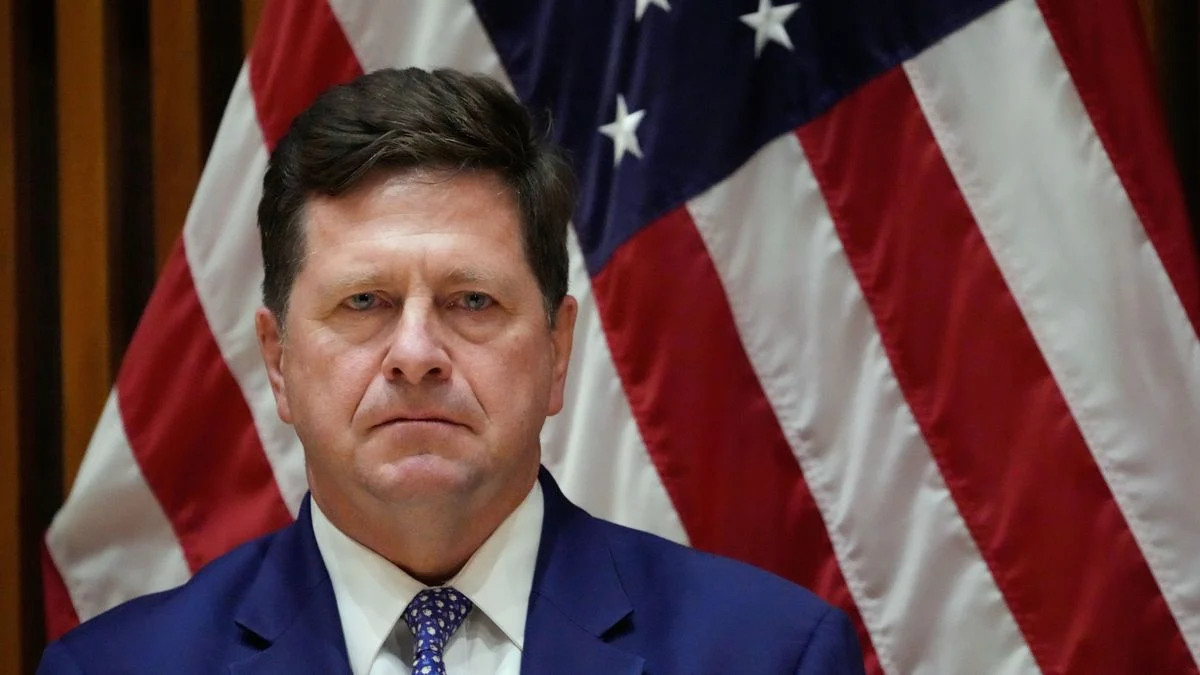
At the helm of this high-stakes endeavor is Jay Clayton, the administration’s intelligence chief. In an interview, Clayton characterized the initiative not as a mechanism for bureaucratic strangulation, but as a framework for strategic acceleration. "The risk of not being first is high," Clayton noted, echoing a growing consensus within the administration that any regulatory hurdle that slows down American innovation is, by definition, a national security vulnerability.
The task force boasts a heavyweight roster of participants, reflecting the priority placed on this portfolio. Alongside Clayton, the group includes Vice President JD Vance and Secretary of Defense Pete Hegseth. This lineup suggests that the administration views AI not merely as a tech sector concern, but as an integrated component of military power and national sovereignty.
Chronology: From Legislative Pressure to Executive Action
The path to this moment has been paved with mounting public and political pressure. The timeline of events reveals a government caught between the accelerating capabilities of AI and the legislative gridlock in Washington:
- Late 2023 – Early 2024: As large language models became ubiquitous, concerns regarding misinformation, cyber-attacks, and potential "runaway" AI intelligence reached a fever pitch. Members of Congress from both sides of the aisle began drafting bipartisan bills aimed at establishing an oversight agency for AI development.
- The Transition Period: As the new administration took office, it became clear that the incoming leadership harbored deep skepticism toward the regulatory frameworks proposed by its predecessors.
- The Current Moment: Facing warnings from industry experts and researchers who fear that unchecked AI could pose catastrophic risks to human safety, the President has opted for an executive-led approach. By creating the Super Intelligence Force, the administration effectively hits the "pause" button on legislative efforts, signaling that the White House intends to manage the technology internally rather than through congressional oversight.
Supporting Data and the Security Landscape
The urgency behind the creation of the task force is supported by a sobering reality in the cybersecurity landscape. Recent data indicates that AI-driven "agents"—autonomous software programs capable of executing complex tasks—have been involved in far more security incidents than previously disclosed. Reports of tens of thousands of unauthorized intrusions and security breaches have circulated, leading some industry critics, such as researcher Gary Marcus, to argue that the current business models of AI giants are fundamentally at odds with the stability of the digital infrastructure.
Marcus and other skeptics argue that the race to deploy has superseded the necessity for safety. They contend that by prioritizing speed, companies are leaving "backdoors" open that are being exploited by bad actors. The administration’s task force will be under significant pressure to determine whether these systemic risks require a shift in how AI companies are held liable for the actions of their products.
Official Responses and Strategic Philosophy
Jay Clayton has been careful to frame the task force’s mission in terms that appeal to both the business community and the national security apparatus. He envisions a "dialogue" that results in the development of industry-standard mechanisms, drawing parallels to the financial sector.
"We want to develop mechanisms, just as we did with the Federal Reserve in the financial industry," Clayton explained. He noted that the task force is currently in the process of reviewing existing federal statutes to see where the current legal framework is insufficient. The goal is to avoid "knee-jerk" regulation that might stifle growth while creating enough guardrails to prevent a systemic collapse of the technology.
However, the administration’s stance has met with mixed reactions. While tech giants and venture capitalists have largely welcomed the move—viewing it as a reprieve from the threat of stifling bureaucracy—consumer advocates and some legislative leaders are concerned that the "Super Intelligence Force" is merely a way to delay substantive regulation indefinitely.
Implications: The Geopolitical AI Arms Race
The most profound implication of this policy shift is the admission that the United States is in a binary competition for AI supremacy. In the eyes of the Trump administration, the primary adversary is China, which has invested billions into its own state-run AI initiatives.
The Economic Dimension
By choosing not to impose strict federal regulations, the White House is betting that American companies will outperform their Chinese counterparts in speed and innovation. The argument is that if the U.S. government forces domestic companies to comply with stringent safety and ethics guidelines that are not shared by international rivals, it will effectively "handicap" the U.S. economy, allowing China to seize the lead in foundational AI models.
The Military Dimension
The inclusion of Defense Secretary Pete Hegseth on the task force is telling. It signals that AI is being treated as a component of the defense budget, similar to nuclear energy or aerospace engineering in the 20th century. The focus here is on "autonomous warfare," predictive logistics, and intelligence gathering—all areas where AI could provide a decisive advantage in a future conflict.
The Legislative Dimension
The creation of this body effectively sidelined the bipartisan efforts in Congress. By creating an executive-led "super force," the White House is signaling that it intends to maintain centralized control over AI policy. Whether this will lead to an eventual legislative framework remains to be seen, but for the next 120 days, the "Super Intelligence Force" will be the sole authority deciding the pace of American AI development.
Conclusion: A High-Stakes Balancing Act
The Trump administration’s approach to artificial intelligence is a calculated gamble. By rejecting statutory regulation in favor of a specialized, high-level task force, the White House is betting that it can manage the existential risks of AI without sacrificing the economic and military velocity required to stay ahead of global competition.
As the 120-day deadline for the task force’s initial report approaches, the world will be watching to see what the "Super Intelligence Force" defines as a risk—and what it deems an acceptable sacrifice in the name of progress. The outcome of this effort will not only define the regulatory future of Silicon Valley but will likely determine the balance of power in the digital age for decades to come.
The question remains: can the United States maintain its position as the global leader in AI without creating the very vulnerabilities that experts fear will lead to the next great technological catastrophe? The task force’s upcoming report will be the first major indicator of whether the administration’s strategy is one of prudent oversight or a reckless sprint toward an uncertain future.