By Sports Editorial Staff
Updated: October 12, 2026
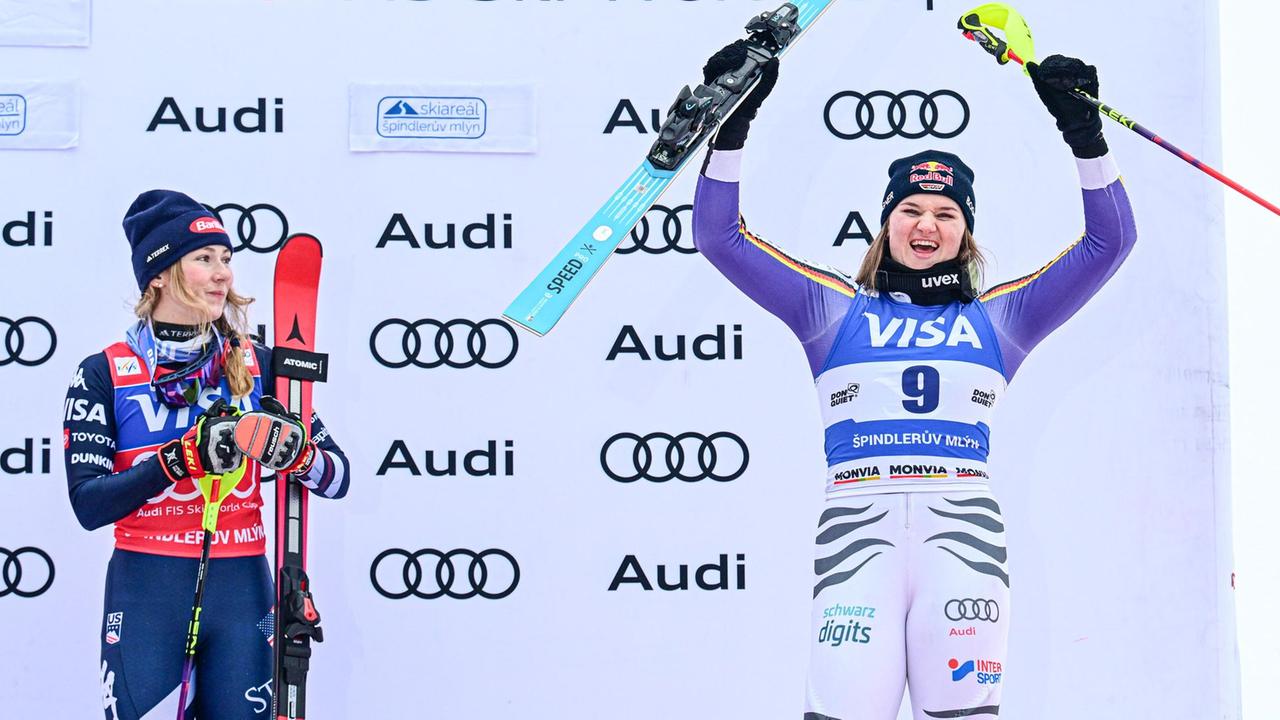
In the rarefied air of elite alpine skiing, where fractions of a second define the difference between legendary status and relative anonymity, 22-year-old Emma Aicher has emerged as a generational force. On Sunday, October 11, 2026, the German sensation was formally honored with the prestigious Bavarian Sports Prize, a testament to a career that—while still in its infancy—has already reshaped the landscape of the World Cup circuit.
Following a breakout 2025/2026 season that saw her consistently challenge the sport’s most established icons, Aicher now stands on the precipice of history. With the new season looming, the young star from the Berchtesgaden ski academy is no longer just a "promising talent"; she is the primary challenger for the Big Crystal Globe, the sport’s ultimate prize.
The Main Facts: A Meteoric Rise
The numbers from the previous season tell a story of breathtaking consistency. Aicher finished just 87 points shy of overall World Cup winner Mikaela Shiffrin. To put that into perspective, had a single race gone differently, or had a singular gate been navigated with more aggression, the history books might have already crowned the first German overall champion since Maria Höfl-Riesch in 2011.
Aicher’s 2025/2026 campaign was highlighted by ten podium finishes across multiple disciplines. Her versatility is her hallmark; she is one of the rare athletes capable of competing for the win in slalom, giant slalom, and speed events with equal efficacy. Her recent recognition with the Bavarian Sports Prize serves as an official acknowledgment that her "outstanding sports career" is not just a future projection, but a current reality.
A Chronological Evolution: From Debut to Dominance
Emma Aicher’s journey to the top of the mountain has been defined by rapid acceleration and a relentless hunger for improvement.
The Early Years and First Glimpses
Aicher made her World Cup debut on her 18th birthday, a symbolic arrival that saw her immediately secure world-class points. For the next three and a half years, she navigated the "valley of the close calls." She was a fixture in the top ten, frequently knocking on the door of the podium, only to be denied by minor technical errors or the sheer dominance of the established elite. These years of struggle were, in retrospect, the forge in which her current form was tempered.
The Breakthrough in Kvitfjell
The turning point arrived in March 2025. In the harsh, technical terrain of Kvitfjell, Norway, Aicher silenced the skeptics. She secured a second-place finish in the downhill, proving her speed was world-class. The following day, she cemented her status by claiming her first-ever World Cup victory. The psychological barrier had been shattered, and the floodgates opened.
The 2026 Olympic Moment
The 2026 Winter Games served as the ultimate testing ground. Aicher arrived with the weight of expectation and departed with a silver medal in the downhill, missing the gold by a heartbreaking 0.04 seconds. However, her contribution to the team event—where she secured another silver alongside teammate Kira Weidle-Winkelmann—became the defining image of her Olympic experience. "The first thing I think of when I think of the Olympics is Kira rushing toward me in the finish area," Aicher reflects. "That is my Olympic image."
Supporting Data: The Metrics of Greatness
The statistics behind Aicher’s rise are staggering. In the 2025/2026 season alone, she demonstrated a proficiency across disciplines that few in the history of the sport have matched.
- Overall World Cup: 2nd Place
- Downhill World Cup: 2nd Place
- Super-G World Cup: 3rd Place
- Slalom World Cup: 6th Place
While her slalom results are already impressive, her strength in the speed disciplines is what sets her apart from traditional technical specialists. By balancing high-speed aggression with the precision required for slalom, Aicher has become the "complete skier" that coaches and analysts dream of developing.
Official Perspectives: The View from the Paddock
The respect Aicher commands among her peers is palpable. Kira Weidle-Winkelmann, who presented the Bavarian Sports Prize to her teammate, provided a glowing assessment of Aicher’s trajectory.
"What you have achieved in the last few years is outstanding," Weidle-Winkelmann stated during the ceremony. "She fights for the victory in every single discipline. It is that versatility, combined with the level at which she executes it, that makes her a rare talent."
Weidle-Winkelmann also shed light on the mental fortitude that separates Aicher from her contemporaries. "It’s a balance of serenity and determination. She knows exactly what she wants, yet she manages to compete without the crushing weight of expectation. She is remarkably grounded."
Implications: The Quest for the Crystal Globe
As the 2026/2027 season approaches, the narrative surrounding the overall World Cup title has shifted significantly. The most notable development is the announcement by Mikaela Shiffrin that she intends to scale back her schedule, specifically by skipping select slalom races, such as those in Levi and Gurgl.
The Shiffrin Factor
For years, Shiffrin’s dominance in the slalom—where she won nine out of ten races last season—has been the foundation of her overall titles. By opting out of at least two of these events, Shiffrin is effectively leaving 200 points on the table. For a challenger like Aicher, this is the opening of a lifetime. While no one expects the American legend to fade, the math is clear: the path to the Big Crystal Globe has never been more accessible for a competitor with Aicher’s consistency.
Pressure and Potential
Aicher enters the new season as a top favorite. However, she remains characteristically humble. When asked about the pressure of being the new "woman to beat," she retreats to the simplicity of her environment. "You have freedom on the mountain. You have space. It is just beautiful," she notes, clearly preferring the solitude of the peaks to the glare of the media spotlight.
The Path Forward: Challenges and Ambitions
The challenge for Aicher now is not physical—she has proven she has the engine and the technique—but mental. Maintaining the level of performance that saw her podium ten times in a single season is an exhausting endeavor. The scrutiny will intensify, the media will demand more of her time, and the tactical gamesmanship of the World Cup tour will become more aggressive as rivals look to neutralize her advantage.
However, if her performance at the Bavarian Sports Prize is any indication, she is prepared. She accepts the awards and the accolades with grace, but her eyes remain fixed on the mountain. The transition from "the next big thing" to "the standard-bearer" is the hardest move in sports, yet everything about Emma Aicher’s development suggests she is ready to make it.
Conclusion: A New Era
As the snow begins to settle on the early-season venues, the skiing world waits with bated breath. Will 2027 be the year that a new German star rises to take the throne? Whether or not she captures the Big Crystal Globe this year, one thing is certain: the era of Emma Aicher has arrived. With a unique blend of technical mastery, speed-discipline courage, and a calm, collected demeanor, she is not just competing for medals—she is building a legacy that promises to span a decade.
For now, the focus is on the training, the next turn, and the pursuit of the perfect race. For Emma Aicher, the mountains are not just a place of work; they are the canvas upon which she is painting one of the most exciting chapters in modern skiing history.