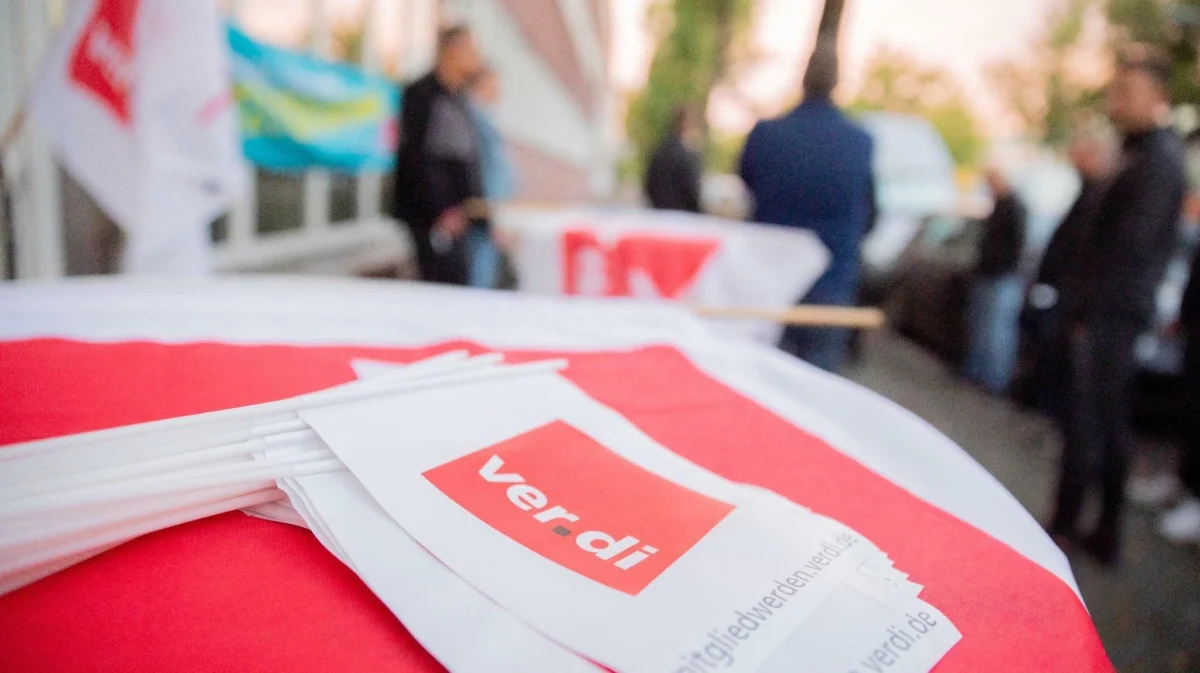
BERLIN — The atmosphere inside the Hannover negotiations room was thick with tension this Friday as representatives from Volkswagen and the powerful IG Metall union gathered for yet another high-stakes meeting. At the heart of the standoff is a fundamental breakdown in trust: the labor side has officially demanded that Volkswagen rescind the termination of nearly all company-specific collective bargaining agreements (Haustarifverträge), warning that failure to do so will trigger the largest industrial dispute in the company’s recent history.
Thorsten Gröger, the lead negotiator and district head of IG Metall Lower Saxony, did not mince words before the talks commenced. "We expect Volkswagen to reverse this breach of trust," he stated, setting the stage for what many analysts believe could be a defining moment for the future of the German automotive industry.
The Ultimatum: A Countdown to Conflict
The escalation is not merely rhetorical. IG Metall has provided a clear, unforgiving timeline for the management board. "We are giving the company until the end of October," Gröger announced. "Otherwise, a massive machinery will be set in motion to prepare for industrial action at Volkswagen."
The date highlighted by the union is December 31, 2024. This marks the expiration of the "peace obligation" (Friedenspflicht)—a legal period during which unions are prohibited from calling for strikes. Once this period lapses on the first day of 2025, the legal path for nationwide walkouts and factory shutdowns will be clear. The union’s message to management is unequivocal: mark the calendar, because the consequences of current policies will manifest in full force if the status quo remains unchanged.
Chronology of the Crisis
To understand how the flagship of the German economy arrived at this precarious juncture, one must look at the rapid deterioration of labor relations over the past few months:
- Early 2024: Volkswagen and the works council agree on a multi-billion euro austerity package, with employees making significant concessions in exchange for long-term production and product guarantees.
- September 2024: In a move that shocked the German industrial landscape, Volkswagen unilaterally terminated ten of its twelve company-specific collective bargaining agreements.
- October 2024: The works council, led by Daniela Cavallo, reveals that the management board has failed to provide concrete plans regarding product allocations for factories, effectively reneging on previous promises.
- Late October 2024: The current deadline set by IG Metall, after which the union will shift from negotiations to full-scale strike preparations.
The Drivers of Despair: Why VW is Struggling
The core of the conflict lies in a structural crisis within the Volkswagen Group. The company is currently grappling with a perfect storm of challenges, most notably a severe slump in sales within China—historically its most profitable market. As Chinese manufacturers transition to high-quality, lower-cost electric vehicles, Volkswagen finds itself struggling to maintain its competitive edge.
Management argues that drastic cost-cutting is the only path to survival. The current restructuring plan is nothing short of radical:
- Workforce Reduction: The company is reportedly eyeing the elimination of nearly 100,000 jobs across its German operations.
- Factory Closures: For the first time in the company’s history, the closure of at least four domestic production facilities is being seriously considered.
- Tariff Revisions: By terminating the collective bargaining agreements, the company seeks to lower the overall wage level and increase labor flexibility, a move that the union views as an attack on the very foundations of the German social market economy.
Official Responses and the "Breach of Trust"
The sentiment among the workforce is described as one of profound indignation. Daniela Cavallo, the chairwoman of the General Works Council, has been vocal about the betrayal felt by employees. "There is great unrest," she stated. "The workforce perceives this as a massive affront; it is a declaration of war."
Cavallo pointed out that management has yet to present a viable strategy for how to fix the production issues that led to the crisis in the first place. Instead of engaging in constructive dialogue about product development and future-proofing the plants, the board has chosen to attack the wages and job security of those who helped the company through previous economic downturns.
"The promises made to us in exchange for our sacrifices have not been fulfilled," Cavallo noted. Without these assurances regarding the long-term future of specific plants, the workers feel they are being asked to pay for management’s strategic failures with their livelihoods.
The Macro-Implications for the German Economy
The conflict at Volkswagen is not an isolated incident; it is a bellwether for the German automotive sector. As the industry faces the monumental task of transitioning from combustion engines to electric mobility, the social contract that has governed German labor relations for decades is being strained to its breaking point.
The Cost of Industrial Action
Should the negotiations fail by the end of October and a strike ensues in early 2025, the economic fallout would be staggering. Volkswagen is a pillar of the German economy; its supply chains feed thousands of small and medium-sized enterprises (the Mittelstand). A prolonged stoppage at VW factories would ripple through the entire national economy, potentially pushing Germany into a deeper recession.
The Global Competitive Landscape
The management’s desire to lower labor costs is a response to the rise of global competitors who do not bear the same social and regulatory burdens as German manufacturers. However, labor leaders argue that by degrading the quality of work and the security of the workforce, Volkswagen risks losing its most valuable asset: the highly skilled, motivated, and experienced employees who have long been the hallmark of "Made in Germany" quality.
Conclusion: A High-Stakes Path Ahead
As October draws to a close, all eyes are on the negotiating table in Hannover. The divide between the board’s desire for efficiency and the workforce’s demand for security appears wider than ever.
If Volkswagen chooses to proceed with its planned cuts without a negotiated settlement, it faces a winter of discontent that could paralyze its operations and damage its brand for years to come. Conversely, if it chooses to retreat and engage in a collaborative effort to reform the company, it may find a path toward survival that does not involve tearing up the agreements that have sustained it for decades.
For now, the countdown continues. The "massive machinery" of the union is waiting in the wings, and the management has been handed a stark reality: in the world of German industry, trust is the most expensive commodity of all, and it is currently in short supply at Volkswagen.