The atmosphere within the halls of Volkswagen’s Wolfsburg headquarters is no longer defined by the quiet confidence of a global market leader, but by the tense, high-stakes uncertainty of a company fighting for its very survival. Just two years ago, the automaker and its powerful labor unions signed a landmark "future collective agreement," a pact that guaranteed job security, promised investment in German production sites, and ruled out forced redundancies. In exchange, the workforce accepted significant sacrifices, including salary freezes and the attrition of 35,000 jobs.
Today, that peace has shattered. With management demanding aggressive new austerity measures and the company’s competitive position under unprecedented pressure, the sanctity of that 2022 agreement is being openly questioned. As Volkswagen’s leadership, led by CEO Oliver Blume, attempts to steer the group through a structural crisis, the workforce is left wondering if their past sacrifices were in vain.
The Core Conflict: A Strained Relationship
The crisis at Volkswagen is not merely a matter of balance sheets; it is a fundamental clash of interests between corporate survival and labor stability. Volkswagen currently faces a "perfect storm" of challenges: declining demand in key markets, the slow adoption of its electric vehicle (EV) lineup, and a relentless influx of affordable, high-tech electric vehicles from Chinese competitors.
In response, the management board has deemed the existing cost-saving measures insufficient. The company has moved to terminate a series of decade-old job security agreements, a move that the IG Metall union has labeled a "declaration of war" on the workforce. While the company insists that it is merely seeking the flexibility to ensure long-term competitiveness, the unions view the move as an attempt to bypass hard-won worker protections.
Chronology of the Crisis
The path to the current confrontation has been marked by a series of escalations:
- 2022: Volkswagen and IG Metall sign a long-term agreement protecting German jobs against layoffs and factory closures until 2029, in exchange for wage restraint and headcount reduction.
- Early 2024: Economic pressures in the German automotive sector intensify. Management begins to signal that the targets set in 2022 are no longer aligned with the current market reality.
- September 2024: The VW Supervisory Board approves an updated "Zukunftsprogramm" (Future Plan), aimed at increasing profitability. Shortly thereafter, the company formally gives notice to terminate several collective bargaining agreements, effective December 31, 2026.
- September 2024 (Mid-month): The IG Metall union invokes a clause in the agreement to force a review of the "Future Collective Agreement," demanding transparency on how VW intends to honor its past promises.
- October 2024: Initial rounds of talks take place. The discussions prove largely inconclusive, with the union expressing "fury" at the company’s refusal to guarantee previously planned investments in new models and specific German plants.
- Late 2024: The countdown to the end of the "peace obligation" (Friedenspflicht) begins. With the current contract protection expiring at the end of the year, the possibility of industrial action in early 2025 looms large.
Supporting Data: The Quest for Profitability
The urgency felt by the executive board is rooted in cold, hard numbers. The management team, under the direction of CEO Oliver Blume, has set an ambitious target: to improve the operating profit margin of the VW core brand to nine percent by 2030. Currently, that figure languishes at roughly 3.8 percent—a performance gap that makes it increasingly difficult to fund the massive R&D costs required for the transition to electric mobility.
The "Future Plan 2030" is designed to bridge this gap. The company has stated that it needs to reduce costs across the board, potentially cutting up to 50,000 jobs globally over the next few years, with nearly half of those reductions potentially impacting the German workforce.
Furthermore, the uncertainty surrounding the long-term viability of key production sites—including Emden, Hannover, Zwickau, and the Audi plant in Neckarsulm—has created a state of deep anxiety among employees. These plants are the lifeblood of their respective regions, and any threat to their operation is seen as a direct threat to the socio-economic fabric of Germany.
Official Responses and Perspectives
The management’s stance is rooted in a pragmatic—if cold—assessment of the global market. Arne Meiswinkel, Volkswagen’s Personnel Director, has been the face of the company’s defense. "These market changes are structural and deep-seated," Meiswinkel noted during a recent briefing. He pointed to the aggressive entry of Chinese manufacturers into the European market as a primary driver of the current crisis, arguing that Volkswagen must adapt its cost structures to remain a global player.
When challenged on the legality and ethics of terminating existing agreements, Meiswinkel remained steadfast: "Volkswagen honors its contracts." According to the company, the termination of specific agreements is not an end in itself, but a necessary step to create a "negotiation room" where a new, sustainable framework can be built—one that allows for the implementation of the "Future Plan" without destroying the company’s financial foundation.
On the other side of the table, labor leaders are equally firm. Thorsten Gröger, the IG Metall district manager for Lower Saxony, has been vocal about the union’s dissatisfaction. Following the initial, unproductive round of talks, he described the mood as one of "disappointment and rage." For the union, the current management strategy is a betrayal of the collaborative culture that has historically defined the "VW way." Daniela Cavallo, head of the works council, has warned that the upcoming months will lead to a "fierce confrontation" as the workforce prepares to fight for the retention of their rights.
The Implications: What Lies Ahead?
The conflict at Volkswagen serves as a microcosm for the wider struggles facing German industry. As Europe’s largest economy grapples with high energy costs, bureaucratic hurdles, and the rapid shift to digital and electric technologies, Volkswagen’s ability to navigate its internal strife will set a precedent for the entire sector.
Several critical factors will dictate the outcome of these negotiations:
1. The Separation of Issues
One of the most complicated aspects of the situation is the overlap between the current "review talks" and the upcoming formal collective bargaining round. While the review of the 2024 agreement is legally distinct from the broader wage negotiations, they are inextricably linked in the eyes of the workers. With IG Metall demanding a five percent pay increase, the company’s request for more flexibility and cost-cutting is likely to lead to a "package deal" negotiation where everything is on the table—from wages and vacation time to factory future investments.
2. The Threat of Industrial Action
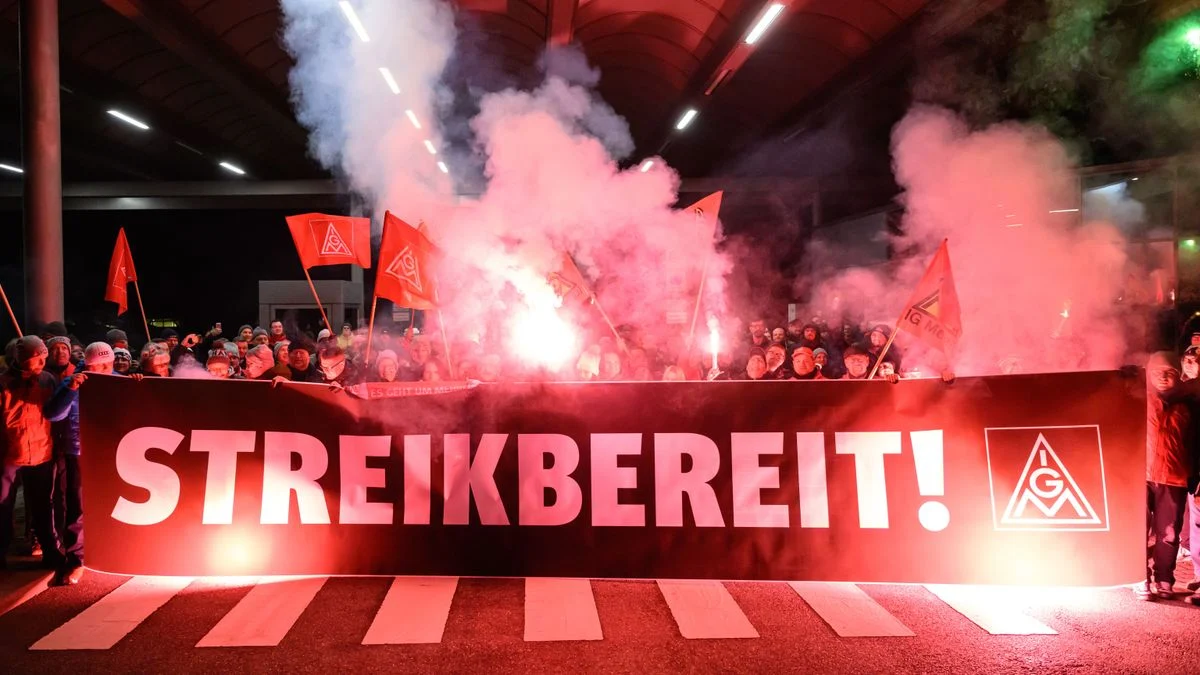
The "peace obligation," which currently prevents the union from calling for strikes, expires on December 31. While the probability of an immediate stoppage in early January remains a point of speculation, the rhetoric from both sides suggests that a labor dispute is no longer a "worst-case scenario" but a realistic expectation. For a company that relies on just-in-time logistics, any disruption to production would be catastrophic.
3. Structural Transformation
Ultimately, the battle is about the survival of the "German Model." Can a company with high labor costs and rigid work structures compete with more agile, state-subsidized, or lower-cost international competitors? If Volkswagen fails to find a middle ground, it faces the prospect of either a permanent decline in market share or a radical, potentially destabilizing restructuring that could alter the landscape of the German automotive industry for decades to come.
As the parties prepare for the next round of discussions, the eyes of the world are on Wolfsburg. The outcome will not only determine the future of 130,000 employees at the Volkswagen AG but will also serve as a litmus test for Germany’s ability to maintain its status as an industrial powerhouse in an era of rapid global transition. The era of comfortable consensus has ended; the era of hard choices has begun.