Berlin, Germany – In an era marked by the resurgence of nationalistic sentiments and the unsettling rise of right-wing populism, the very fabric of national identity and its associated rituals are undergoing intense scrutiny. Ambros Waibel, a seasoned editor at the German daily taz, offers a poignant and deeply personal reflection on these complex dynamics, navigating the intricate relationship between individual experience, collective memory, and the evolving political landscape. His observations, spanning from a solitary birthday ritual to the collective euphoria of a basketball game and a European conference, coalesce into a compelling narrative that grapples with what it means to be German today, particularly in the shadow of historical burdens and contemporary challenges.
Waibel’s journey begins with the seemingly innocuous, yet profoundly personal, act of ritual, only to broaden into an intellectual and emotional interrogation of national symbols and the dangerous allure of destructive ideologies. His narrative implicitly urges a re-evaluation of how societies engage with their past, confront present political realities, and envision their future, especially when confronted with the "devastating drug cocktail" of hate and megalomania.
A Journey Through Shifting Meanings: Main Facts
Ambros Waibel’s article delves into three distinct yet interconnected experiences that prompt a profound reflection on rituals, national identity, and political responsibility:
- The Evolving Birthday Ritual: Waibel describes a personal annual ritual – a solitary bike and S-Bahn trip to a forest by Lake Wannsee, intended for mushroom hunting and quiet remembrance of his father. This year, the ritual is unexpectedly altered by his eldest son’s spontaneous company, a lack of mushrooms, and inclement weather. Despite the changes in content, the form of the ritual proves resilient, providing structure and meaning.
- The National Anthem’s Unexpected Shiver: Attending a women’s basketball game where Germany is poised for a historic World Cup final appearance, Waibel finds himself singing the national anthem alongside his daughter. To his surprise, he experiences a "shiver down the spine," prompting an internal debate about the meaning of this emotional response, its connection to the sport’s euphoria versus the political climate (specifically mentioning the AfD), and the abstract concept of "Unterpfand" (pledge) within the anthem’s lyrics.
- "Sassonia" and the "Drug Cocktail": At a conference in Milan, Waibel is repeatedly questioned about the political situation in "Sassonia" (Saxony), a German state known for strong right-wing support. He feels an unexpected sense of responsibility as a German to address these concerns. During his lecture, titled "How much drug does a human need?", he identifies a "devastating drug cocktail" – hate, arrogance, megalomania, cruelty, and meanness, often catalyzed by alcohol – explicitly linking it to the political outcomes in Saxony. He further muses on the obscure "Anhalt" component of "Sassonia-Anhalt," questioning its meaning.
These experiences culminate in a nuanced stance on national participation: while he doesn’t fully identify with singing the anthem, he also finds himself unable to entirely disengage from it. His reflections highlight the complex and often contradictory emotions evoked by national symbols in a post-war Germany grappling with a resurgent far-right.
Chronology of Reflection: Personal Experiences and Public Encounters
Waibel’s narrative unfolds as a series of personal anecdotes, each serving as a catalyst for deeper introspection into the nature of rituals, identity, and societal responsibility.
The Adaptable Ritual: A Birthday by Wannsee
The article opens with a vivid description of a cherished personal ritual: an annual birthday pilgrimage to a secluded patch of forest near Lake Wannsee. The intention is clear: to prevent the day from "fraying" at home, to connect with nature, to hunt for mushrooms, and to remember his father. This year, however, the ritual takes an unexpected turn. His eldest son, usually absent from such solitary pursuits, joins him spontaneously. The father-son duo finds no mushrooms, a departure from the expected bounty. The emotional resonance, typically tied to memories of his father, is muted. Furthermore, the expected post-swim sun-drying on a deserted meadow is thwarted by rain, forcing them to seek shelter.
Despite these significant deviations from the planned content, Waibel observes a crucial insight: "The form of the ritual proved its worth, but the content was entirely different. The ritual tolerates this, indeed, it makes it possible – without it, I would simply rot away on the sofa." This observation sets the stage for his broader contemplation of rituals, highlighting their inherent flexibility and their fundamental role in providing structure and meaning, even when circumstances alter their specific manifestations. It underscores how rituals, whether personal or collective, offer a framework for human experience, allowing for adaptation while maintaining a sense of continuity.
The Unsettling Shiver: National Anthem at a Basketball Game
Two weeks prior to his birthday outing, Waibel recounts an equally compelling public experience. He attends a women’s basketball game with his daughter, where the German team is making an unprecedented run towards the World Cup final. The arena is packed, the atmosphere electric, a blend of exuberant celebration and peaceful camaraderie. As the national anthems begin, the crowd rises. His daughter sings along, and to his surprise, so does Waibel. A "small shiver" runs down his spine.
This unexpected physiological response immediately triggers a flurry of internal questions: "Really now, I think? What’s going on here? Is it because of the basketball? Or because of the AfD? Am I singing for or against something? What exactly is this ‘Unterpfand’?" The juxtaposition of the euphoria of sporting success with the political anxieties surrounding the rise of the far-right Alternative for Germany (AfD) party creates a powerful tension. The term "Unterpfand," a pledge or guarantee from the German national anthem ("Einigkeit und Recht und Freiheit für das deutsche Vaterland, danach lasst uns alle streben brüderlich mit Herz und Hand. Einigkeit und Recht und Freiheit sind des Glückes Unterpfand" – Unity and justice and freedom for the German fatherland, for these let us all strive brotherly with heart and hand. Unity and justice and freedom are the pledge of fortune), becomes a focal point for his interrogation of national identity. In a nation historically burdened by the misuse of national symbols, the spontaneous feeling of national pride, however fleeting, becomes a source of both curiosity and discomfort.
"Sassonia" in Milan: International Perceptions and National Responsibility
A week after the basketball game, Waibel finds himself at a conference in Milan, presenting a lecture. Here, the political anxieties that simmered beneath the surface at the basketball game come to the forefront. Colleagues from across Europe repeatedly inquire about the elections in "Sassonia" (Saxony), a state in eastern Germany where the AfD has gained significant electoral traction. Waibel initially attempts to clarify, mentioning "Saxony-Anhalt," but soon drops the distinction, realizing the broader perception.
His interaction with the Milanese colleagues evokes a distinct sense of responsibility: "My impression is, in any case, that I could do nothing more absurd and cowardly than to pretend that I have nothing to do with ‘Sassonia.’ As if I were not responsible in a special way for what happens there. My impression is that the Milanese expect me to behave as a German regarding German matters." This moment highlights the international gaze on Germany’s internal politics, particularly the rise of the far-right, and the pressure on individual Germans to confront and account for these developments. His rhetorical question about "Anhalt" – "What exactly is this ‘Anhalt’?" – further underscores a sense of fragmentation and perhaps even disinterest within Germany itself regarding its own regions and their political leanings, contrasting sharply with the unified concern expressed by his international peers.
Supporting Data and Context: The Rise of the Far-Right and Germany’s Identity Crisis
Waibel’s reflections are not isolated sentiments but are deeply embedded within a significant contemporary political context in Germany. The rise of the Alternative for Germany (AfD) party, particularly in the eastern states like Saxony and Saxony-Anhalt, represents a profound challenge to Germany’s post-war political consensus and its carefully cultivated identity.

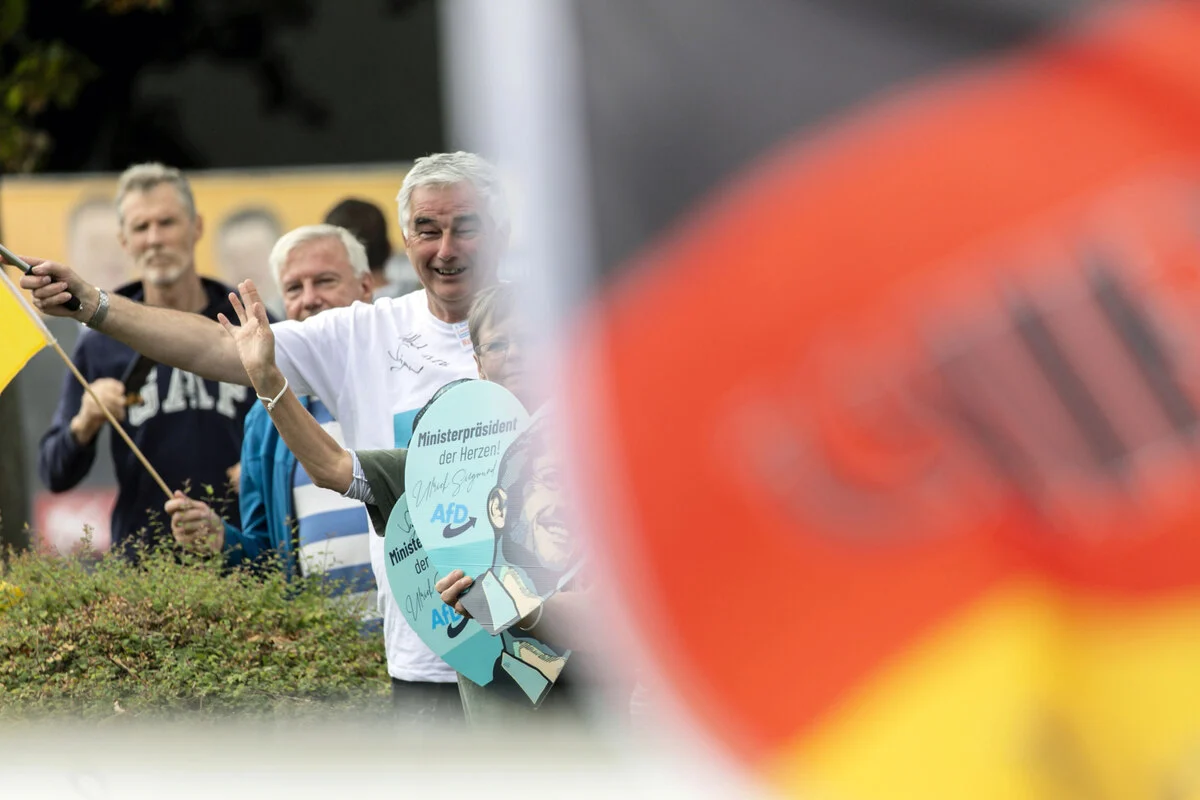
The AfD, founded in 2013, initially gained traction on an anti-euro platform but quickly shifted its focus to anti-immigrant and nationalist rhetoric. Its success in eastern Germany is often attributed to a combination of factors: lingering economic disparities, a sense of being left behind by reunification, disillusionment with traditional parties, and a greater openness to nationalist narratives compared to western Germany, which has had a longer and more intensive engagement with denazification and the rejection of aggressive nationalism.
In states like Saxony, the AfD has consistently polled strongly, becoming a significant political force, often second only to the CDU (Christian Democratic Union). This electoral success, coupled with the party’s increasingly radicalized wing, has alarmed mainstream politicians and civil society, raising concerns about democratic erosion and the potential for a return to darker aspects of German history. Waibel’s "Sassonia" anecdote in Milan perfectly captures this international concern and the internal struggle within Germany.
The basketball game anecdote also taps into a broader discussion about national pride in Germany. For decades after World War II, overt displays of German nationalism, such as flag-waving or enthusiastic anthem singing, were viewed with suspicion due to their association with the Nazi regime. A more reserved form of national pride emerged, often expressed through sporting events, which provided a "safe" outlet for collective enthusiasm. However, as Waibel notes, even these moments are now complicated by the political climate, where symbols of national identity can be co-opted or reinterpreted by nationalist movements. The "shiver" he feels is a microcosm of this national dilemma: how to express a healthy sense of belonging without inadvertently validating or contributing to dangerous nationalist currents.
The "Drug Cocktail": A Metaphor for Societal Poison
During his Milan conference, Ambros Waibel’s lecture, provocatively titled "How much drug does a human need?", provides the analytical framework for his observations on the political climate. His answer to the question, on a personal level, is libertarian: "there is no convincing reason not to leave the answer to this question to the individual human being. Except when it becomes dangerous for other people." This sets up a crucial distinction between individual choice and collective harm.
He then immediately pivots to the collective, unveiling what he terms the "most devastating drug cocktail in the history of humanity": "Hate, arrogance, megalomania, cruelty, meanness – with alcohol as a catalyst." This is not a literal drug but a potent metaphor for the toxic ideologies and destructive psychological states that have fueled historical atrocities and continue to undermine social cohesion. The inclusion of "alcohol as a catalyst" suggests how everyday social lubricants can lower inhibitions and amplify aggressive, hateful tendencies within a collective.
Crucially, Waibel explicitly connects this abstract "cocktail" to the political reality he has just discussed: "It becomes clear that I also mean the cocktail that decided the election in ‘Sassonia’." This direct link is a powerful indictment of the political forces at play in regions where right-wing extremism thrives. It suggests that the success of parties like the AfD is not merely a reflection of economic grievances or policy disagreements, but rather a manifestation of deeper societal maladies – a cultivation and exploitation of these destructive human traits. This "drug cocktail" poisons public discourse, erodes empathy, and ultimately threatens democratic values by promoting division and aggression.

Rituals: From Personal Structure to Collective Performance
Waibel’s article continually circles back to the concept of rituals, revealing their multifaceted role in human life, from providing personal stability to enabling collective experiences.
The Oktoberfest Paradox: A Globalized Ritual
Returning to his birthday outing, Waibel describes how he and his son, seeking refuge from the rain, stumble upon a most unexpected scene: a beer garden transformed into an "Oktoberfest" celebration. The friendly waiter, dressed in Lederhosen and a traditional Bavarian shirt, speaks with a Ruhrgebiet accent, a region far removed from Bavaria. This encounter perfectly encapsulates the modern, often decontextualized nature of cultural rituals. "Oktoberfest can be anywhere," Waibel muses, recognizing it as "a ritual that people all over the world interpret very differently, a kind of carnival with a corresponding costume."
This observation is significant. It highlights how rituals, especially cultural ones, can transcend their original geographical or historical context, becoming globalized performances. The "carnival" aspect suggests a temporary suspension of everyday norms, a space for collective revelry and role-playing. Yet, it also implies a certain superficiality, a detachment from deeper meaning. The waiter’s accent further emphasizes this cultural pastiche, demonstrating how rituals can be adopted and adapted across diverse cultural landscapes, sometimes losing their specific regional authenticity in the process.
The Anthem as Carnival: Navigating National Participation
This understanding of Oktoberfest as a kind of "carnival" then informs Waibel’s re-evaluation of the national anthem experience. "Singing the national anthem before a basketball game is also a kind of carnival, I think, participation in a ritual." This comparison is both insightful and provocative. By framing the anthem as a "carnival," he suggests that participation, while emotionally resonant, does not necessarily equate to a complete surrender of individual identity or critical thought. It can be a performance, a shared experience, rather than an absolute statement of allegiance.
He concludes with a nuanced and deeply reflective position: "I do not go into it as a person that I sing the German national anthem. But I also no longer go into it not to sing it." This statement encapsulates the core dilemma for many Germans: how to engage with national symbols in a way that acknowledges collective identity without succumbing to the dangers of uncritical nationalism, especially in the context of historical responsibility and the contemporary rise of the far-right. It’s a delicate balance between engagement and detachment, between belonging and critical distance. It signifies a mature, reflective approach to national identity that avoids both blind patriotism and cynical rejection.
Implications: A Call for Engaged Reflection
Ambros Waibel’s series of personal reflections carries profound implications for contemporary German society and, by extension, for any nation grappling with its identity in turbulent times.

Firstly, his article serves as a subtle call to reclaim and critically engage with national symbols and rituals. The unexpected "shiver" from the anthem, rather than being dismissed, becomes an opportunity for inquiry. In a country where national pride has long been complicated by historical atrocities, Waibel suggests that a blanket rejection of all national sentiment might be as unhelpful as uncritical acceptance. Instead, a nuanced engagement, understanding rituals as flexible forms and questioning their content, is necessary. This approach allows for participation in collective experiences like sports events while maintaining intellectual and political vigilance against the co-option of these symbols by extremist forces.
Secondly, Waibel’s metaphor of the "devastating drug cocktail" is a stark warning against the insidious nature of hate, arrogance, megalomania, cruelty, and meanness in political discourse. By directly linking this cocktail to the electoral successes in "Sassonia," he highlights the moral and ethical dimensions of political choices. This is not merely about policy debates but about the fundamental character of a society. The implication is clear: citizens must be acutely aware of and actively resist ideologies that promote these destructive "ingredients," as their societal impact is far more corrosive than any individual "drug use." It underscores the responsibility of every individual to foster a culture of empathy, humility, and critical thinking.
Thirdly, the international perspective from Milan underscores the global responsibility of German citizens to address the rise of the far-right within their borders. The expectation from his European colleagues that Waibel, as a German, would account for the political developments in "Sassonia" reflects a broader international concern. This implies that Germany, given its history, has a particular obligation to demonstrate resilience against extremism, not just for its own sake but for the stability and values of the wider European and global community. Passivity or feigned ignorance is not an option when faced with forces that threaten democratic institutions.
Finally, the article implicitly champions the power of individual reflection and open discourse. Waibel’s journey from a personal ritual’s unexpected deviation to a public emotional response and an international political interrogation demonstrates how individual experiences can illuminate broader societal truths. His willingness to question his own feelings and assumptions, and to articulate the complex interplay between personal identity and collective phenomena, encourages others to do the same. In a fragmented and often polarized world, such nuanced self-reflection is crucial for fostering a resilient and inclusive civil society.
Conclusion: Navigating Identity in a Fractured World
Ambros Waibel’s deeply personal and intellectually probing essay offers a vital contribution to the ongoing conversation about national identity, collective rituals, and the rise of right-wing extremism in Germany. His journey from a solitary birthday reflection to the shared experience of a national anthem and an international conference reveals the complex layers of contemporary German self-understanding.
He concludes that rituals, whether personal or national, provide essential structure, allowing for adaptation and reinterpretation even when their content shifts dramatically. Yet, this adaptability comes with a responsibility to critically engage with the meanings these rituals convey, especially when political forces seek to manipulate them. The "devastating drug cocktail" he identifies – hate, arrogance, megalomania, cruelty, and meanness – serves as a potent metaphor for the societal poisons that fuel extremist movements, demanding vigilant opposition and a commitment to democratic values.

Waibel’s final, nuanced stance on singing the national anthem – neither fully identifying with it nor fully rejecting it – encapsulates the delicate balance many Germans seek to strike. It is a call for an engaged patriotism, one that acknowledges history, embraces complexity, and actively defends the principles of an open, pluralistic society against the encroaching shadows of nationalism. As the taz itself states, it strives for pluralism and a free society, particularly in the face of rising right-wing extremism. Waibel’s reflections are a powerful embodiment of this mission, urging readers to remain vigilant, reflective, and committed to the ongoing work of shaping a democratic and inclusive future.