

PISCO, PERU – August 2, 2026 – A small tourist aircraft carrying international visitors on a sightseeing tour over Peru’s world-renowned Nasca Lines crashed shortly after takeoff from Pisco airport, claiming the lives of all 13 people on board. The victims include seven Italian nationals, two Germans, two Spaniards, and the Peruvian pilot and tour guide. The devastating incident has cast a somber shadow over the popular tourist destination and ignited urgent questions about aviation safety in the region.
Authorities have launched a full-scale investigation into the cause of the crash, which occurred under as yet undetermined circumstances. Emergency services and law enforcement personnel quickly secured the crash site in the southern Peruvian department of Ica, just outside the city of Pisco, as the nation grapples with the profound loss. The tragedy has prompted an outpouring of grief and condolences from the affected nations and raised concerns within the international tourism community.
Main Facts
The fatal accident unfolded on the morning of August 2, 2026, when a light aircraft, typically used for aerial tours of the ancient Nasca Lines, suffered a catastrophic failure shortly after departing from Captain FAP Renán Elías Olivera Airport in Pisco. The Peruvian Ministry of Transport and Communications (MTC) confirmed the fatalities, identifying all 13 individuals on board as deceased. The passenger manifest included a significant number of European tourists, comprising seven from Italy, two from Germany, and two from Spain, alongside the two Peruvian crew members – the pilot and a dedicated tour guide.
The aircraft was on a routine flight path designed to provide passengers with unparalleled aerial views of the mysterious geoglyphs etched into the desert floor of southern Peru, a UNESCO World Heritage site that draws thousands of international visitors annually. The sudden and unexpected nature of the crash has left investigators with a complex task of piecing together the final moments of the flight and determining what led to the tragic loss of life. Rescue and recovery operations transitioned swiftly into an investigative phase, with specialized teams from Peru’s Civil Aviation Authority (DGAC) and the police meticulously examining the wreckage spread across the impact zone. The absence of immediate information regarding the cause has fueled speculation, though officials have stressed that all possibilities, from mechanical failure to human error or environmental factors, will be thoroughly explored.
Chronology of the Tragedy
The events leading to the fatal crash began, as they do almost daily, with the bustling activity characteristic of Pisco Airport, a key gateway for tourists embarking on the iconic Nasca Lines experience.
Pre-Flight Preparations and Departure
On the morning of August 2, 2026, the doomed flight was scheduled to depart from Pisco, a coastal city approximately 230 kilometers south of Lima. Pisco Airport serves as a vital hub for air travel to the Nasca region, particularly for the light aircraft tours. Tourists, often arriving from Lima or other international connections, gather at the airport with anticipation, eager to witness the enigmatic geoglyphs that can only be fully appreciated from an aerial perspective.
The passengers – the seven Italians, two Germans, and two Spaniards – would have undergone standard pre-flight briefings, receiving instructions on safety protocols and the flight path over the Nasca and Palpa Lines. These flights are generally conducted in small, single-engine aircraft, such as Cessna Caravans, known for their maneuverability and high wings that offer unobstructed views. The pilot, a Peruvian national with presumed experience in navigating the local airspace and terrain, and the tour guide, responsible for enriching the passengers’ experience with historical context, would have completed their routine checks and preparations.
The Moment of Catastrophe
The aircraft commenced its takeoff roll from Pisco Airport, likely under clear skies typical of the Peruvian coastal desert in winter. Eyewitness accounts, though not immediately confirmed or detailed by authorities, would be crucial for investigators to understand the initial moments of the flight. Small aircraft tours over the Nasca Lines typically involve a short ascent after takeoff before heading towards the geoglyphs.
However, shortly after becoming airborne, the aircraft encountered an unforeseen and critical issue. The precise nature of this malfunction or incident remains the central focus of the ongoing investigation. What is clear is that the flight path was abruptly and tragically cut short. Instead of continuing its ascent towards the Nasca desert, the aircraft deviated from its intended trajectory and crashed within a short distance of the airport. The impact would have been immediate and devastating, leaving no survivors.
Emergency Response and Discovery
The crash triggered an immediate emergency response. Airport personnel, air traffic controllers, and local authorities would have been alerted almost instantaneously to the distress or disappearance of the aircraft from radar. Within minutes, emergency services, including fire brigades, police, and medical teams, were dispatched to the suspected crash zone.
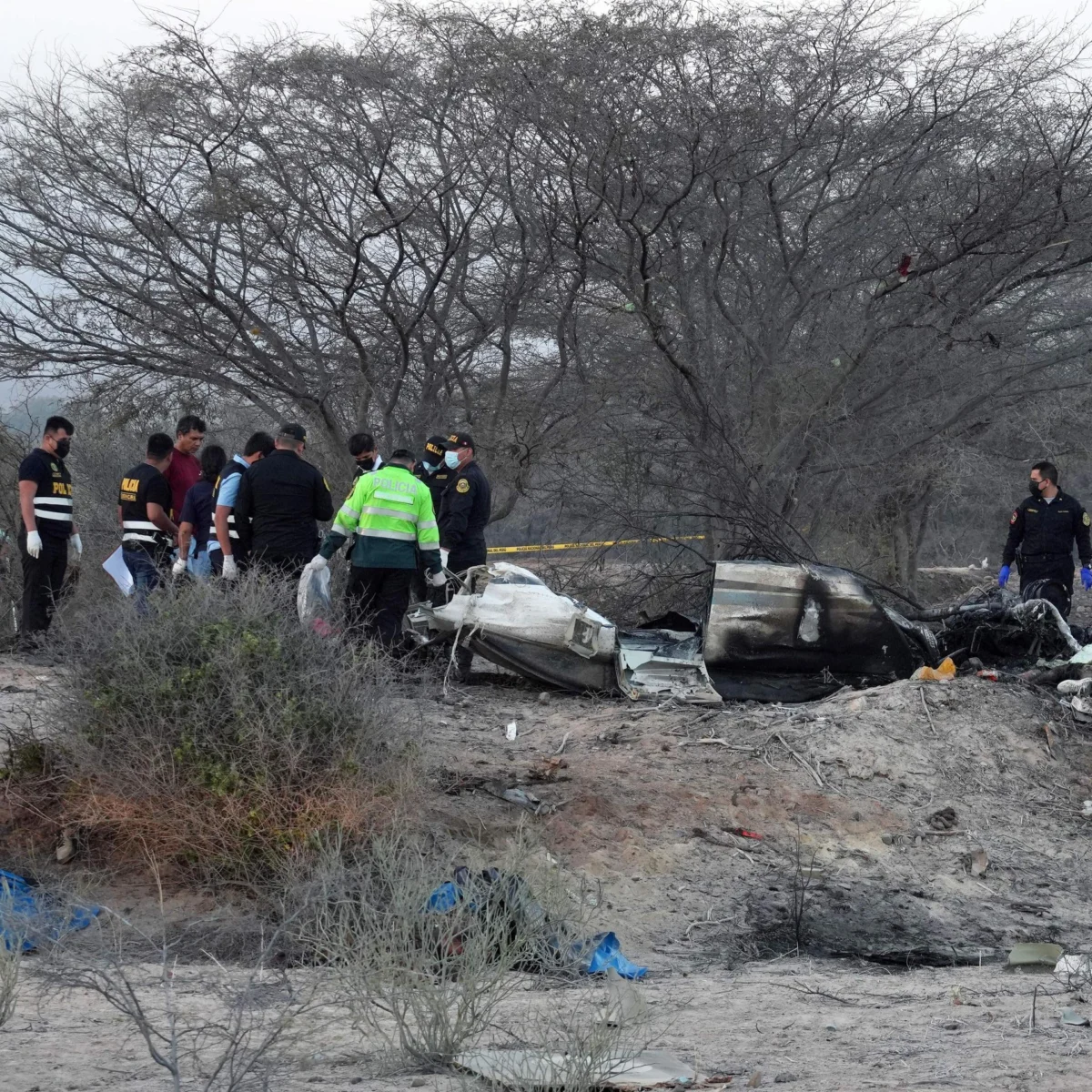
The image provided depicts multiple police officers standing around the aircraft wreckage, conducting investigations. This scene underscores the swift arrival of responders at the crash site, which was likely identified relatively quickly due to its proximity to the airport. The wreckage, scattered across the desolate terrain, bore grim testament to the force of the impact. Investigators immediately began the meticulous process of securing the area, documenting the scene, and collecting crucial evidence. The recovery of the victims’ remains was a somber and challenging task, conducted with the utmost respect for the deceased and their grieving families.
The initial hours and days following the crash were dominated by official confirmations of the fatalities, the identification of the nationalities of the victims, and the preliminary stages of the complex forensic and aviation accident investigation. The focus shifted from rescue to understanding the "how" and "why" of this profound tragedy.
Supporting Data and Context
The region of Ica, particularly the area around Nasca and Palpa, is a magnet for international tourism, largely due to the enigmatic Nasca Lines. These ancient geoglyphs are not merely tourist attractions but profound historical and archaeological marvels, making the aerial tours a cornerstone of the local economy.
The Allure of the Nasca Lines
The Nasca Lines are a series of massive geoglyphs created by the ancient Nasca culture in the deserts of Peru. Etched into the arid plateau between 500 BC and 500 AD, these colossal figures depict animals, plants, and geometric shapes, some stretching for hundreds of meters. Their purpose remains a subject of intense archaeological debate, with theories ranging from astronomical calendars and ritualistic pathways to water sourcing maps or even messages to deities.
Designated a UNESCO World Heritage site in 1994, the Nasca Lines are best appreciated from the air, as their true scale and intricate patterns become apparent only when viewed from above. This unique characteristic has fueled a thriving industry of aerial tours, providing an indispensable experience for visitors seeking to unlock the mysteries of this ancient civilization. For many, a flight over the Nasca Lines is the highlight of their Peruvian adventure, making the destination a must-visit for cultural and historical enthusiasts.
Pisco Airport: A Gateway to Ancient Wonders
Captain FAP Renán Elías Olivera Airport (Pisco Airport) serves as a critical operational base for these sightseeing flights. Located strategically on the Pacific coast, it offers convenient access to the Nasca plateau. The airport typically handles domestic flights and general aviation, with a significant portion of its traffic dedicated to tourist flights. Several local tour operators and small airlines operate out of Pisco, offering various packages for Nasca Lines excursions.
The aircraft used for these tours are predominantly light, single-engine planes, designed for short-haul flights and optimal visibility. Common models include the Cessna 206, Cessna 207, and the larger Cessna Grand Caravan (C208). These aircraft are favored for their reliability, operational efficiency, and the panoramic views they offer. The pilots operating these flights are expected to possess specialized training and experience in low-altitude sightseeing flights and navigating the unique geographical features of the Nasca desert.
Aviation Safety in the Region
The safety record of small aircraft operations, particularly in regions heavily reliant on tourist flights, is always under scrutiny. While the vast majority of flights proceed without incident, the inherent risks associated with aviation, especially with smaller aircraft operating in potentially challenging environments, necessitate stringent safety protocols. Peruvian aviation authorities, primarily the Directorate General of Civil Aeronautics (DGAC), are responsible for regulating air safety, issuing licenses, and conducting oversight of airlines and aircraft maintenance.
Historically, the Nasca Lines tour industry has faced periodic safety concerns. While it is crucial not to draw premature conclusions about the cause of this specific accident, prior incidents involving small tourist planes in Peru have occasionally highlighted issues related to aircraft maintenance, pilot experience, or operational procedures. These past events underscore the importance of continuous vigilance and robust regulatory enforcement to ensure the highest standards of safety for passengers embarking on these unique aerial experiences. The presence of international tourists from Germany, Italy, and Spain further amplifies the global attention and expectation for a thorough and transparent investigation.
Official Responses and Investigations
The aftermath of the plane crash triggered immediate and coordinated responses from Peruvian governmental bodies and international diplomatic missions, all focused on the investigation, victim support, and communication.
Peruvian Authorities Mobilize
The Peruvian Ministry of Transport and Communications (MTC) was among the first to release official statements, confirming the incident and the number of fatalities. The MTC, through its Directorate General of Civil Aeronautics (DGAC), has taken the lead in the technical investigation. The DGAC’s Air Accident Investigation Commission (CIAA) has deployed a specialized team to the crash site. Their mandate is to meticulously gather evidence, analyze flight data (if available from the aircraft’s systems), inspect the wreckage for signs of mechanical failure, review maintenance records of the aircraft, and examine the pilot’s qualifications and flight history.
The Peruvian National Police and emergency services played a critical role in securing the crash site, recovering the victims, and assisting the investigators. The Public Prosecutor’s Office has also opened an inquiry, a standard procedure in such incidents, to determine if any criminal negligence was involved. Authorities have pledged full transparency throughout the investigation process, recognizing the international implications of the tragedy. They have also established channels for communication with the families of the victims, both domestically and through foreign embassies.
International Condolences and Support
The presence of multiple foreign nationals among the victims immediately elevated the incident to an international concern. Diplomatic missions from Germany, Italy, and Spain in Lima swiftly issued statements expressing their profound sorrow and offering condolences to the families of their deceased citizens.
- German Embassy: The German Embassy in Lima confirmed the deaths of two German citizens and stated that it was in close contact with Peruvian authorities to provide support to the victims’ families and facilitate any necessary consular assistance.
- Italian Embassy: The Italian Embassy expressed its deep grief over the loss of seven Italian nationals and activated its crisis unit to assist with the identification process and repatriation arrangements.
- Spanish Embassy: Similarly, the Spanish Embassy confirmed the fatalities of two Spanish citizens, extending its condolences and offering full cooperation with the Peruvian investigation.
These embassies are expected to play a crucial role in liaising between the Peruvian authorities and the victims’ families, ensuring proper identification, handling of personal effects, and eventually, the repatriation of remains. The international community, through these diplomatic channels, is also likely to monitor the progress of the investigation, seeking assurances that all possible measures are being taken to ascertain the cause and prevent future recurrences.
The Focus of the Investigation
Aviation accident investigations are complex and often lengthy processes. The CIAA will be looking into several key areas:
- Aircraft Maintenance: Scrutinizing the aircraft’s maintenance logs, recent inspections, and repair history to identify any potential mechanical failures or overdue servicing.
- Pilot Factors: Examining the pilot’s experience, flight hours, medical certification, and any potential factors like fatigue or incapacitation. Eyewitness accounts of the aircraft’s behavior prior to impact will also be crucial.
- Environmental Conditions: Assessing weather conditions at the time of the crash, including wind, visibility, and any unusual atmospheric phenomena, although the desert environment around Pisco typically offers stable flying conditions.
- Air Traffic Control (ATC) and Operational Procedures: Reviewing communications between the pilot and ATC, as well as the operational procedures of the tour operator, including flight planning and safety protocols.
- Structural Integrity: A detailed forensic analysis of the wreckage to determine the point of failure and the sequence of events leading to the crash.
Experts emphasize that it can take months, or even over a year, to conclusively determine the precise cause of an aviation accident, particularly when multiple factors might be involved. The integrity and thoroughness of this investigation are paramount, not only for the victims’ families but also for the reputation of Peru’s aviation and tourism sectors.
Implications and Broader Context
The tragic plane crash in Pisco carries significant implications, not only for the immediate families of the victims but also for Peru’s vital tourism industry and the broader discussion surrounding aviation safety.
Impact on Tourism and the Nasca Lines Experience
The Nasca Lines are a cornerstone of Peru’s tourism offerings, attracting hundreds of thousands of visitors annually. The aerial tours are a unique and often once-in-a-lifetime experience for many international travelers. This tragic incident, particularly involving tourists from several European countries, is likely to have a profound, albeit potentially short-term, impact on the perception of safety for these excursions.
Tour operators and the Peruvian government will face immediate pressure to reassure prospective tourists about the safety of flying over the Nasca Lines. This could involve increased scrutiny of existing safety protocols, potentially leading to stricter regulations, enhanced aircraft maintenance checks, or even temporary suspensions of operations if systemic issues are identified. While the allure of the Nasca Lines is undeniable, concerns about safety could deter some travelers, affecting local businesses, hotels, guides, and airlines that rely on this steady stream of visitors. The incident serves as a stark reminder of the delicate balance between offering unique adventure tourism and ensuring paramount passenger safety.
Calls for Stricter Safety Regulations
This tragedy will undoubtedly reignite calls for more robust oversight and potentially stricter safety regulations within Peru’s general aviation sector, particularly for tourist operations. While Peruvian authorities have established regulatory frameworks, the effectiveness of enforcement and the frequency of inspections will likely come under renewed examination. International aviation bodies and the embassies of the affected nations may also exert pressure for transparent audits of the operational safety standards applied to these flights.
The debate will likely focus on:
- Maintenance Standards: Ensuring that all aircraft undergo regular and thorough maintenance by certified technicians, using approved parts.
- Pilot Training and Experience: Verifying that pilots operating tourist flights have adequate experience, recurrent training, and are fit for duty.
- Aircraft Age and Type: Discussions about the appropriate age and type of aircraft for these specific sightseeing operations, balancing operational costs with safety margins.
- Weather Monitoring: Enhancing real-time weather monitoring and decision-making protocols for flight cancellations or delays when conditions are marginal.
The Human Cost and Remembering the Victims
Beyond the technical and economic implications, the most profound impact of this disaster is the immense human cost. Thirteen lives were abruptly ended, leaving behind grieving families and friends across multiple continents. For the families of the seven Italians, two Germans, and two Spaniards, what began as an exciting vacation culminated in unimaginable sorrow. Similarly, the loss of the Peruvian pilot and tour guide represents a deep loss for their communities and a blow to the local tourism workforce.
As the investigation proceeds, the focus will remain on understanding the circumstances that led to this tragedy. However, it is equally important to remember the individuals who perished – their hopes, their dreams of adventure, and the profound void they leave behind. The Pisco plane crash serves as a somber reminder of the inherent risks, however rare, associated with certain forms of travel and the critical importance of unwavering commitment to safety in all aspects of the aviation industry.
The world watches as Peru investigates this heartbreaking incident, hoping not only for answers but also for reforms that will ensure such a tragedy is never repeated. The memory of the 13 victims will undoubtedly spur a renewed commitment to securing the skies above one of the world’s most mysterious and captivating landscapes.