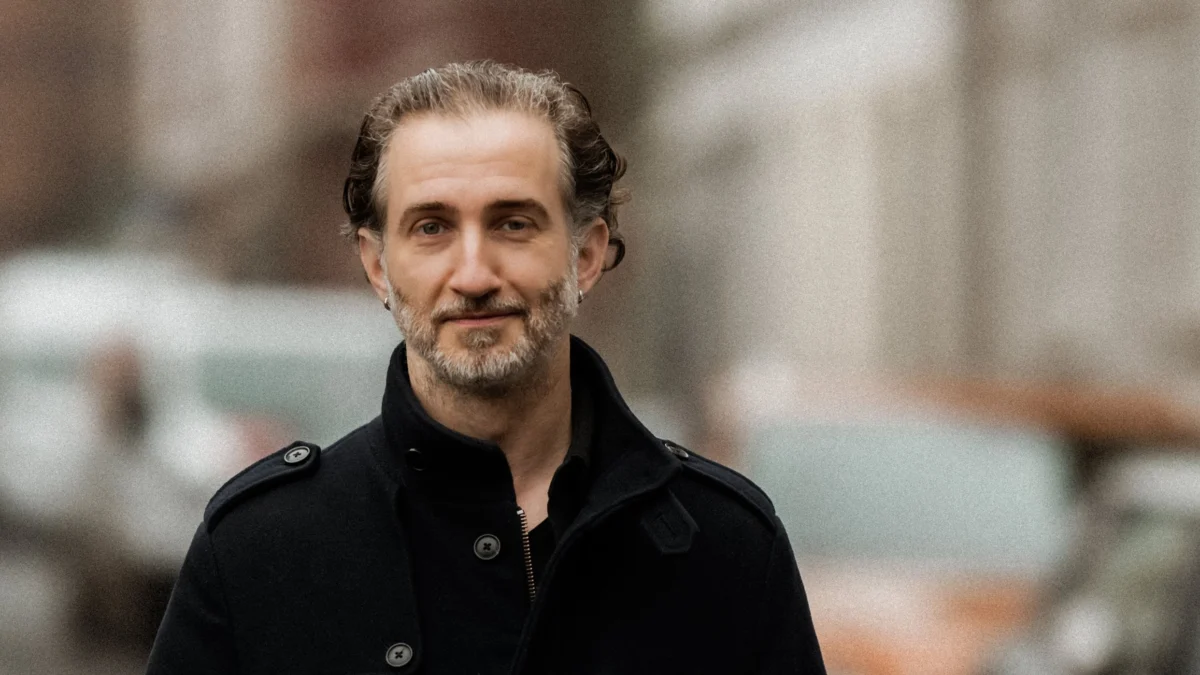
In the polished, high-stakes world of inherited fortunes, the archetype of the "millionaire" is typically set in stone: bespoke suits, an obsession with market preservation, and a life lived within the guarded confines of generational privilege. Yet, Kai Viehof, a 44-year-old resident of Mönchengladbach, Germany, represents a profound departure from this script. With a slightly unkempt beard, a penchant for simple black t-shirts, and a quiet, unassuming demeanor, Viehof is challenging the very foundation of how wealth is perceived, held, and—most controversially—renounced.
As a vocal participant in the public discourse surrounding wealth inequality, Viehof has become a symbol for a burgeoning group of affluent individuals who argue that the hoarding of capital is not merely a personal choice, but a societal burden.
Main Facts: The Choice to Walk Away
At the heart of Kai Viehof’s public identity is a decision that strikes many as incomprehensible: he refused his inheritance. The wealth in question stems from the legacy of the "Allkauf" retail empire, a massive chain built by his grandfather in the 1960s. In 1998, the company was sold to Metro AG in a deal valued at approximately one billion Deutsche Marks.
While many would view such a sum as a lifelong guarantee of comfort and power, Viehof viewed his potential share as an ethical anchor he did not wish to carry. When the time came for him to receive his portion of the family fortune, he chose to step aside. This act of refusal was not a spur-of-the-moment protest, but a calculated stance against the widening gap between the ultra-wealthy and the rest of society. He is not alone in this conviction; he is part of a growing, albeit small, cadre of millionaires and heirs who believe that extreme private wealth is "toxic" to a functional democracy.
Chronology: From Retail Giant to Social Reformer
To understand Viehof’s current position, one must look back at the trajectory of his family’s enterprise.
- The 1960s: The foundation of "Allkauf" is laid. Under the leadership of Viehof’s grandfather, the company evolves into a retail powerhouse, shaping the landscape of German consumerism during the post-war economic miracle.
- 1998: A pivotal year for the family and the company. The sale of Allkauf to the retail giant Metro AG for roughly one billion Deutsche Marks crystallizes the family’s wealth, creating a massive pool of capital intended to be passed down through generations.
- The Early 2020s: As the societal conversation around wealth inequality intensifies, Kai Viehof emerges as a critical voice. He begins to move away from the traditional expectations of his upbringing.
- Spring 2024: Viehof appears on the ARD talk show “Hart aber fair” (Hard but Fair) to discuss the ethics of inheritance. His performance—quiet, measured, and deeply analytical—contrasts sharply with the more traditional, combative posture of other wealthy participants, cementing his reputation as a "different kind of millionaire."
Supporting Data: The "Tax the Rich" Sentiment
Viehof’s perspective is bolstered by a broader international movement that has gained significant traction in the post-pandemic era. The economic shock of COVID-19, coupled with soaring inflation and the cost-of-living crisis, has reignited debates about tax policy and wealth concentration.
Key figures in the movement include:
- Marlene Engelhorn: An heir to the BASF chemical fortune, Engelhorn has made headlines for her aggressive advocacy for higher inheritance taxes, famously arguing that wealth should be distributed through democratic processes rather than private whims.
- Sebastian Klein: Co-founder of the successful app Blinkist and author of “Toxisch reich” (Toxic Rich). Klein provides the intellectual framework for this movement, arguing that the concentration of wealth inherently corrupts the political process and erodes social cohesion.
Data from organizations such as Tax Me Now and Patriotic Millionaires suggest that a significant minority of the global elite are increasingly uncomfortable with the current tax structures. They argue that when the gap between the top 0.1% and the bottom 50% becomes too wide, the resulting instability threatens the very markets that created their wealth in the first place.
Official Responses and Public Perception
The reaction to individuals like Viehof is polarized. Among the general public, his stance is often met with a mix of fascination and disbelief. In the televised debates in which he participates, he frequently faces pushback from conservative entrepreneurs who view his stance as performative or economically naive.
Critics often argue that:
- Philanthropy is more effective: Many wealthy individuals prefer to manage their own foundations rather than turning money over to the state.
- Wealth creates jobs: The traditional economic argument is that capital held by the wealthy is invested back into businesses, thereby stimulating the economy.
However, Viehof and his allies counter that private philanthropy, while well-intentioned, is "undemocratic." It allows the wealthy to pick and choose which societal problems to solve based on personal interest, rather than allowing the public to decide on priorities through tax-funded government programs.
Implications: A Shift in the Social Contract
The emergence of figures like Kai Viehof suggests a shift in the "social contract" of the 21st century. For decades, the accumulation of wealth was viewed as the ultimate measure of success. Today, for a younger generation of heirs, the moral weight of that wealth is becoming a liability.
1. The Erosion of Dynastic Wealth
If more heirs choose to renounce or aggressively redistribute their fortunes, the concept of the "family legacy" may undergo a radical transformation. This could lead to a cultural shift where the inheritance of massive sums is viewed as a social responsibility to be liquidated and redistributed, rather than a privilege to be hoarded.
2. Policy Pressure
The advocacy of these millionaires provides political cover for lawmakers to propose more aggressive tax policies, such as wealth taxes or higher inheritance levies. When the wealthy themselves demand to be taxed, it weakens the argument that such taxes are "punitive" or "job-killing."
3. Redefining Success
Viehof’s lifestyle—characterized by simplicity and a refusal to engage in the typical displays of status—represents a new form of cultural capital. By rejecting the traditional markers of wealth, he is redefining what it means to be successful. It is no longer about the size of the bank account, but the impact one has on the collective wellbeing.
Conclusion: The Path Forward
Kai Viehof remains an anomaly, yet he is not an outlier in the trajectory of social history. Throughout history, the evolution of economic systems has often been driven by those from within the elite who recognized that the status quo was unsustainable. Whether his actions lead to systemic change or remain a symbolic protest depends on the willingness of wider society—and the political establishment—to engage with the uncomfortable questions he poses.
Is wealth a private reward, or is it a social byproduct that should be managed for the common good? As Viehof continues to speak out, he forces us to look past the superficiality of the "millionaire" label and confront the uncomfortable reality of what true equality might require in an age of record-breaking disparity.
The story of the man who said "no" to a fortune is, ultimately, a story about the future of capitalism itself. It is a challenge to the idea that money is the ultimate goal, suggesting instead that a society’s true wealth is measured by the equity of its distribution, not the depth of its private vaults. As Viehof sits in television studios, dressed in his plain black shirt, he is not just arguing against his own fortune—he is arguing for a world where the accident of birth no longer dictates the destiny of the many.