The era of second-generation (2G) mobile communication in Germany is entering its final chapter. In a coordinated industry shift, Germany’s three primary mobile network operators—Deutsche Telekom, Vodafone, and O2 Telefónica—have confirmed that they will retire the aging 2G infrastructure in the second half of 2028. This move marks the final transition toward a purely high-speed, data-driven mobile landscape, effectively closing the book on the technology that first enabled mass-market mobile telephony in the early 1990s.
While the operators view this as a necessary step to reallocate valuable radio frequencies for more efficient 4G (LTE) and 5G services, the sunsetting of 2G carries significant implications for millions of connected devices, ranging from legacy mobile handsets to critical automotive safety systems.
The Chronology of the Sunset
The decommissioning of 2G does not come as a surprise to industry observers. It follows the successful, albeit sometimes contentious, phase-out of 3G (UMTS) technology, which concluded in 2021.
- 1991: Global System for Mobile Communications (GSM/2G) is introduced, revolutionizing communication by digitizing voice and enabling SMS.
- 2000s: 2G becomes the backbone of global mobile connectivity.
- 2021: German network operators shutter 3G networks to clear spectrum for 5G deployment. 2G remains as a "fallback" or "minimalist" network for voice calls and basic data.
- 2024: O2 Telefónica joins Telekom and Vodafone in setting a firm deadline for the 2G shutdown: the second half of 2028.
- 2026: Introduction of the "Next Generation eCall," which utilizes LTE/4G, replacing the 2G-based emergency systems.
- 2028: The scheduled final shutdown of all 2G networks across Germany.
Supporting Data: Why Now?
The rationale for the shutdown is rooted in technical efficiency. As consumer demand for high-speed data explodes, the radio spectrum currently occupied by 2G—which is remarkably inefficient by modern standards—is needed to bolster the capacity and reach of 5G.
According to the Federal Network Agency (Bundesnetzagentur), 2G remains remarkably pervasive, with at least one operator covering 99.78% of Germany’s landmass. This is primarily because 2G signals travel further and penetrate buildings more effectively than higher-frequency 5G signals. In contrast, 4G networks currently cover 97.79%, and 5G covers 95.29% of the country.
Operators argue that by 2028, the gap in coverage will be bridged, and the maintenance of a redundant, energy-consuming legacy network will no longer be justifiable. "For most consumers, nothing will change, and they can look forward to the end of 2G with ease," says Mallik Rao, Chief Technology Officer at O2 Telefónica.
Implications: The eCall Crisis and Automotive Challenges
While mobile phone users are largely shielded from this change—as almost all modern smartphones are 4G/5G capable—the automotive sector faces a substantial hurdle.
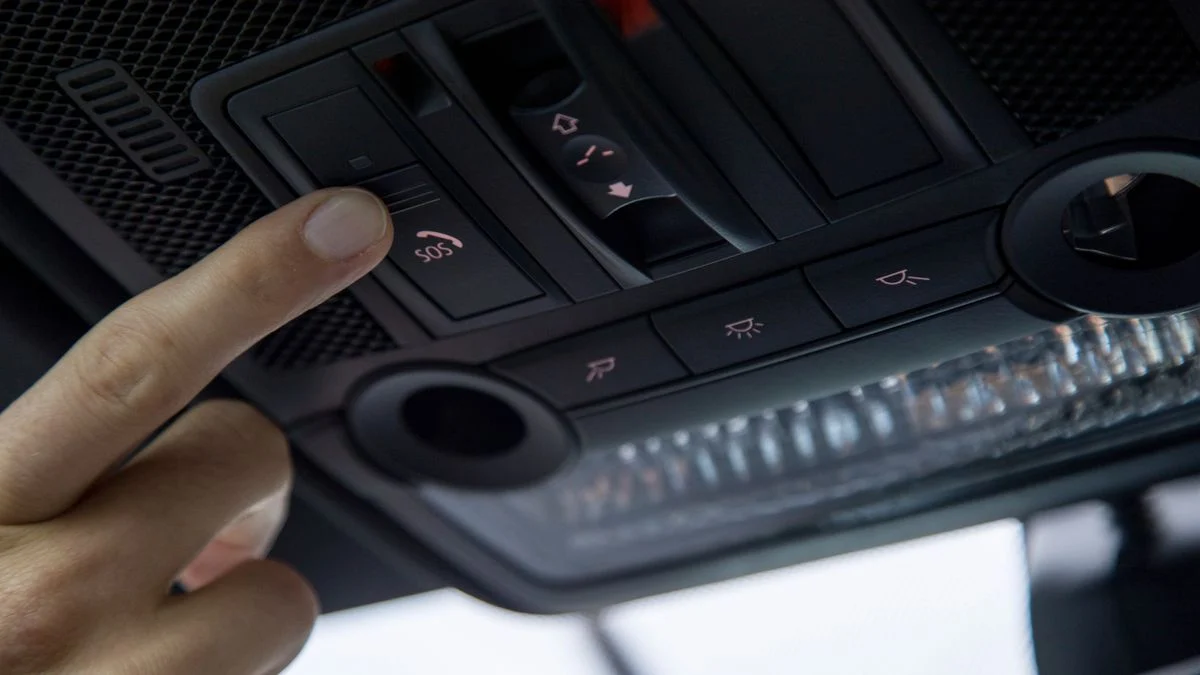
Since 2018, the European Union has mandated that all new passenger cars be equipped with "eCall," an automated emergency response system that dials 112 in the event of a severe accident. A significant portion of vehicles produced between 2018 and the introduction of the "Next Generation eCall" (early 2026) were built using 2G communication modules.
The TÜV Dilemma
The prospect of millions of cars losing their emergency communication capability has created a debate regarding the TÜV (Technical Inspection Association) safety certification. There is growing concern that vehicles lacking a working eCall system could technically fail their safety inspections.
The TÜV Association has voiced a pragmatic stance, suggesting that vehicles should not be denied a inspection sticker solely because an eCall update is unavailable, provided the rest of the car meets safety standards. However, the final authority remains with the federal legislature. Currently, manufacturers like Volkswagen are attempting to mitigate this by issuing software updates to transition legacy systems to newer network protocols. Yet, for many older or entry-level models, the hardware may be physically incapable of supporting anything beyond 2G, leaving owners in a precarious position.
Beyond Cars: The Hidden Landscape of Connected Objects
The impact of the 2G shutdown extends well into the "Internet of Things" (IoT) sector. Numerous industrial and household devices—including smart meters, fire alarms, tele-care systems for the elderly, and fleet management trackers—rely on the low-power, wide-area coverage provided by 2G.
Industrial Adaptation
Vodafone, in particular, has acknowledged the difficulty this poses for business customers and has extended a grace period for certain industrial applications until 2030. This two-year buffer is intended to allow for the replacement of legacy hardware, which is often deeply embedded in infrastructure and difficult to access.
However, private consumers using "dumb" phones from the early 2000s will find their devices essentially useless after 2028. While this affects only a small percentage of the population, it represents a complete loss of utility for a specific segment of elderly users who rely on simple, durable hardware.
Official Responses and Strategic Outlook
The consensus among German telecommunications providers is that the shutdown is not merely a cost-saving measure, but an environmental and technical necessity. By consolidating spectrum, carriers aim to reduce energy consumption per transmitted gigabyte, aligning with broader climate goals.
The Risk of the "New" Funkloch
Despite the optimism from carriers, skeptics point to the remaining "Funklöcher" (dead zones). While the percentage of coverage is high, the topography of rural Germany means that 2G currently provides connectivity in valleys and remote forests where 4G and 5G signals often struggle to reach due to their physical properties.
Critics warn that unless the government mandates the installation of new high-frequency towers in these specific, currently 2G-dependent locations, the 2028 deadline could lead to a permanent loss of service in remote areas. The Federal Network Agency is monitoring this closely, emphasizing that the transition must be managed to avoid a digital divide.
Conclusion: Preparing for the Final Switch
As 2028 approaches, the German automotive and telecommunications sectors must navigate a complex transition. For the average citizen, the change will likely be invisible—a seamless background migration to more powerful networks. For the automotive industry and legacy industrial operators, however, the next four years represent a critical window for hardware updates, fleet modernization, and legislative clarification.
The end of 2G marks the definitive conclusion of the "early" digital age. By moving to a unified 4G/5G standard, Germany is setting the stage for more robust, secure, and data-rich communication, even if the road to that destination requires overcoming significant logistical and regulatory obstacles. The message to vehicle owners and operators of legacy machinery is clear: investigate your hardware compatibility now, as the countdown to the 2G sunset has officially begun.