By Chaled Nahar
Published: September 29, 2026
The foundation upon which the modern era of Manchester City has been built is currently undergoing an unprecedented structural audit. On Tuesday, September 29, 2026, the sporting world was shaken by the announcement that an independent commission had found Manchester City guilty of the vast majority of charges brought against them by the Premier League regarding systemic breaches of financial regulations. The ruling, which centers on the period between 2009 and 2018—the transformative first decade under the ownership of the Abu Dhabi United Group—has cast a shadow of illegitimacy over the club’s most successful era.
As the dust settles, the footballing community is left grappling with a singular, harrowing question: What happens now? While the verdict marks a definitive turning point, the procedural journey is far from over. The determination of sanctions remains pending, and with the club expected to launch a vigorous appeal, the final chapter of this saga may remain unwritten for months, if not years.
The Verdict: A Decade of Deception
The independent commission’s findings are as damning as they are extensive. The charges, which were formally brought forward in 2023 following a four-year investigation triggered by revelations from Der Spiegel, describe a sophisticated, multi-layered effort to manipulate the club’s financial health.
According to the report, Manchester City utilized "shell" sponsorship agreements to artificially inflate revenue streams, effectively disguising the source of funds to bypass both Premier League and UEFA Financial Fair Play (FFP) regulations. The commission concluded that the club systematically understated its costs while simultaneously inflating its income by approximately £900 million (over €1 billion).
Furthermore, the club was found to have provided false financial statements to auditors and regulatory bodies, intentionally obscuring the true nature of their expenditures. This was not a minor oversight; it was, according to the ruling, a calculated strategy to maintain a competitive advantage in the transfer market and wage structures, allowing the club to outspend rivals while appearing to operate within the strict confines of financial sustainability rules.
Chronology of a Crisis
The road to this verdict has been long, winding, and intensely litigious.
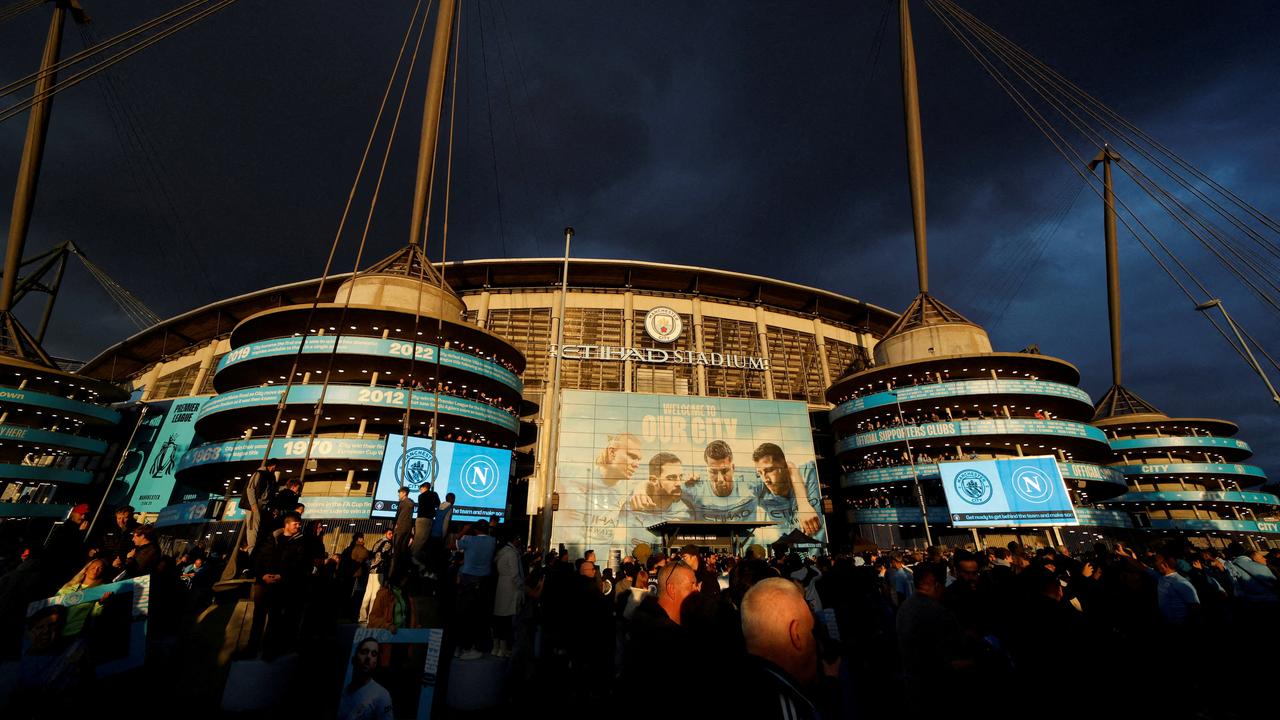
- 2009–2018: The core period of the alleged breaches. During this time, Manchester City secured three Premier League titles and established themselves as a global powerhouse.
- 2019: Following investigative reports by Der Spiegel which leaked internal documents, the Premier League launched an official investigation into the club’s financial practices.
- 2020: UEFA initially banned Manchester City from the Champions League for two years due to financial irregularities. However, the Court of Arbitration for Sport (CAS) later overturned the ban, citing that many of the allegations were time-barred under UEFA’s statute of limitations.
- 2023: The Premier League formally charged Manchester City with over 100 breaches of its financial rules, spanning nearly a decade of activity.
- 2026 (September 29): An independent commission releases its findings, confirming that the club is guilty of nearly all charges, including failing to provide accurate financial information and failing to cooperate with the league’s investigation.
The Mechanics of Financial Doping
At the heart of the case is the concept of "Financial Doping." The regulations set by the Premier League and UEFA are designed to ensure that clubs grow organically, based on the revenue they generate. By inflating sponsorship deals—often involving companies linked to the club’s ownership—City created an illusion of self-sustainability.
These "fake" revenues allowed the club to recruit elite-level talent and world-class managers that otherwise would have been prohibited by the Profit and Sustainability Rules (PSR). When a club hides its true costs, it gains an unfair edge; it creates a playing field that is tilted, not just in terms of tactics, but in terms of the very capital required to compete. The irony is not lost on observers that this era of "financial engineering" culminated in the club’s 2023 UEFA Champions League title, a trophy that now carries a heavy, lingering asterisk in the minds of critics.
Potential Sanctions: The Arsenal of Consequences
The Premier League possesses a broad spectrum of disciplinary measures. While the football world waits for the final sentencing, speculation has reached a fever pitch.
1. Points Deductions
The most immediate and likely consequence is a significant points deduction. Following the precedents set by Everton and Nottingham Forest, who were docked points for far less extensive breaches, a massive deduction for Manchester City would be a logical step. The debate remains whether such a penalty would be applied retroactively or in the current season, which could effectively relegate the club from the standings or strip them of current title pursuits.
2. Expulsion from the League
While considered a "nuclear option," the Premier League has the authority to expel a club. Though many legal experts argue that a forced relegation to the lower tiers of the English Football League (EFL) is more plausible than total expulsion, the precedent would be cataclysmic.
3. Retroactive Title Stripping
Could the titles won between 2009 and 2018 be revoked? In other sports, such as cycling or athletics, the removal of honors due to doping is standard. In football, however, it is rare. Juventus was stripped of two Serie A titles in 2005/06 due to match-fixing, and Olympique Marseille lost their 1993 status under similar clouds. While legally complex, the Premier League could theoretically adjust the record books. However, as many analysts point out, this is a purely symbolic act; you cannot retroactively "give back" the joy of a last-minute goal or the European qualification spots lost by other clubs over the last decade.
The Geopolitical Dimension
It is impossible to view this case through a purely sporting lens. The club is owned by Sheikh Mansour bin Zayed Al Nahyan, brother of the President of the United Arab Emirates. A conviction against Manchester City is, by extension, a diplomatic embarrassment for the ruling family of the UAE. This adds a layer of complexity to the enforcement of the penalties, as the Premier League navigates the intersection of international diplomacy, massive commercial interests, and the integrity of the sport.
The Path Forward: Appeals and Legal Wrangling
Manchester City has consistently denied all allegations, maintaining that the accusations are "entirely false" and supported by "flawed evidence." The club is almost certain to challenge the commission’s decision.
Unlike the UEFA proceedings in 2020, where the CAS ruling leaned heavily on the statute of limitations, the Premier League’s rules are far more stringent. There is no such "expiry date" on the breaches for which City has been found guilty. This suggests that the club’s legal team—likely one of the most expensive and well-resourced in the world—will have a much harder time finding a procedural exit ramp this time.
Implications for the Global Game
The fallout from this verdict will echo throughout football for years. If a club as powerful as Manchester City can be sanctioned for systemic financial fraud, it signals a new, tougher era for the Premier League.
Furthermore, the economic impact is massive. Clubs that lost out on Champions League qualification or Premier League titles during the decade of breaches are already exploring the potential for civil litigation. If City is found to have deprived other clubs of millions in prize money, the financial liability could dwarf any fine the league itself imposes.
The case of Chelsea—who were recently fined for financial irregularities during the Roman Abramovich era—serves as a point of comparison. However, the scale of the charges against City is vastly different. While Chelsea self-reported their issues and received a relatively modest fine and a suspended transfer ban, City’s situation involves a decade of alleged active concealment.
Conclusion
The "Trial of the Century" has reached its primary verdict, but the final judgment is yet to come. The integrity of the Premier League is on the line. If the league fails to deliver a penalty that reflects the severity of the findings, it risks being seen as a toothless regulator. Conversely, if it imposes a sanction that fundamentally alters the club’s existence, it risks a legal war that could paralyze the sport for a generation.
As the fans wait, the narrative of the "noisy neighbors" has shifted. Manchester City is no longer just a football club; they are the subject of the most significant regulatory investigation in the history of the sport. The golden age of their history now faces the ultimate test—not on the pitch, but in the courtroom.