By Veronika Simon, Science Correspondent
Stockholm, Sweden — October 7, 2026
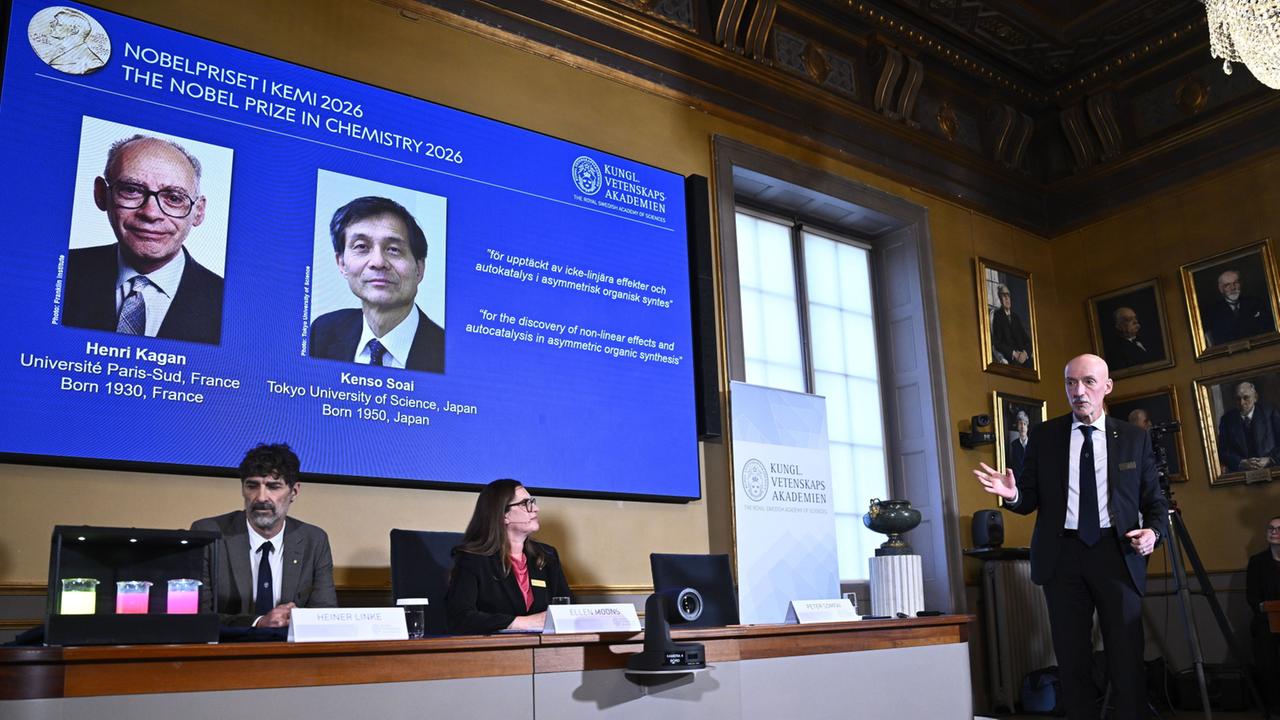
In a landmark decision that celebrates the fundamental mastery of molecular architecture, the Royal Swedish Academy of Sciences has awarded the 2026 Nobel Prize in Chemistry to Henri Kagan and Kenso Soai. The duo was honored for their revolutionary contributions to the field of asymmetric synthesis—a breakthrough that has fundamentally reshaped how scientists perceive and construct the building blocks of life, medicine, and modern materials.
The laureates’ work centers on "chirality," a Greek term for "handedness." Much like a pair of human hands, which are mirror images of one another but cannot be perfectly superimposed, certain molecules exist in two distinct, mirror-image forms. While they share identical atomic compositions, their spatial arrangements often dictate vastly different biological behaviors. Kagan and Soai’s ability to control this "handedness" has provided the chemical industry with a master key to precision manufacturing.
The Core Concept: Why Molecular Symmetry Matters
To the layperson, the difference between a left-handed and a right-handed molecule may seem like a trivial geometric curiosity. However, in the world of organic chemistry, this distinction is a matter of life and death.
"The analogy is simple, yet profound," says Dr. Heiner Linke of the Nobel Committee. "If you choose the wrong glove for your right hand, it doesn’t fit, it pinches, and it fails its purpose. Molecules behave the same way. When a drug molecule interacts with a protein in the human body, it must fit into the receptor like a key into a lock. If the molecule is the wrong ‘mirror image,’ it won’t just fail to work; it can trigger toxic side effects."
The most infamous cautionary tale in pharmaceutical history is the drug Thalidomide (Contergan). Developed in the mid-20th century, the drug was marketed as a safe sedative. It existed as a mixture of two mirror-image molecules: one provided the intended therapeutic relief, while the other was a potent teratogen, causing catastrophic developmental defects in fetuses. This tragic history underscored the urgent necessity for methods that could produce "homochiral" substances—pure samples consisting of only one specific mirror-image form.
Chronology of a Scientific Revolution
The path to controlling chirality was fraught with difficulty. For decades, chemists could synthesize molecules, but they were almost always produced as a "racemic mixture"—a 50/50 blend of both left- and right-handed versions. Separating these mixtures after the fact is costly, inefficient, and often results in the waste of half the produced material.
The Kagan Contribution: Catalytic Precision
Henri Kagan, born in 1930, emerged as a visionary in the field during the latter half of the 20th century. His work focused on the development of "chiral catalysts." By introducing a special, asymmetric molecule into a chemical reaction, Kagan demonstrated that he could steer the outcome. The catalyst acted like a sculptor’s mold, forcing the reactants to assemble in one specific orientation rather than the other. His pioneering work on rhodium-based catalysts provided the first robust toolkit for chemists to exert control over molecular geometry on an industrial scale.
The Soai Contribution: The "Coolest" Experiment
If Kagan provided the toolkit, Kenso Soai, born in 1950, provided the breakthrough that seemed to mimic the self-organizing mysteries of nature. In the 1990s, Soai developed an autocatalytic reaction that left the global scientific community stunned.
In his experiment, the product of the reaction itself acted as a catalyst to produce more of the same mirror-image form. This created a "positive feedback loop," where a tiny initial bias toward one form was rapidly amplified until the final product was 100% pure. Peter Somfai, a member of the Nobel Committee, famously dubbed this "the coolest experiment in organic chemistry," as it provided the first laboratory-scale model for how the universe might have tipped the scales in favor of one specific handedness in early biological systems.
Supporting Data and Implications
The impact of the Kagan-Soai discovery extends far beyond the laboratory bench. It has become a cornerstone of modern industrial synthesis.
Pharmaceutical Efficacy
Today, over 80% of all modern pharmaceutical drugs are chiral. Without the ability to synthesize pure mirror-image forms, the development of modern antivirals, antidepressants, and anti-cancer therapies would be significantly more expensive and less safe. By perfecting these "rules of the game," Kagan and Soai have enabled the mass production of high-purity medicines that minimize side effects and maximize therapeutic impact.
Material Science and Beyond
Beyond medicine, the implications extend to:
- Flavor and Fragrance: As noted by experts, the aroma of caraway seeds is one mirror-image isomer, while its exact mirror counterpart smells of mint. The ability to isolate these isomers is essential for the food and fragrance industries.
- Agrochemicals: Modern pesticides and herbicides are increasingly designed to be chiral, allowing them to target specific agricultural pests while remaining benign to the surrounding ecosystem and human health.
- Electronic Materials: Emerging research into liquid crystals and organic LEDs (OLEDs) relies heavily on the precise spatial arrangement of molecules to conduct light and electricity efficiently.
Official Responses and Reflections
The atmosphere in Stockholm was electric as the Nobel Committee announced the winners. Henri Kagan, reached at his home, expressed humility, noting that he always viewed chemistry as a "dance of symmetry."
Kenso Soai joined the press conference via video link from Japan. Visibly moved, he described the announcement as "one of the most exhilarating moments of my existence."
"Our reaction is not the final word," Soai stated during the Q&A session. "It is a window into the self-organizing potential of nature. I hope this recognition serves as an invitation to the next generation of scientists to explore the deeper mysteries of how asymmetry governs our lives—from the DNA in our cells to the evolution of biological systems."
Dr. Oliver Trapp, a professor at the Ludwig-Maximilian-University of Munich and a leading voice in the field of chiral research, emphasized the paradigm shift the duo initiated. "Before Kagan and Soai, we were fighting against probability. They showed us how to bend nature to our will, using the laws of chemistry to create order out of potential chaos. It is a fundamental triumph of human intellect."
Looking Toward the Future: The Unfinished Quest
While the 2026 Nobel Prize celebrates the milestones reached by Kagan and Soai, the scientific community is already looking toward the next frontier. Despite our success in controlling chirality, many questions remain about the "homochirality" of life itself. Why did nature choose the specific handedness it did for amino acids and sugars?
The work of these two laureates has provided the roadmap for answering such questions. By mastering the ability to design molecules with atomic precision, the scientific community is now better equipped to tackle the challenges of the 21st century—from climate-neutral chemical production to the synthesis of complex bio-materials.
As the Nobel Committee noted in their closing remarks, the prize is not just a recognition of past achievements, but a catalyst for future exploration. Kagan and Soai have taught us the "rules of the game," but as the laureates themselves suggest, the game of chemistry is far from over. It is, in fact, only just beginning.