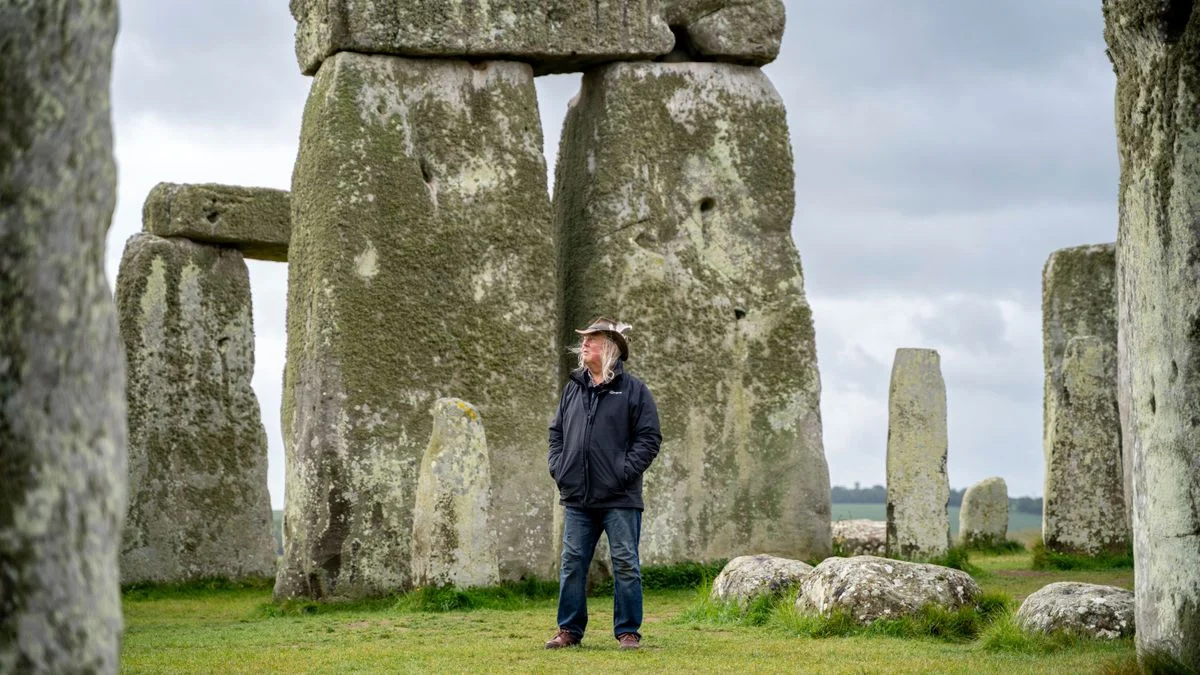
Every year, as the summer solstice approaches on June 21, thousands of pilgrims, tourists, and modern-day druids descend upon the Salisbury Plain in Wiltshire, England. They gather in the shadow of Stonehenge, the world’s most iconic prehistoric monument, to witness the sun aligning perfectly with the massive sarsen stones. For decades, archaeologists have sought to understand the origins of this architectural marvel, questioning whether it emerged as a singular, sudden feat of engineering or as the culmination of a long-evolving cultural tradition.
A groundbreaking discovery by Wessex Archaeology has now provided a compelling answer. Researchers have identified a "prototype" for Stonehenge located just five kilometers from the famous stone circle in the parish of Bulford. This newfound site, dating back approximately 5,000 years, suggests that the Neolithic people of Britain were observing the heavens and engineering complex solar alignments centuries before the iconic stones were ever hauled into place.
The Discovery: A Monument of Wood and Earth
While the famous Stonehenge is characterized by its imposing megalithic structures, the Bulford site is far more subtle, leaving behind only faint traces for the modern eye to decipher. According to the research team at Wessex Archaeology, the monument originally consisted of two massive wooden posts positioned 120 meters apart.
Time has eroded the wooden structures themselves, but the subterranean legacy remains. Excavations revealed the deep pits that once anchored these timbers, allowing archaeologists to map the layout of the site with precision. By conducting rigorous soil and carbon analysis, the team has dated the construction to roughly 3,000 BCE—a full 500 years before the primary phase of Stonehenge’s stone alignment.
Unlike the dramatic stone pillars that define the horizon today, this earlier site functioned as a "horizon observatory." The researchers reconstructed the ancient landscape and the celestial view as it would have appeared to Neolithic observers. Their findings confirm that the placement of the wooden posts was no accident: they were specifically engineered to align with the sunrise during the summer solstice and the sunset during the winter solstice.
Chronology: A Timeline of Neolithic Ingenuity
The discovery forces a recalibration of how we view the timeline of Neolithic British history. For years, the narrative suggested that Stonehenge was a relatively isolated event in the landscape, a sudden burst of architectural ambition. The Bulford site reveals a more nuanced, gradual development of ritualistic space.
- c. 3,500 – 3,000 BCE: Early Neolithic communities begin to settle in the Salisbury Plain. The discovery of the Bulford post-pits suggests that these groups were already engaged in sophisticated astronomical observations.
- c. 3,000 BCE: The Bulford wooden monument is constructed. It serves as a communal hub for solstitial rituals, setting a precedent for the importance of the sun’s cycle in the local belief system.
- c. 2,500 BCE: The transition from wood to stone begins. The knowledge gained from earlier, ephemeral structures like the Bulford site informs the construction of the permanent megaliths at Stonehenge.
- Present Day: Modern archaeological techniques, including laser scanning and remote sensing, allow researchers to connect these disparate sites, revealing a sprawling "sacred landscape" rather than just a single monument.
Supporting Data and Technical Analysis
The validation of the Bulford site relied on a multi-disciplinary approach. Wessex Archaeology utilized advanced digital modeling to recreate the ancient horizon. Because the earth’s tilt and the position of the stars shift over millennia, the researchers had to calculate the exact celestial coordinates as they existed 5,000 years ago.
The team analyzed the "intervisibility" between the Bulford site and other nearby Neolithic monuments. This suggests that the landscape was not just a collection of random structures, but a highly curated environment. The two wooden posts served as a terrestrial compass, anchoring the local population to the cyclical nature of the seasons.
Furthermore, evidence gathered from the soil samples indicates that the site was not merely a ceremonial backdrop but a place of intense social activity. The team identified what they describe as "extensive evidence" of feasting and large-scale gatherings. The presence of pottery shards and animal bone remains near the pits indicates that the solstices were occasions for major communal events, where people traveled from surrounding regions to participate in ritualized dining and celebration.
Official Responses and Expert Commentary
The academic community has received the findings with significant enthusiasm. Dr. Fabio Silva, the lead researcher on the project, highlighted the shift in perspective that this discovery necessitates.
"The alignment shows that the communities were already deeply engaged with the summer and winter solstices within the Stonehenge landscape centuries before the stones were erected," said Dr. Silva. "This discovery helps us stop viewing Stonehenge as a unique, one-off structure. Instead, it suggests a long-standing tradition of practice that culminated in the stone monument we see today."
According to the Wessex Archaeology report, the site serves as the "missing link" in the evolutionary history of British megaliths. By constructing simpler, wooden monuments first, Neolithic builders refined their skills in geometry and astronomical tracking. This process of trial and error, combined with the successful management of large labor forces for ritual events, provided the social and technical foundation necessary for the monumental task of moving and erecting the massive stones of Stonehenge.
The Broader Implications: Redefining Prehistoric Britain
The existence of the Bulford "prototype" changes the narrative of Stonehenge in three profound ways:
1. The Landscape as a Living Calendar
We now understand that the Salisbury Plain was likely a "living landscape" where the movement of the sun dictated the rhythm of life. The Bulford site proves that the desire to track the solstice was not an obsession that began with the stone builders, but a foundational cultural pillar.
2. Ritual Precedes Architecture
The evidence of feasting and large-scale gatherings suggests that the "social infrastructure" existed long before the "physical infrastructure." The site was likely a hub for regional diplomacy, trade, and religious cohesion. People gathered to celebrate the sun, and it was this shared purpose that necessitated the eventual creation of more permanent, awe-inspiring monuments.
3. A Gradual Evolution of Design
The jump from two wooden posts to the complex lintel-and-tenon construction of Stonehenge is significant. However, with the Bulford discovery, we can see the "lineage" of the design. The architectural intent—to bridge the gap between the terrestrial world and the celestial realm—remained constant, even as the materials evolved from wood to stone.
Conclusion: A Window into the Neolithic Mind
The discovery at Bulford reminds us that history is rarely written in singular, dramatic strokes. Instead, it is a mosaic of incremental advancements. As we look at the ruins of Stonehenge today, we are not looking at the start of a story, but at a late chapter.
The original architects of the Salisbury Plain were not primitive; they were sophisticated observers of the cosmos who possessed the social organization to align their lives—and their monuments—with the heavens. By finding the "prototype," Wessex Archaeology has not diminished the mystery of Stonehenge; rather, they have enriched it. We now see a landscape populated by generations of people who, through wood, stone, and fire, sought to understand their place in the universe.
As further excavations continue, the story of the Salisbury Plain will undoubtedly continue to evolve. For now, the wooden posts at Bulford stand as a silent testament to an ancient civilization that looked at the horizon, tracked the turning of the year, and decided to build something that would outlast them all. The stones of Stonehenge remain the stars of the show, but they are no longer standing alone—they are part of a much older, deeper, and more human tradition.