Whether it is the pounding rhythm of Queen’s "We Will Rock You" or the haunting, ethereal minimalism of Depeche Mode’s "Enjoy the Silence," music possesses a unique, almost supernatural ability to transport us. In a matter of seconds, a familiar melody can bridge the gap between the present moment and a distant, long-forgotten memory. But what is truly happening beneath the surface? Why does a specific sequence of notes trigger such visceral emotional responses, and how does our brain process these auditory signals?
Recent neurological research, coupled with studies from the fields of psychology and musicology, has begun to peel back the layers of this phenomenon. It appears that our brains do not merely "hear" music; they engage in a complex, multi-dimensional reconstruction of meaning, narrative, and memory.
The Architecture of Musical Perception
To understand the profound impact of music, we must first recognize that it is far more than a simple sequence of tones. Music is a sophisticated interplay of rhythm, melody, harmony, and timbre. When sound waves hit our eardrums, the brain’s auditory cortex begins a lightning-fast analysis. It identifies patterns, anticipates structure, and connects these stimuli to our personal reservoir of life experiences.
This process is not solitary. A groundbreaking study recently published by researchers at Princeton University suggests that music evokes remarkably shared neural representations across different people. When listening to unfamiliar instrumental pieces, approximately 71 percent of participants described narratives that aligned closely with those of others. Even more compellingly, these shared "storylines" were reflected in similar activity patterns across the listeners’ brains, suggesting that our neural pathways are wired to interpret musical structure in a universally human way.

Mapping the Musical Brain: A Deep Dive
Two decades ago, the Max Planck Institute for Human Cognitive and Brain Sciences in Leipzig conducted a seminal study that remains a cornerstone of neuro-musicology. Researchers sought to understand how the brain distinguishes between harmonious, pleasant music and dissonant, "unpleasant" auditory input.
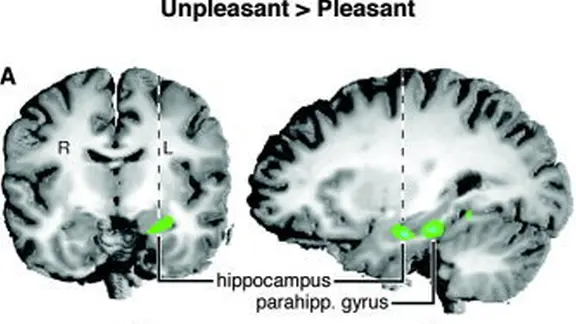
The study involved young adults with no formal musical training. They were exposed to harmonious classical works by Bach and Dvořák, as well as jazz compositions. The researchers then intentionally manipulated these tracks, introducing dissonant tones to create an "unpleasant" experience. Using fMRI scanning, the team mapped the distinct neurological responses.
Key Neurological Findings:
- The Reward System: When participants listened to harmonious, pleasant music, the ventral striatum—a core component of the brain’s reward and motivation circuitry—showed heightened activity. This explains the physiological "high" or sense of satisfaction we derive from a favorite song.
- The Emotional Anchor: Dissonant music, by contrast, triggered the amygdala and the hippocampus. The amygdala is responsible for emotional processing, while the hippocampus acts as the librarian of our memories. By activating these areas, the brain signals that the sound is "concerning" or requires immediate emotional evaluation.
Remarkably, the activity in these regions did not plateau; it intensified over the duration of the listening experience. This suggests that the emotional impact of a song is cumulative, building a bridge between sensory perception and long-term psychological states.
Music as a Gateway to Memory
Beyond immediate emotional spikes, music serves as a profound mnemonic device. The connection between specific songs and autobiographical memories—what psychologists call "music-evoked autobiographical memories" (MEAMs)—is one of the most powerful tools in the human cognitive toolkit.

In a 2023 study led by Dr. Kelly Jakubowski and Emma Francini at Durham University, researchers explored the mechanics of this recall. They recruited 100 participants to listen to 24 diverse musical clips. The results were startling:
- The Power of Familiarity: Known songs triggered nearly three times as many autobiographical memories as unfamiliar ones.
- Speed of Recall: On average, a familiar song triggered a specific memory within ten seconds, whereas unfamiliar music took nearly fourteen seconds to yield a result—if it did at all.
- Contextual Binding: In roughly 79 percent of instances involving known music, the song was actually playing during the original event being recalled. This confirms that music acts as a "contextual anchor," embedding itself into the fabric of our life experiences.
The Role of Emotional Valence and Energy
The Durham study also revealed that the "energy" of a song matters as much as its perceived mood. While positive music naturally pulls forward positive memories, the relationship with negative music is more complex. High-energy, "negative" music (such as fast-paced, aggressive tracks) often triggered positive memories associated with social events like parties or dancing. This implies that our brains categorize music not just by "happy or sad," but by the physiological arousal and the social context in which the music was consumed.
Implications for Mental Health and Therapy
These findings have profound implications for clinical settings. If music is a reliable key to the hippocampus and amygdala, it offers a non-invasive pathway to reach individuals suffering from memory-related disorders, such as dementia or Alzheimer’s. By curating a "soundtrack" of a patient’s life, caregivers can potentially unlock memories and stabilize emotional states that are otherwise inaccessible.
Furthermore, the realization that music triggers shared neural representations suggests that communal listening—such as concerts or group therapy—can foster empathy and social cohesion by synchronizing the emotional responses of a crowd.
Official Perspectives: The "Soundtrack of My Life"
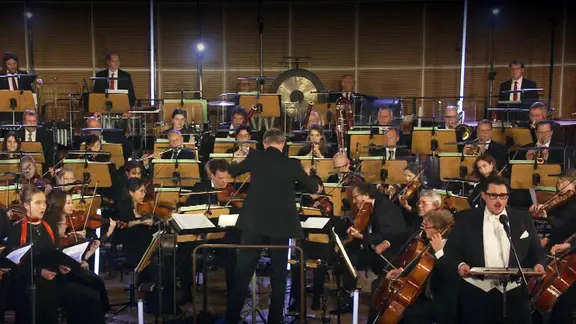
The intersection of music, science, and personal narrative is the central theme of the upcoming "Soundtrack of My Life" project by the MDR Symphony Orchestra in Leipzig. The project seeks to answer the question: What does music signify in the modern human experience?
"Music is not just background noise," a representative for the project noted. "It is the emotional map of our lives. When we play pieces ranging from Puccini to John Lennon, we aren’t just performing notes; we are facilitating a dialogue between the audience and their own pasts."
The initiative highlights a critical shift in how institutions are viewing classical music: moving away from the static, academic appreciation of the past and toward a dynamic, personalized engagement with the listener’s biography.
Chronology of Scientific Understanding
- 2005-2006: Max Planck Institute identifies the role of the ventral striatum and amygdala in musical pleasure and displeasure.
- 2023: Durham University researchers confirm the "contextual anchor" theory, proving that music serves as a primary retrieval cue for autobiographical data.
- 2026: Princeton University research demonstrates that music creates shared narrative structures in the brain, suggesting a common "musical language" of storytelling.
The Future of Musical Consumption
As we move into an era where digital archives make almost every song ever recorded instantly available, the way we interact with music is changing. However, the biological hardware remains the same. Whether we are listening to a vinyl record or a digital stream, the brain continues to use music to define who we are, where we have been, and what we feel.
The "Soundtrack of My Life" concert series, scheduled for October 2026, serves as a poignant reminder of this. As MDR Klassik transitions from a dedicated radio wave to new digital platforms, the goal remains the same: ensuring that the soundtrack of our lives remains audible. By moving content to ARD Mediathek and digital platforms, the mission of connecting music to the human experience is being future-proofed.
In conclusion, music is not merely an aesthetic choice; it is a fundamental cognitive necessity. It acts as an architect of our memories and a regulator of our emotions. As science continues to map the neural pathways that light up when the music starts, we gain a deeper appreciation for the complex, beautiful, and deeply personal soundscape that lives within each of us. Whether it is a song from a first date or a melody that reminds us of home, the soundtrack of our heads is arguably the most accurate record of our existence.