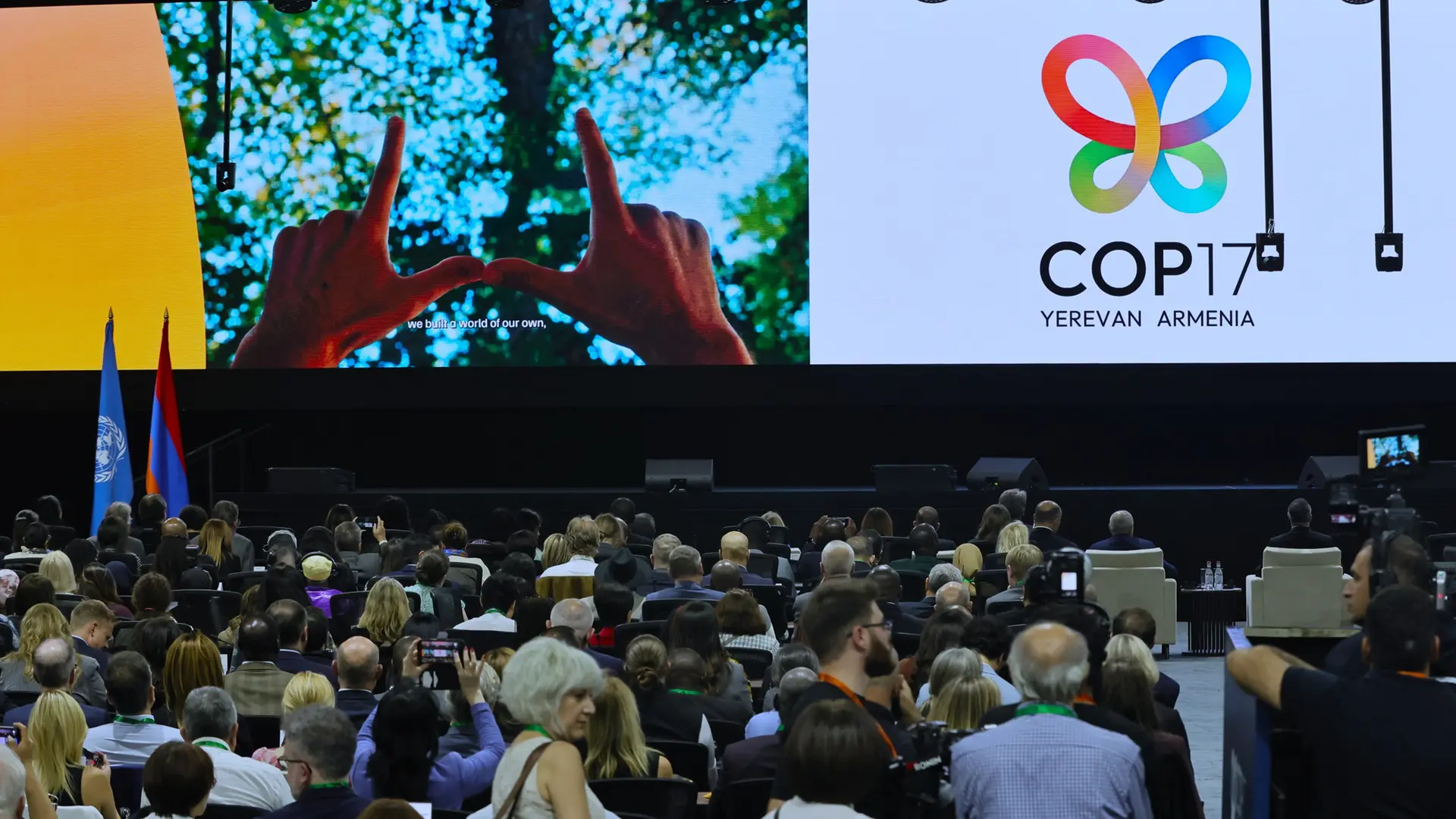
Jerewan, Armenia – October 21, 2026. As the world gathers in the Armenian capital for the 17th UN Biodiversity Conference (COP17), the mood is a mixture of diplomatic optimism and stark scientific realism. With 30,000 delegates, activists, and researchers descending on Jerewan, the summit represents one of the most critical junctures in the history of environmental policy. Following the landmark 2022 Kunming-Montreal Global Biodiversity Framework, the international community is now facing a "moment of truth": a comprehensive audit of whether the planet is actually on track to preserve its natural foundations by 2030.
The Global Stakes: A Planet in Decline
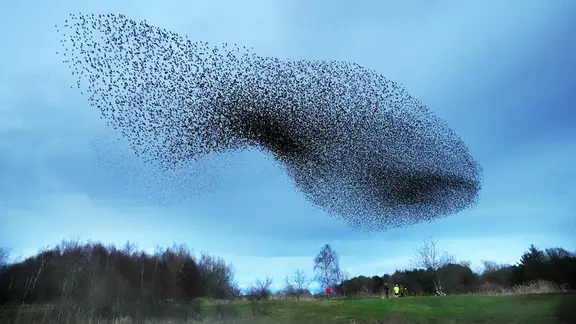
The scale of the crisis is difficult to overstate. Scientists warn that we are currently in the midst of the sixth mass extinction event, driven not by geological catastrophes, but by human activity. From the rapid disappearance of pollinators to the collapse of forest ecosystems and the acidification of our oceans, the threads of the web of life are fraying.
The COP17 summit in Jerewan is tasked with moving beyond the ambitious rhetoric of 2022. The central pillar of the current agenda is the "30×30" goal: a commitment by nations to protect at least 30 percent of the world’s land and sea areas by 2030. However, as of this week, the data presented in initial reports suggests that the world is woefully behind. A recent UN assessment highlighted that on 22 out of 23 defined targets, the global community is currently failing to meet the required benchmarks.
The Role of Research: The View from Dresden
Among the thousands of attendees, a contingent of researchers from Central Germany, including experts from the Leibniz Institute of Ecological Urban and Regional Development (IÖR) in Dresden, have arrived to bridge the gap between abstract policy and practical implementation.
Dr. Karsten Grunewald, a lead researcher from the IÖR, describes the atmosphere in Jerewan as a "World Expo of Conservation." While the sheer diversity of stakeholders—from indigenous leaders to high-level ministers—is inspiring, the underlying urgency is palpable. "It is very colorful, very lively, and incredibly diverse," says Dr. Grunewald. "But the challenge lies in translating this energy into binding, measurable actions that survive the flight home."
For the German delegation, the goal is not merely to observe but to provide the analytical tools necessary for success. Wolfgang Wende, a fellow researcher at the IÖR, emphasizes that the scientific community’s role is to act as a reality check for political actors. "We are here to provide the data that makes nature visible in the ledger books of economics and politics," he notes.
Chronology of the Biodiversity Crisis
To understand why COP17 is so vital, one must look at the recent timeline of environmental policy:
- 2022 (COP15, Montreal): The birth of the Kunming-Montreal Global Biodiversity Framework. This agreement was hailed as the "Paris Agreement for Nature," setting concrete, time-bound targets to stop and reverse nature loss.
- 2023–2025 (The Implementation Gap): Years characterized by slow legislative progress. Despite the promises made in Montreal, few nations successfully integrated these biodiversity goals into their national economic strategies.
- October 2026 (COP17, Jerewan): The first major "stocktaking" summit. This is the first time the global community is formally measuring progress against the 2030 deadlines.
- 2030 (The Deadline): The target year for the 30×30 goal. Currently, the world is trending toward missing this deadline by a significant margin.
Measuring the Unmeasurable: Ecosystem Accounting
One of the most significant contributions coming out of the Dresden research camp is the development of "Ecosystem Accounting." Working in close collaboration with Armenian colleagues, the IÖR team has spent months mapping natural assets in the region. The goal is to move past the vague notion of "preserving nature" and toward a precise, data-driven understanding of "ecosystem services."
Ralf-Uwe Syrbe, who specializes in the mapping and valuation of these services, explains that policymakers often ignore nature because they lack a clear price tag for its destruction. "We are translating the services provided by nature—such as water purification, carbon sequestration, and pollination—into clear indicators and numbers," says Syrbe. "If a government can see the exact economic cost of losing a wetland, they are far more likely to protect it. Our work provides the information basis for decision-making."
By making these assets "visible," researchers hope to force nature into the center of national budget discussions. If the benefit of an intact forest can be quantified alongside the cost of a new industrial project, the political calculus for conservation changes entirely.
Official Responses and Political Will
The political high-stakes theater will intensify next week when high-level officials, including German Environment Minister Carsten Schneider, take their seats at the negotiating table. The pressure is on these leaders to move beyond pledging and toward legislative action.
The primary obstacle remains funding. While developing nations demand financial support to transition their economies toward sustainable models, wealthier nations have been hesitant to commit the necessary capital. The debate in Jerewan is expected to hinge on whether the "Global North" will provide the technological and financial aid required to ensure that the Global South can preserve its biodiversity without sacrificing its development goals.
Implications: A World at a Crossroad
The implications of the outcome of COP17 are profound. If the conference results in empty promises, the 2030 goals will almost certainly drift out of reach, locking the planet into a cycle of degradation that could take centuries to reverse. However, if the delegates can leverage the data-driven approaches being presented by institutions like the IÖR, there is a narrow pathway to success.
The message from the scientists in Jerewan is consistent: the knowledge exists, the technology exists, and the economic rationale for conservation is clearer than ever. What remains the "missing link" is the political courage to treat the loss of biodiversity with the same level of existential urgency as climate change.
"We are not here to witness the end of the world," says Wolfgang Wende. "We are here to help politicians understand that the natural world is not a luxury—it is the foundation of our economy and our survival. 2030 is only four years away. The clock is not just ticking; it is ringing."
As the discussions continue over the next two weeks, the eyes of the world are fixed on Armenia. Whether the COP17 becomes a footnote in a long history of failed environmental summits or the turning point for a greener, more resilient planet, remains to be seen. For now, the researchers in Jerewan continue their work, mapping the earth, measuring its value, and hoping that the world will finally choose to listen.
For more information on the ongoing research projects and the side-events of the COP17, interested parties can visit the official IÖR website, which provides detailed insights into their "Ecosystem Accounting" initiative and the collaborative efforts between Germany and Armenia.