As yields on US government bonds reach levels unseen in over two decades, financial markets are grappling with a haunting question: Are we witnessing the precursor to a multi-decade bull market, or is the era of fiscal irresponsibility signaling a permanent shift in the global debt landscape?
Date: October 14, 2026
The financial world is currently fixated on a singular, powerful metric: the yield on the 10-year US Treasury note. Having recently breached the 5.3% threshold—a level not sustained since 2002—the bond market is echoing the sentiment of a bygone era. For seasoned investors, the current environment evokes memories of 1981, a year that marked both a traumatic peak in interest rates and the birth of a generational investment opportunity. However, as the global economy navigates a complex web of geopolitical conflict, technological disruption, and unprecedented national debt, analysts are divided on whether history is poised to repeat itself.
The Ghost of 1981: A Historical Benchmark
To understand the gravity of the current situation, one must look back to September 30, 1981. On that day, the yield on 10-year US Treasuries hit a staggering 15.84%. At the time, the United States was caught in the grip of rampant "stagflation," with consumer prices soaring 11% above the previous year’s levels.
The subsequent four decades proved to be one of the most profitable periods for fixed-income investors in modern history. As the Federal Reserve, under the leadership of Paul Volcker, broke the back of inflation through aggressive monetary tightening, the long-term trend for interest rates shifted downward. For investors who locked in double-digit yields in the early 1980s, the outcome was two-fold: they enjoyed decades of high interest income, and as market yields steadily declined, the prices of their existing bonds appreciated significantly. This "bond bull market" became the gold standard for long-term wealth preservation and growth.
The mechanism is straightforward: when market yields fall, older bonds with higher fixed coupons become highly desirable, driving their price upward. Conversely, the environment we face today is testing whether that inverse relationship still holds the same promise for the modern investor.
Geopolitical Friction and the Iran Conflict
The current surge in yields is not occurring in a vacuum. A primary catalyst for the recent volatility is the ongoing Iran conflict, initiated under the administration of President Donald Trump. This geopolitical instability has introduced profound uncertainty into the global energy markets.

High oil prices are once again feeding inflation, forcing the Federal Reserve to maintain a restrictive monetary policy stance. Market participants are increasingly pricing in the risk that "higher for longer" is not merely a slogan, but a structural necessity. Furthermore, the US economy is experiencing a unique demand-side shock. As noted by Edgar Walk, Chief Economist at Metzler Asset Management, the massive capital expenditure requirements of the domestic Artificial Intelligence sector are putting pressure on the broader credit market.
"The entire cohort of AI-focused enterprises in the US is aggressively seeking capital to fund massive data center infrastructure," Walk explains. "These corporate entities are now competing directly with the US Treasury for a finite pool of investor capital. This creates a supply-demand imbalance that exerts upward pressure on sovereign yields."
The Fiscal Time Bomb: A Paradigm Shift
While 1981 was defined by a battle against inflation, 2026 is defined by a battle against debt. The structural differences between the two eras are stark and, to many analysts, alarming. In 1981, US federal debt held by the public stood at approximately 25% of GDP. Today, that figure has climbed to 101%, with the Congressional Budget Office (CBO) projecting a staggering 120% by 2036.
This accumulation of debt has turned the federal budget into a prisoner of its own interest payments. The CBO estimates that net interest expenses on the US national debt will reach approximately $1 trillion in the current fiscal year alone. Projections suggest this could more than double to $2.1 trillion by 2036.
This fiscal trajectory has fundamentally altered the risk profile of US Treasuries. Investors are no longer merely worried about inflation; they are beginning to question the long-term fiscal sustainability of the world’s largest borrower. As Beil, an investment expert at Sutor Bank, notes: "For bondholders, the critical component is confidence—the belief that the debtor will be able to service its obligations. That confidence is currently showing cracks. It is an exceptionally tense situation."
Analyzing the Risks and Potential Rewards
Despite the mounting concerns, the allure of current yield levels cannot be ignored. For the long-term investor, the ability to lock in a 5% yield on a "risk-free" asset—assuming the US government maintains its creditworthiness—remains a powerful value proposition.
The Case for Caution
If the economy enters a period of stagnant growth or if the Federal Reserve is forced to cut rates due to a cooling economy, those holding long-duration bonds will see significant price appreciation. However, the bear case is equally compelling. If inflation proves to be stickier than expected, or if the market begins to demand a higher "term premium" to compensate for the risks associated with the ballooning national debt, bond prices could continue to slide.
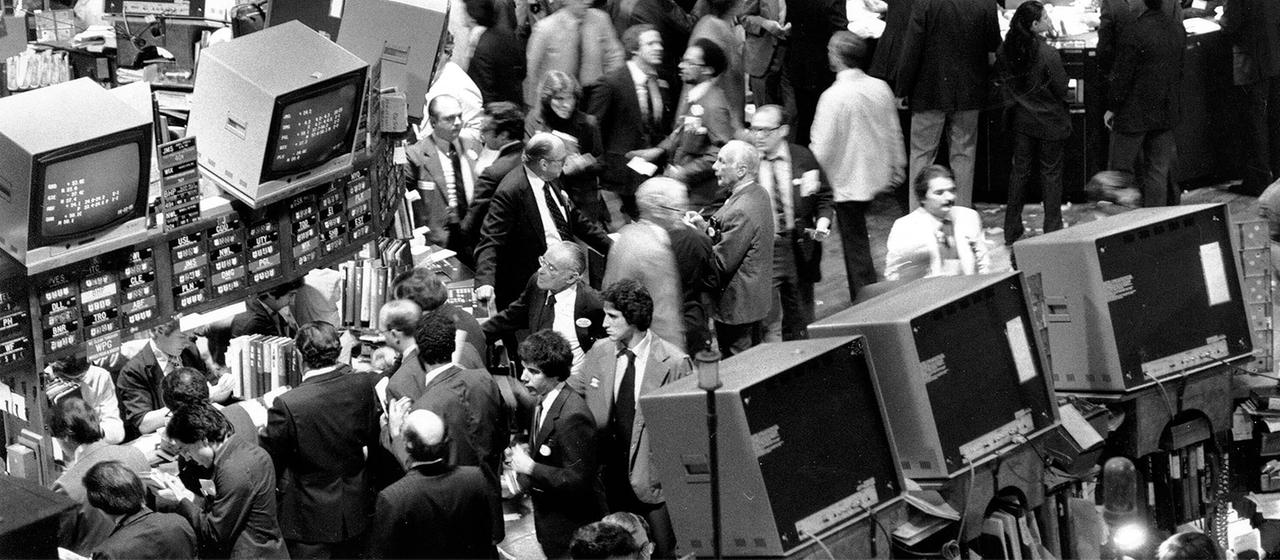
"We are not currently seeing a scenario that mirrors the 1981 secular bull market," warns Beil. "The lack of fiscal discipline in Washington means the government is unlikely to pursue the austerity measures required to curb the supply of debt. Consequently, I do not anticipate a massive, four-decade-long rally in bond prices."
The Currency Factor
For European investors, the decision to invest in US Treasuries is further complicated by foreign exchange risk. The yield advantage offered by American bonds can be completely eroded if the US Dollar depreciates against the Euro. Furthermore, the duration of the bond matters significantly. While long-dated bonds offer the highest potential for capital gains in a falling-rate environment, they are also the most sensitive to interest rate volatility. Conversely, short-dated securities offer less protection against inflation but provide greater stability in the face of shifting market sentiment.
The Institutional View: Is the "Risk-Free" Asset Still Risk-Free?
Official responses from global financial institutions suggest a shift in strategy. Many pension funds and insurance companies, which historically relied on the stability of government bonds, are now diversifying into private credit and infrastructure assets to achieve the returns they once found in the Treasury market.
The International Monetary Fund (IMF) has repeatedly warned that the United States’ fiscal path is "unsustainable" under current policies. While few believe in an imminent default, the prospect of "financial repression"—where inflation is allowed to run higher than interest rates to inflate away the real value of the debt—remains a credible concern for bondholders.
Implications for the Individual Investor
For the average investor, the current bond market serves as a reminder that diversification is not just about asset classes, but about time horizons and risk profiles.
- Strategic Allocation: If you are a long-term investor, using a "laddered" approach—purchasing bonds with varying maturity dates—can help mitigate the risk of being locked into a single rate or being overly exposed to interest rate swings.
- The Inflation Hedge: Given that US fiscal policy remains expansive, investors should ensure their portfolios include assets that perform well during inflationary periods, such as Treasury Inflation-Protected Securities (TIPS) or real assets.
- Currency Hedging: For those investing from outside the dollar zone, understanding the cost of hedging currency risk is essential. Often, the yield pick-up on a US bond is neutralized once the cost of currency hedging is factored in.
Conclusion: A New Reality
The historical comparison to 1981 provides a vital lesson in how interest rate cycles function, but it also highlights the dangers of extrapolating the past onto a very different present. The bond market of 1981 was saved by a central bank willing to sacrifice growth for price stability. The bond market of 2026 faces a more complex adversary: the sheer weight of a sovereign debt load that threatens to outpace economic productivity.
While the current yields of over 5% offer an undeniable temptation, they are also a signal from the market that the era of "easy money" is firmly in the rearview mirror. Investors must now navigate a landscape where sovereign bonds are no longer just a passive store of value, but an active, and increasingly complex, component of a modern, volatile portfolio. Whether this is a historic buying opportunity or a warning of deeper structural fragility will likely be determined by the fiscal choices made in Washington over the next several years. For now, prudence, rather than nostalgia for the 1980s, remains the best guide.