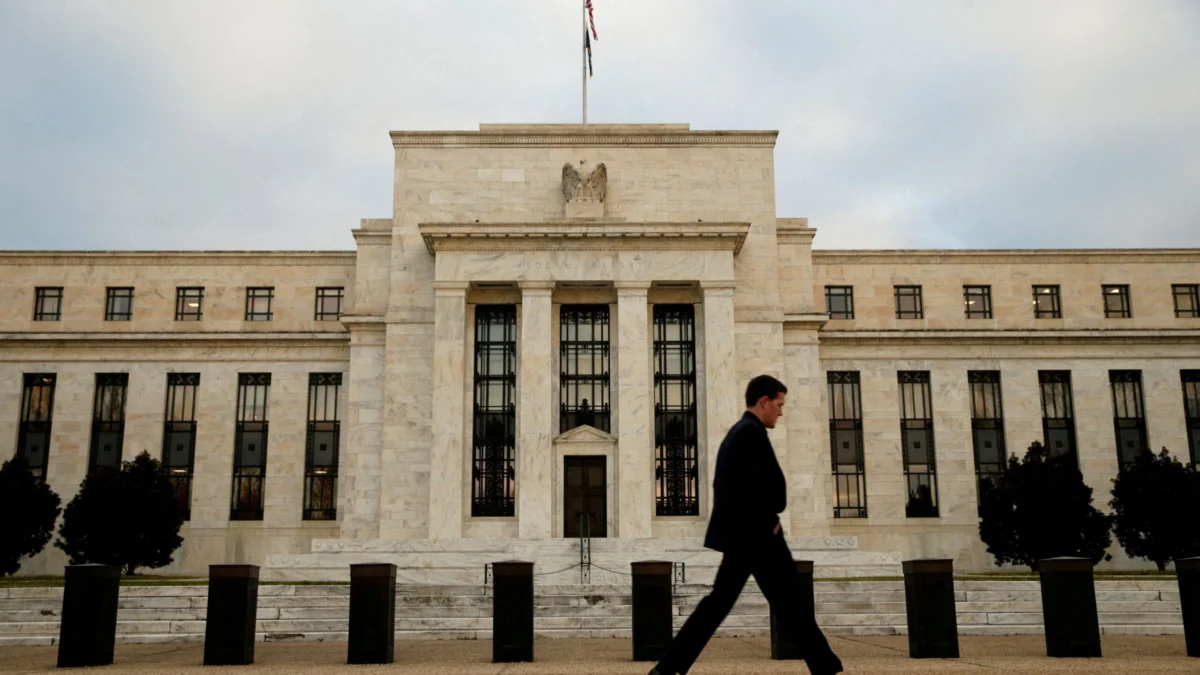
WASHINGTON – Beneath the veneer of a unanimous decision to hike interest rates, the United States Federal Reserve is grappling with profound internal disagreements regarding the path forward. Minutes from the central bank’s September meeting, released Wednesday evening, reveal a fractured consensus that reflects the mounting complexity of navigating a robust economy haunted by persistent inflationary pressures and geopolitical instability.
The discourse within the Federal Open Market Committee (FOMC) underscores a critical turning point for the U.S. economy. As the Fed attempts to balance growth with price stability, the divergence of opinion among policymakers suggests that the era of predictable, incremental adjustments may be giving way to a period of heightened volatility and debate.
The Core Conflict: Precautionary Measure or Structural Pivot?
At the heart of the latest FOMC minutes is a fundamental disagreement over the strategic purpose of the recent interest rate hike. While the committee voted as a single bloc to move forward with the increase, the underlying rationales were diametrically opposed.
One faction within the Federal Reserve views the recent tightening primarily as a "precautionary" measure. Proponents of this view argue that the move was intended to stay ahead of the curve, preventing the economy from overheating without necessarily signaling a long-term commitment to aggressive contraction. For this group, the hike is a defensive maneuver designed to maintain policy flexibility in an uncertain environment.
Conversely, a second, more hawkish camp views the September decision as a definitive pivot. For these policymakers, the rate hike is the opening act of a broader, more restrictive monetary regime. Their objective is clear: to deliberately dampen economic momentum to ensure that inflation does not become entrenched. This camp is increasingly concerned that the current level of economic activity, while impressive on paper, is creating a demand-pull inflationary environment that only a sustained period of higher borrowing costs can resolve.
Chronology of the Policy Shift
To understand the current tension, one must look at the recent trajectory of U.S. economic performance.
- Q1/Q2 Growth Realities: Throughout the first half of the year, the U.S. economy demonstrated remarkable resilience. Despite external shocks, including the localized economic fallout from regional conflicts in the Middle East, the economy expanded in the second quarter at a seasonally adjusted annual rate of 2.2%.
- The Inflationary Persistent: For over five and a half years, the Federal Reserve has struggled to maintain its core objective: an inflation rate anchored near two percent. The persistent failure to reach this target, coupled with the recent uptick in energy costs, has placed immense pressure on the FOMC to move beyond "wait-and-see" rhetoric.
- The September Meeting: The decision to hike rates in September was the culmination of weeks of internal deliberation. While the vote was unanimous, the minutes expose that the agreement was reached on the action taken, not the implication of that action.
- The Current Impasse: As the committee prepares for its next session at the end of the month, the minutes provide a blueprint for what is expected to be a contentious debate. The central question has shifted from "should we hike?" to "how much, and for how long?"
Supporting Data: An Economy Under Pressure
The Federal Reserve’s dilemma is exacerbated by conflicting economic indicators. The "brumming" (humming) economy, as noted in recent reports, presents a unique challenge for central bankers.
The Growth Paradox
While 2.2% growth might seem modest in a historical context, it is occurring at a time when the Fed is intentionally trying to tighten financial conditions. Usually, a restrictive policy environment is expected to slow growth more aggressively. The fact that the U.S. economy continues to expand suggests that the underlying demand is more robust than anticipated.
The Energy Shock and Inflation
The "Energy Shock"—a byproduct of geopolitical instability—has served as a primary driver of headline inflation. The FOMC is currently analyzing whether this shock is transitory or if it has begun to permeate into core inflation metrics.
If the energy shock is temporary, the Fed’s current restrictive policy might be overkill, risking an unnecessary economic slowdown. If, however, the shock has triggered a secondary wave of price increases—as businesses pass on costs and labor demands higher wages to compensate for the cost of living—the Fed must adopt a much more aggressive stance to prevent a wage-price spiral.
Official Responses and Internal Debate
The minutes suggest that the upcoming meeting at the end of the month will be a watershed moment. The internal debate is coalescing around two primary schools of thought:
- The Proactive Interventionist Approach: This group argues that the evidence of demand-driven inflation is now indisputable. They contend that waiting for further data—which is often backward-looking—is a risk the Fed cannot afford. They favor immediate and successive rate hikes to demonstrate the central bank’s commitment to its mandate.
- The Observational/Data-Dependent Approach: This group advocates for a pause. They argue that the global economy is still absorbing the effects of the recent energy price spikes. By holding off on further hikes, the Fed can observe whether the market naturally corrects as energy prices stabilize. They fear that over-tightening could stifle investment and labor market gains unnecessarily.
The tone of the minutes indicates that the FOMC is cognizant of the "wait-and-see" argument but is increasingly uncomfortable with the optics of inaction.
Implications: What This Means for the Markets and the Public
The growing divide within the Fed has significant implications for global financial markets, business investment, and the average American household.
Financial Markets and Volatility
Financial markets thrive on certainty. The realization that the Fed is not of one mind regarding the future trajectory of interest rates is likely to introduce increased volatility. Investors are currently pricing in a range of outcomes, and any sign that the "hawkish" wing of the Fed is gaining ground could trigger sharp sell-offs in equity and bond markets.
The Cost of Capital
For businesses, the uncertainty surrounding the Fed’s next move makes long-term capital expenditure planning difficult. If the Fed continues to push rates higher, the cost of debt will increase, potentially slowing innovation and expansion. Conversely, if the market perceives the Fed as "behind the curve" on inflation, long-term interest rates may rise regardless of Fed action, as bondholders demand higher yields to compensate for inflation risk.
The Consumer Impact
For the American consumer, the stakes are equally high. While a "restrained" economy might help stabilize the cost of goods, it also brings the risk of a cooling labor market. If the Fed successfully brakes the economy, the current tight labor market—which has provided significant leverage for workers to demand higher wages—could soften. The challenge for the Fed is to orchestrate a "soft landing" without causing a recession, a feat that becomes exponentially more difficult as the internal consensus fractures.
Conclusion: The Road Ahead
As the Federal Reserve heads toward its next policy meeting, the eyes of the world are fixed on Washington. The division documented in the September minutes is more than just a procedural footnote; it represents a fundamental disagreement on the health of the U.S. economy and the role of the central bank in shaping it.
Whether the Fed chooses to prioritize the containment of inflation through aggressive tightening or opts for a more cautious, observational approach will set the tone for the entire global economy. One thing is certain: the era of easy consensus has ended, and the debates that follow will be as consequential for the American public as they are for the global financial order. The upcoming session will not just be a vote on interest rates—it will be a test of the Fed’s ability to remain a stabilizing force in an increasingly unpredictable world.