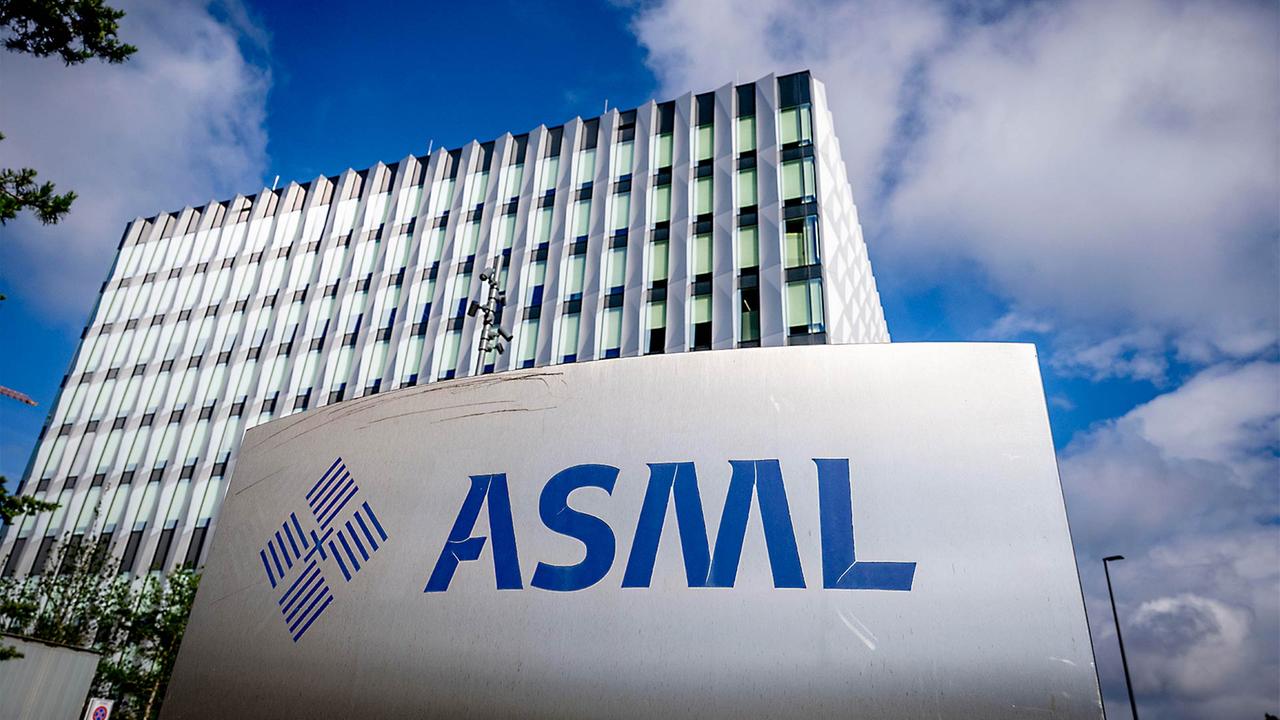
Veldhoven, Netherlands — In the high-stakes theater of global technology, where geopolitical shifts and silicon shortages dominate headlines, one company stands as the undisputed architect of the digital future. ASML, headquartered in the unassuming Dutch town of Veldhoven, has cemented its status as the most valuable corporation in Europe. As the sole provider of the world’s most advanced lithography machines, ASML is not merely participating in the Artificial Intelligence (AI) boom; it is the fundamental infrastructure provider that makes the entire industry possible.
With a market capitalization exceeding €600 billion, ASML has become a bellwether for the global economy. Its recent quarterly performance, characterized by a massive surge in net profit and order intake, serves as a powerful signal: the AI revolution is not just a trend—it is a long-term capital expenditure cycle that is only just beginning.
The Strategic Imperative: Why ASML Controls the Future
To understand the modern economy, one must understand the semiconductor supply chain. At the very tip of this chain sits ASML. The company specializes in Extreme Ultraviolet (EUV) lithography—a process so complex that it has been described as one of the most significant engineering feats in human history. These machines use light to etch microscopic circuits onto silicon wafers, a process that enables the creation of the high-performance chips required to train Large Language Models (LLMs) like GPT-4 or Claude.
Without ASML’s machines, companies like Nvidia, Apple, TSMC, and Samsung would be unable to shrink transistors to the nanometer scale required for advanced AI computing. Because these machines are bespoke, take months to manufacture, and cost hundreds of millions of dollars per unit, ASML functions as the "bottleneck" of the global tech industry. If ASML thrives, the AI sector thrives. If ASML stumbles, the global tech roadmap effectively grinds to a halt.
Financial Performance: A Snapshot of Exponential Growth
The latest fiscal reporting period underscores the sheer velocity at which the company is growing. ASML reported a revenue jump from €9.3 billion in the previous quarter to nearly €11.7 billion. More impressively, the company’s gross margin expanded by 3.5 percentage points to 57.5%, a testament to its pricing power and the inelastic demand for its cutting-edge equipment.
Net income followed a similar, steep trajectory, climbing to nearly €5 billion from approximately €3 billion in the preceding quarter. These figures are not just isolated wins; they represent a sustained trend of increased investment from the world’s leading chip foundries.
Because of the extreme lead times—often exceeding 12 to 18 months—between the ordering of a machine and its arrival at a customer’s facility, ASML’s order books serve as a highly accurate crystal ball for the semiconductor industry’s health. The current influx of orders confirms that major chipmakers are betting billions on a future defined by AI-driven compute power.
Chronology of the AI Infrastructure Surge
The rise of ASML to its current zenith is the result of decades of research and development, but the current "AI Supercycle" can be broken down into three distinct phases:
- The Foundation Phase (2020–2022): Driven by the pandemic-induced digitisation of the global economy and the initial surge in remote work, demand for semiconductors skyrocketed. ASML began scaling its production of deep ultraviolet (DUV) and EUV systems to meet the needs of the consumer electronics market.
- The Generative AI Inflection (2023): With the public emergence of generative AI, the focus shifted from consumer devices to high-end data center chips. This prompted companies like TSMC to aggressively expand their "High-NA" EUV capacity, locking in orders with ASML for years to come.
- The Scaling Phase (2024–Present): We are currently in a stage where demand is systematically outpacing supply. ASML’s recent reports indicate that even with aggressive expansion plans, the company is struggling to keep up with the insatiable hunger of the tech giants for more computing power.
Official Perspectives: The View from Veldhoven
ASML CEO Christophe Fouquet has provided a candid assessment of the current market environment, characterizing it as a "structural undersupply" rather than a temporary spike.
"Given the dynamics in order intake that we have seen from quarter to quarter this year, we now anticipate that our currently planned capacity for 2027 and 2028 will not fully cover the demand of our customers," Fouquet stated in a recent briefing.
The company is now facing the "luxury problem" of having to expand capacity faster than originally forecast. Management is currently evaluating plans to increase production for 2028 by more than the previously communicated 30% target. Perhaps most telling is the revelation that some of the world’s largest chip manufacturers are already attempting to secure order slots for 2029 and 2030, signaling that the industry views the AI boom as a permanent shift in the technological landscape rather than a cyclical bubble.
Market Implications: Volatility vs. Fundamentals
Despite the stellar performance of companies like ASML, the broader market remains jittery. Investors frequently grapple with the "AI ROI" question: when will the billions of dollars invested in data centers translate into sustainable corporate profits?
This uncertainty often leads to sharp, sentiment-driven sell-offs in semiconductor stocks. Recent weeks have seen periodic pressure on chip manufacturers as traders weigh the risks of high interest rates and the potential for a cooling in global economic growth.
However, experts remain bullish on the underlying fundamentals. Marcus Weyerer, an investment strategist at Franklin Templeton Investments, notes that the investment cycle shows no sign of exhaustion. "We currently see no end to the ongoing investment cycle," Weyerer explained to the ARD finance editorial team. "This applies to all companies along the value chain. While interest rates remain a variable risk, the strategic necessity of AI infrastructure is currently overriding cyclical economic concerns."
The Broader Economic Ripple Effect
The success of ASML is not contained within its own balance sheet. Its growth ripples through the entire European equity market, bolstering indices like the EuroStoxx 50 and providing a tailwind for the German DAX. When ASML reports strong numbers, it lifts the fortunes of other European tech players, such as the German chipmaker Infineon, which saw its share price climb in sympathy with the Dutch giant’s results.
However, the market is currently in a "wait-and-see" mode. As Thomas Altmann of QC Partners observes, the ongoing earnings season in the United States, coupled with volatile energy prices and inflation concerns, has made institutional investors cautious.
"We are looking at a market defined by hesitation," says Altmann. "While the long-term outlook for semiconductor infrastructure is incredibly strong, investors are currently unwilling to take massive, one-sided positions until the broader macroeconomic picture becomes clearer."
Conclusion: A Linchpin of the 21st Century
ASML’s position in the global economy is a unique blend of engineering brilliance and strategic scarcity. As we look toward the end of the decade, the company’s ability to scale its production of EUV machines will likely determine the speed at which AI integrates into the global economy.
For the foreseeable future, ASML remains the "picks and shovels" provider for the AI gold rush. While market volatility will undoubtedly persist, the fundamental reality is that the digital transformation of global industry requires more, not less, silicon. And as long as that holds true, the machines humming in Veldhoven will remain the most critical hardware on the planet.