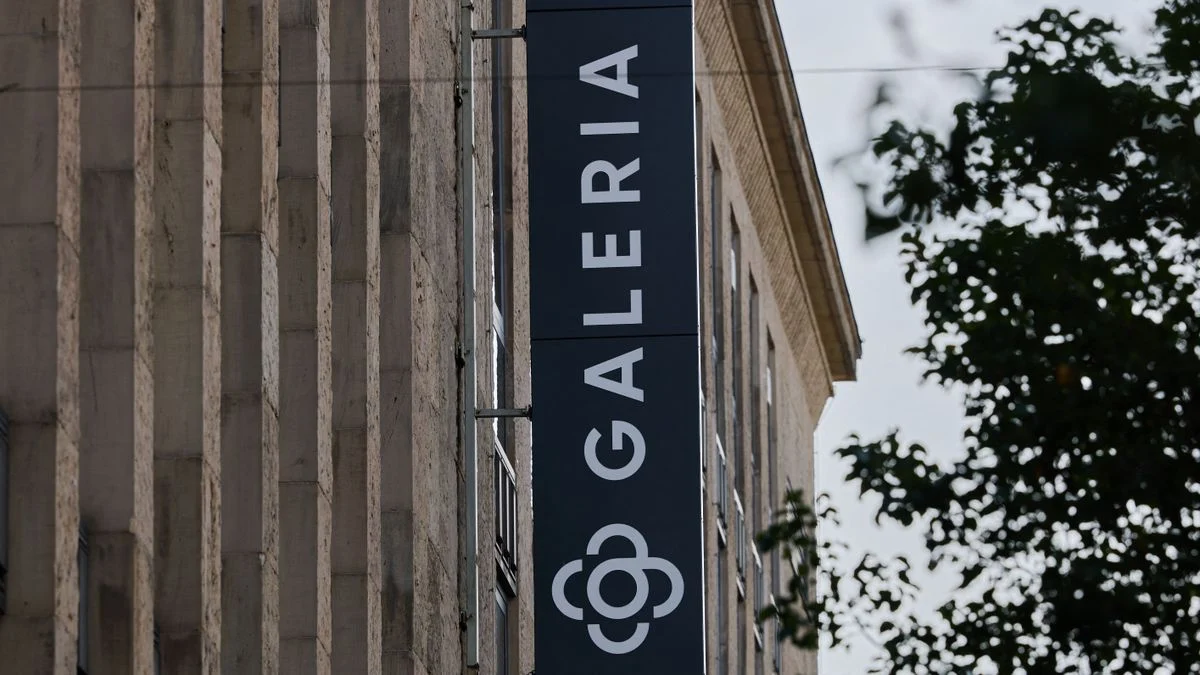
The German retail landscape is once again reeling from the collapse of a titan. Galeria, the nation’s last remaining major department store chain, has filed for insolvency at the District Court of Düsseldorf. This marks the fourth time in just six years that the entity—formerly known as the Karstadt-Kaufhof group—has sought protection from its creditors. Despite a fresh injection of optimism and capital from investors Bernd Beetz and Richard Baker just months ago, the company has proven unable to escape its structural malaise.
The latest filing has ignited a firestorm of recrimination between the company’s ownership and its executive management. As the retail giant fights for its survival once more, the question remains whether the German department store model is a relic of a bygone era or a victim of persistent mismanagement.
The Collapse: A Timeline of Institutional Decay
To understand the current crisis, one must look at the rapid-fire succession of failures that have plagued the group since 2020. The history of Galeria is a chronicle of desperate restructuring and failed pivots:
- 2020: The first major insolvency filing occurs in the wake of pandemic-related lockdowns. The company, burdened by massive rental obligations, attempts to stabilize under the protective shield of German insolvency law.
- 2022: A second, deeper insolvency follows. Creditors are forced to waive billions in claims as the group seeks a path to profitability. Numerous branch closures are initiated to stem the bleeding.
- Early 2024: Following a brief period of apparent calm, the company faces renewed financial instability, culminating in yet another filing.
- The Current Crisis: With 83 remaining branches, the business continues to operate, but the atmosphere within the headquarters in Düsseldorf is one of profound uncertainty.
The recurring nature of these filings has eroded the trust of suppliers, employees, and the public, creating a "crisis fatigue" that makes each subsequent recovery effort significantly more difficult.
The Investor’s Perspective: Beetz vs. Management
Bernd Beetz, the seasoned German entrepreneur who previously steered the beauty giant Coty and luxury icon Christian Dior, joined American investor Richard Baker in the spring of 2024 to take the reins of Galeria. At the time, the narrative was one of growth and long-term commitment. That narrative has now been replaced by a scathing critique of the current management, led by Tilo Hellenbock.
In a recent interview with Bild, Beetz made his frustration clear: "I consider this insolvency fundamentally avoidable." He argues that the transformation of the retail chain has been far too slow to keep pace with the rapidly evolving market.
Beetz emphasizes that the shareholders did not inherit a healthy company, but rather a "difficult situation" into which they poured significant time, energy, and personal capital. However, he places the blame for the current state of affairs squarely on the shoulders of the management team. "The decisive factor would have been to implement the necessary transformation more consistently and more quickly," Beetz stated.
According to the investor, the recovery requires a "stringent merchandise management system, a clear assortment strategy, and a significantly stronger customer orientation." He maintains that while the department store model is not inherently dead, it can only succeed today if it offers a clear point of differentiation from the fierce competition of online retail and specialized discounters.
Structural Failures: Why the Pivot Failed
Retail experts argue that the problems at Galeria run much deeper than any single management decision. Carsten Kortum, a prominent retail analyst, suggests that the cycle of insolvency is a direct consequence of a systemic "extraction" mentality.
"Many of the owners over the years had only one thing in mind: to extract as much money as possible in as short a time as possible," Kortum told Der Spiegel. He argues that in the retail business, the inverse must be true: investment is the lifeblood of relevance. "The less you invest, the greater the gap between your offering and what the customer expects becomes."
This lack of investment has led to a stagnant shopping experience. While competitors invested in omnichannel strategies, high-quality digital integration, and updated store aesthetics, Galeria’s physical footprint remained largely frozen in the past. When combined with the high cost of maintaining massive, multi-story buildings in prime city-center locations, the financial model becomes precarious.
The Human and Economic Cost
The implications of this fourth insolvency are widespread. For the thousands of employees across 83 locations, the news brings the return of the anxiety that has defined their work lives for the better part of a decade. Every insolvency cycle brings with it the threat of branch closures, salary cuts, and the potential for a complete liquidation of the workforce.
Furthermore, the impact on city centers cannot be overstated. Galeria stores are often "anchor tenants" in German shopping districts. Their closure often triggers a domino effect, leading to a decline in foot traffic for smaller boutiques and cafes nearby, effectively hollowing out the commercial heart of many cities.
The Path Forward: Can Leadership Save the Brand?
Bernd Beetz remains publicly optimistic, but his optimism is conditional. He believes that the next phase of the company’s existence must be defined by a radical shift in leadership philosophy.
"It is not about individual people, but about ensuring the best possible leadership for the next phase," Beetz explained. He suggested that future personnel decisions must be dictated by a single metric: who possesses the greatest degree of trust among creditors, employees, suppliers, and potential future investors.
This call for a "reset" in leadership indicates that the relationship between the owners and the current management has effectively broken down. Whether Beetz and Baker will initiate a total purge of the executive suite remains to be seen, but the urgency in his tone suggests that time is running out.
Strategic Imperatives for Survival
If Galeria is to avoid a fifth insolvency, the company must address three critical pillars:
- Assortment Revitalization: The current product mix has often been criticized for being "bland." The stores must pivot toward a more curated, high-margin, and exclusive range of goods that cannot be easily purchased on platforms like Amazon.
- Operational Excellence: As Beetz noted, the department store must be "operatively excellent." This means optimizing supply chains, reducing inventory bloat, and ensuring that staff are empowered to provide the high-end service that distinguishes brick-and-mortar retail from the digital experience.
- Real Estate Re-evaluation: The company must continue to shed unprofitable square footage. A department store that is too large for its customer base is a liability, not an asset. Focusing on smaller, more efficient, and highly profitable "flagship" locations may be the only way to retain a physical presence in the long term.
Conclusion: A Final Chance or a Slow Fade?
The fourth insolvency of Galeria is a cautionary tale for the European retail sector. It demonstrates that capital alone cannot save a business model if the underlying strategy is not aligned with modern consumer behavior. The tension between the investors and the management highlights a fundamental disagreement over whether the company needs a faster, more aggressive transformation or a complete change in leadership culture.
As the legal proceedings in Düsseldorf get underway, the retail world will be watching closely. Whether Galeria becomes a case study in successful corporate restructuring or a cautionary legend about the death of the department store will depend on the decisions made in the coming weeks. For now, the chain remains open, but for the staff and the German retail market, the clock is ticking louder than ever. The era of "business as usual" has officially ended; the era of survival has begun.