By Editorial Staff
Updated October 7, 2026
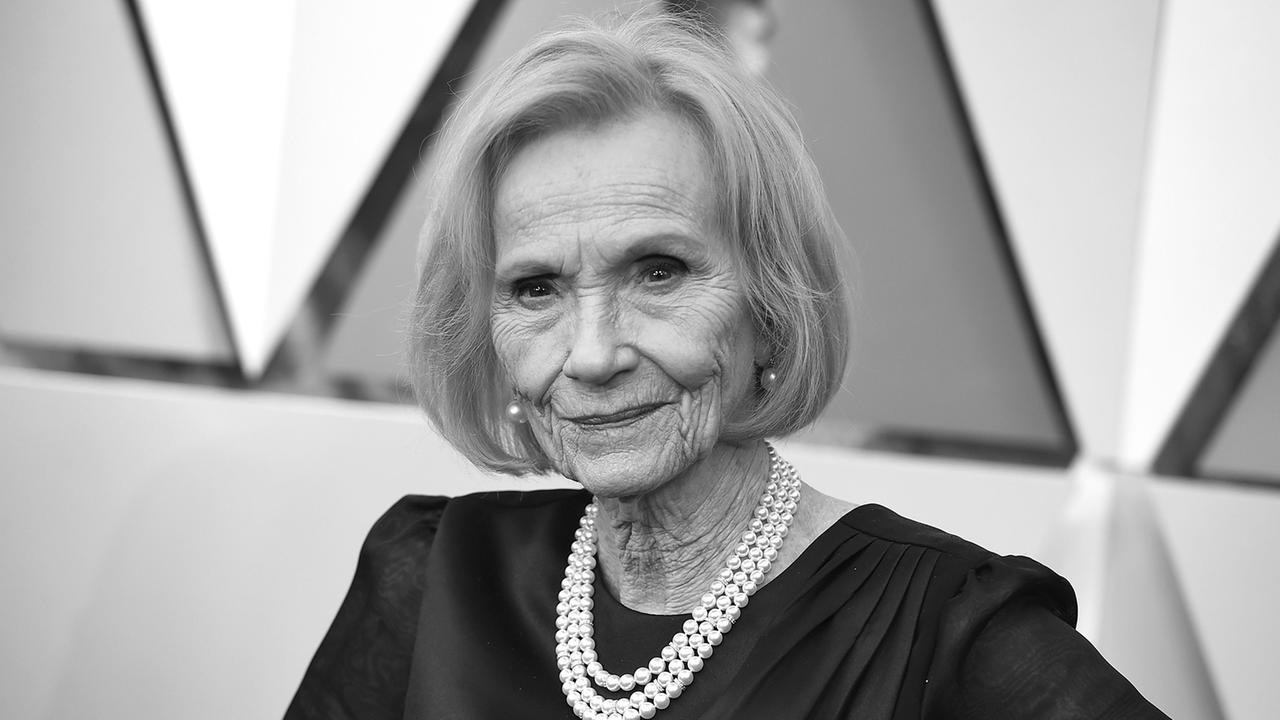
Eva Marie Saint, one of the final remaining titans of Hollywood’s Golden Age, has passed away at the age of 102. Her representatives confirmed that the Academy Award-winning actress died peacefully at her home in Los Angeles, surrounded by her family. Her passing marks the conclusion of a storied life and career that spanned over seven decades, defining the evolution of American acting from the stage to the silver screen.
Renowned for her cool elegance, nuanced performances, and an uncanny ability to hold her own against the most formidable leading men in cinematic history, Saint’s filmography remains a blueprint for dramatic excellence. From her explosive debut in the 1950s to her surprise return to the blockbuster stage in the mid-2000s, Saint navigated the volatile landscape of the entertainment industry with grace, discipline, and a profound commitment to her craft.
A Legacy Forged in Method Acting
Born on July 4, 1924, in Newark, New Jersey, Eva Marie Saint’s journey to the spotlight was grounded in the strict discipline of her Quaker upbringing. While she initially attended Bowling Green State University with the intent of becoming a teacher, the theater soon claimed her focus. Following her move to New York, she became a pivotal figure at the Actors Studio, the legendary institution that served as the cradle for "Method Acting" in the United States.
Under the influence of teachers like Elia Kazan, Saint learned to prioritize emotional truth over theatrical artifice. This training proved vital when, in 1954, she made her film debut in Kazan’s On the Waterfront. Cast as Edie Doyle opposite Marlon Brando, Saint delivered a performance of such vulnerability and strength that it shattered the industry’s expectations. In a film largely celebrated for its gritty, masculine portrayals of union corruption, Saint’s presence provided the moral heartbeat. The performance earned her the Academy Award for Best Supporting Actress in 1955, a rare and prestigious feat for a debutante in a major feature film.
Chronology of a Storied Career
Saint’s career was not merely a collection of roles, but a series of collaborations with the most visionary directors of the 20th century.
- 1954: On the Waterfront establishes her as a formidable dramatic force.
- 1959: Saint defies expectations by starring in Alfred Hitchcock’s North by Northwest. Cast as Eve Kendall, she became the quintessential "Hitchcock Blonde"—intelligent, mysterious, and complex. Her chemistry with Cary Grant remains one of the most iconic pairings in cinematic history.
- 1960: She reunites with director Otto Preminger for the epic Exodus, portraying a nurse on a refugee ship carrying Jewish Holocaust survivors. Her work alongside Paul Newman cemented her reputation as a dramatic heavy hitter.
- 1990: Saint demonstrates her range in television, winning an Emmy for her performance in the acclaimed miniseries People Like Us.
- 2006: In a stunning return to mainstream prominence, she appears as Martha Kent in Bryan Singer’s Superman Returns, introducing her talent to a new generation of filmgoers.
Throughout these decades, Saint was twice honored with stars on the Hollywood Walk of Fame—a testament to her dual success in both film and television.
The Art of the "Hitchcock Blonde"
While many actresses of her era were relegated to decorative roles, Eva Marie Saint brought a unique intellectual depth to her work. Perhaps her most challenging assignment was the role of Eve Kendall in North by Northwest. Hitchcock, known for his meticulous control over his leads, sought a woman who could play a double agent with a mixture of allure and calculated danger. Saint’s ability to pivot between vulnerability and steely resolve helped elevate the film from a standard suspense thriller to a masterwork of irony and wit.
Reflecting on her career in later years, Saint often credited her longevity to her decision to prioritize her family life over the relentless pursuit of stardom. Her marriage to director Jeffrey Hayden, which lasted 65 years until his death in 2016, was widely regarded as a beacon of stability in an industry often characterized by fleeting unions. This balance allowed her to work on her own terms, choosing projects that resonated with her rather than chasing trends.
Supporting Data: An Industry Icon
Beyond her Oscar win, Saint’s contribution to the arts was recognized through five Emmy nominations and a career that spanned various mediums, from Broadway to live television and the digital age. Her work in Wim Wenders’ Don’t Come Knocking (2005) proved that even in her 80s, she retained the sharp, intuitive instincts that had defined her youth.
Her philosophy on acting was simple yet profound. In a 2006 interview with TCM, she remarked, "You have had all sorts of emotional experiences in your own life and you hopefully understand things better. And that makes you a better actress." This commitment to "living" as a prerequisite for acting was the cornerstone of her longevity.
Official Responses and Industry Tributes
The outpouring of grief from the film community has been significant. Industry veterans, fellow actors, and historians have taken to social media and press releases to express their condolences.
"Eva Marie Saint wasn’t just an actress; she was a bridge to an era of filmmaking that prioritized the craft above all else," said a spokesperson for the Academy of Motion Picture Arts and Sciences. "Her ability to bring such humanity to every frame she occupied, whether in a gritty drama or a high-stakes thriller, remains a gold standard for performers today."
Family members stated that she remained intellectually sharp and deeply engaged with the world until her final days, finding joy in her children, grandchildren, and great-grandchildren.
Implications: The End of a Cinematic Epoch
The death of Eva Marie Saint serves as a sobering reminder of the thinning ranks of Hollywood’s "Old Guard." As the last major stars of the 1950s pass on, the industry loses not just performers, but the direct links to the foundational techniques and storytelling traditions that built the American film apparatus.
However, the implications of her life go beyond mere nostalgia. Her career trajectory—moving from the theater to the screen, embracing Method acting, and eventually transitioning into character roles in major studio tentpoles—is a masterclass in professional adaptability. She proved that an actor’s career does not have to end when the "leading lady" years are over. By continuing to work well into her 80s, she challenged the ageism that has long plagued Hollywood, paving the way for future generations of actors to find relevance at any age.
Eva Marie Saint leaves behind a body of work that will continue to be studied, admired, and cherished. She was a woman who navigated the complexities of fame with a quiet, unwavering dignity, and her absence leaves a void that cannot be filled. As the sun sets on a life that spanned over a century, the final credits roll on a truly remarkable performance. Eva Marie Saint was, and will remain, an irreplaceable part of the American cultural tapestry.