Neurobiologists from the Leibniz Institute for Neurobiology in Magdeburg have uncovered a groundbreaking mechanism in how we acquire new information. Contrary to the long-held belief that learning is merely an "additive" process driven by excitatory signals, new research suggests that our brain employs a sophisticated "braking" system—inhibitory synapses—to stabilize itself while simultaneously restructuring.
For decades, the field of neuroscience has been dominated by the mantra "Use it or lose it." The prevailing paradigm suggested that learning was synonymous with expansion: the brain creates new connections, strengthens existing ones, and discards those that remain dormant. This model focused heavily on "excitatory" synapses—the components of the brain that act as the gas pedal, driving neural activity and information flow. However, a new study led by Dr. Alessio Attardo and his team at the Leibniz Institute for Neurobiology (LIN) suggests that this view is only half the story.
The Main Facts: A Symphony of Inhibition and Excitation
The study, which tracked neural changes in mice over a 13-day period, reveals that learning is not just about "adding" to our mental repertoire. Instead, the brain engages in a high-stakes balancing act. While excitatory synapses provide the "action," it is the previously overlooked "inhibitory" synapses—the brain’s internal brake system—that perform the vital work of structural regulation.
The researchers discovered that when the brain learns, it does not just rewire itself across the board. Rather, it utilizes a specific spatial strategy: it encourages rapid, flexible restructuring at the "receiving end" of the neuron (the dendrites) while simultaneously enforcing rigid stability at the "sending end" (the axon). This dual-action process ensures that as we gain new information, our fundamental neural architecture remains robust enough to store that knowledge without descending into chaos.
Chronology: A 13-Day Window into the Hippocampus
To observe these microscopic changes in real-time, the Magdeburg team focused on the hippocampus—a critical region of the brain responsible for memory formation, spatial navigation, and learning.
- Preparation: The team utilized advanced photon microscopy and fluorescent markers to make inhibitory synapses visible within the living brain tissue of 23 mice.
- The Conditioning Phase: The mice underwent "fear conditioning," a classic neurobiological experimental model. The subjects were exposed to a specific tone followed by a mild electric shock. Over the 13-day observation period, the researchers monitored how the mice learned to associate the sound with the unpleasant stimulus.
- The Observation: By capturing images of the synapses throughout the duration of the conditioning, the team was able to track exactly how the inhibitory network adapted to the stress of learning.
- The Discovery: As the mice mastered the association between the tone and the shock, the researchers observed a clear divergence in the behavior of inhibitory synapses depending on their location on the neuron.
Supporting Data: The Architecture of a Neuron
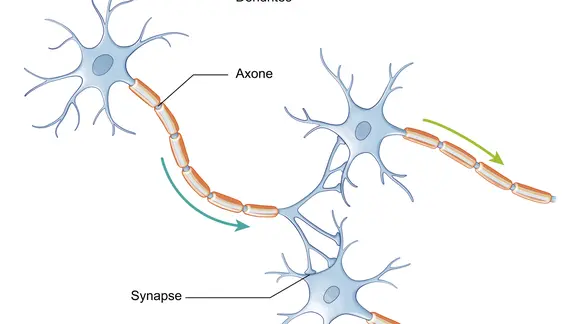
To understand the magnitude of this discovery, one must look at the anatomy of a nerve cell. Neurons are equipped with dendrites—the "receiving antennas" that gather thousands of signals from neighboring cells—and axons, the long-distance "cables" that transmit signals to other neurons.
Between these structures sit the synapses. Traditionally, researchers focused on excitatory synapses, which fire up activity. However, inhibitory synapses, which dampen and regulate signals, were largely relegated to the background.
The LIN study provided high-resolution evidence that these inhibitory synapses are not static. At the dendrites, they are highly dynamic, constantly breaking and rebuilding as the brain processes new experiences. Conversely, at the axon—the "exit point" of the cell—these same inhibitory synapses stabilize and reinforce existing pathways. This allows the neuron to be flexible in what it hears, but consistent in what it reports to the rest of the neural network.
Official Perspective: Insights from Dr. Alessio Attardo
Dr. Alessio Attardo, a group leader in Cellular Neuroscience at the Leibniz Institute, notes that the team’s findings challenge the "excitatory-first" bias of modern neuroscience.
"There is this classical understanding that nerve cells operate primarily through the positive flow of information via excitatory synapses," Dr. Attardo explains. "However, very little is known about the regulation of this entire system, which is managed by inhibitory synapses. Our key finding is that some connections go into motion and change during learning, while others stabilize—and this happens within one and the same nerve cell."
Dr. Attardo emphasizes that the "Trubel am Eingang" (bustle at the entrance) and the "Ruhe am Ausgang" (calm at the exit) are not contradictory, but rather complementary. "Our study shows the subtle balance between excitation and inhibition. It is a fundamental mechanism of how the brain manages to be both plastic and stable at the same time."
Implications: Beyond the Mouse Model
While the study was conducted on mice, the fundamental nature of the mechanism suggests that it is likely a universal trait of mammalian brains, including humans. This discovery opens several critical doors for future research:
1. Understanding Pathological States
Many neurological and psychiatric conditions are characterized by an imbalance between excitation and inhibition. Understanding how this balance is normally maintained could provide clues into the origins of epilepsy, autism spectrum disorders, and schizophrenia, where "noisy" or unregulated neural activity is a hallmark.
2. The Role of Stress and Sleep
The research team is already looking toward the next frontier: how external factors like chronic stress or sleep deprivation influence this delicate balance. Since sleep is a critical time for memory consolidation, the researchers hypothesize that the stabilization of inhibitory synapses at the axonal level may be particularly active during rest.
3. Rethinking Neuroplasticity
For years, the focus of neuroplasticity (the brain’s ability to change) has been on how to "grow" more connections. The Magdeburg findings suggest that the inhibition of signals is just as important. In the future, therapeutic interventions for cognitive decline or learning disabilities might focus not just on stimulating the brain, but on optimizing the regulatory "braking" systems that allow for stable, long-term memory storage.
Conclusion
The work coming out of the Leibniz Institute for Neurobiology reminds us that the brain is not a simple machine that adds files to a hard drive. It is a living, breathing ecosystem. By uncovering the role of inhibitory synapses as the "stabilizers" of our intellectual life, Dr. Attardo and his team have provided a new framework for understanding how we learn. We do not just learn by firing up new pathways; we learn by carefully calibrating the inhibitors that keep our mental world from descending into static. As we continue to probe the depths of the human mind, this "braking" mechanism may prove to be the most important part of the entire drive.