For many high-growth startups and scaling SMEs, the transition from mid-market player to enterprise vendor is marked by a sudden, often overwhelming shift in administrative pressure. The initial excitement of a signed contract with a major corporation is frequently tempered by a daunting reality: the dreaded security questionnaire.
Yet, this questionnaire is merely the tip of the iceberg. As companies ascend the value chain, the demands grow increasingly complex. One client mandates ISO 27001 certification; an automotive giant requires TISAX; a US-based expansion partner insists on SOC 2 compliance. In the modern B2B landscape, the speed and reliability with which an organization can provide these compliance artifacts have become critical determinants of sales success. Failing to provide them quickly is no longer just a delay—it is a deal-breaker.
The Reality of Enterprise Audits: Beyond the Surface
To the uninitiated, security questionnaires often appear to be idiosyncratic demands unique to each client. However, a deeper analysis reveals a fundamental truth: while the formatting may differ, the core requirements are almost always identical. Whether it is a multinational bank or a tech conglomerate, the underlying questions revolve around data integrity, access control, risk management, and operational resilience.
For smaller deals, a simple self-assessment or a standard vendor risk management (VRM) form might suffice. But as organizations enter the enterprise space, they face a convergence of formal requirements. Regulatory mandates such as the EU’s NIS2 Directive, the Digital Operational Resilience Act (DORA), the Cyber Resilience Act, and the burgeoning EU AI Act have created a "compliance thicket."
The mistake many companies make is treating these frameworks as discrete, silos projects. When a business treats ISO 27001, SOC 2, and TISAX as separate, isolated initiatives, they incur a "re-use debt." They end up rewriting controls, chasing down the same evidence for different auditors, and duplicating documentation efforts across various departments.
The Information Silo: Why Compliance Efforts Fail
The central challenge is rarely the difficulty of the 200+ questions posed by an enterprise client. Rather, it is the fragmentation of the answers within the company.
In a typical scaling enterprise, the necessary information is scattered across the corporate architecture:
- Legal holds the privacy policies and data processing agreements.
- The IT/Security team manages the technical infrastructure and incident logs.
- Management retains the strategic risk assessments.
- HR and Operations manage access control lists and employee onboarding protocols.
When a request for evidence arrives, these teams scramble to aggregate data that already exists but is trapped in disparate formats. The scaling question, therefore, is not "How do we answer this questionnaire?" but rather "How do we create a centralized repository where once-documented controls can satisfy multiple requirements simultaneously?"
Compliance as Technical Debt
In software engineering, the concept of "technical debt"—where suboptimal, quick-fix code creates long-term maintenance burdens—is well understood. In the realm of governance, risk, and compliance (GRC), we are seeing the emergence of "Compliance Debt."
When a security process is updated but only adjusted in one place, the organization inadvertently creates contradictory documentation. If the password policy is changed in the IT handbook but the policy document used for the SOC 2 audit remains outdated, the company risks a failed audit and significant reputational damage. This lack of a "Single Source of Truth" is the primary driver of escalating compliance costs.
To solve this, modern organizations must adopt a centralized compliance architecture. This involves:
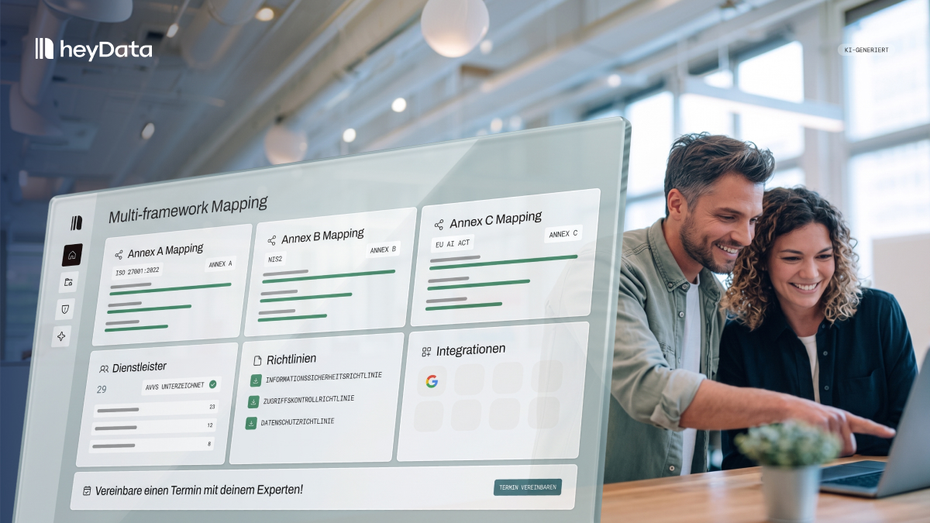
- Unified Control Mapping: Mapping one technical control (e.g., multi-factor authentication) to multiple requirements across different frameworks (e.g., ISO 27001, SOC 2, and NIS2).
- Centralized Evidence Stores: Maintaining a single, version-controlled library of evidence that auditors from any framework can access.
- Continuous Gap Analysis: Instead of starting from scratch when a new regulation is introduced, teams should perform a simple gap analysis to see what existing controls already satisfy the new requirements.
Automation: The Scalability Lever
The demand for compliance is rising faster than the supply of qualified compliance officers. Consequently, automation has become a necessity rather than a luxury. Software-driven approaches excel at repetitive, data-heavy tasks:
- Evidence Collection: Automatically pulling system logs, access reports, and configuration settings directly from cloud providers (AWS, Azure, Google Cloud).
- Continuous Monitoring: Alerting the compliance team when a control drifts out of compliance (e.g., an S3 bucket becomes public).
- Task Management: Automating the review cycle for policies and assigning tasks to the relevant stakeholders before a deadline passes.
However, a critical distinction must be made: compliance cannot be fully automated. While software can handle the "janitorial" work of data gathering and status reporting, strategic decisions remain the domain of human expertise. Determining how the scope of a certification should be defined or interpreting how the Cyber Resilience Act applies to a specific, complex corporate structure requires nuanced professional judgment. Software provides the structure; human experts provide the strategy.
From Research Project to Corporate Infrastructure
When a company moves from an ad-hoc, project-based approach to a centralized, automated infrastructure, the sales process undergoes a transformation. Security questionnaires cease to be "research projects" that stall sales cycles for weeks; they become simple, automated exports of existing, validated data.
This shift changes the role of the compliance department from a "sales blocker" to a "sales enabler." By turning compliance into an operational foundation, companies can enter new markets, secure enterprise contracts, and satisfy regulatory requirements with a fraction of the traditional overhead.
The Future of Compliance: The heyData Approach
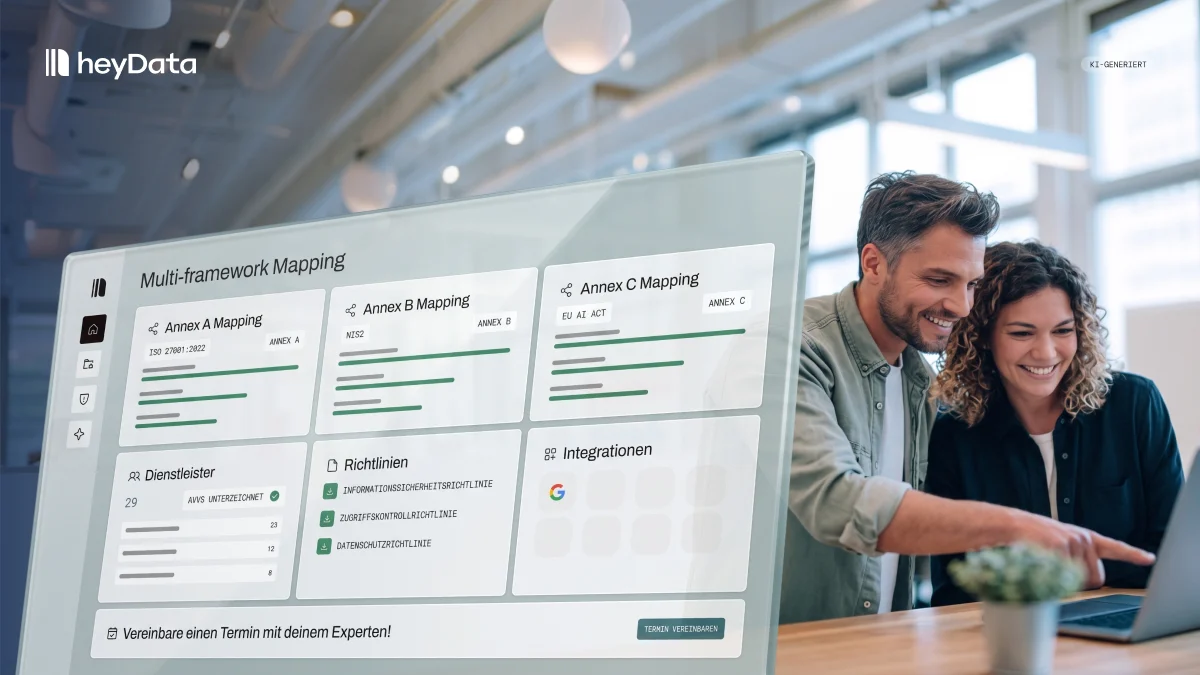
In the current market, platforms like heyData are addressing this need by shifting the focus from isolated, framework-specific compliance to a unified, scalable foundation. By allowing companies to map their work once and reuse it across multiple standards, platforms like heyData effectively eliminate the redundancy that plagues modern security teams.
With over 2,500 organizations already utilizing such centralized platforms, the industry trend is clear: the era of the spreadsheet-based, manual compliance audit is ending. As regulatory pressure from the EU and beyond intensifies, the companies that thrive will be those that view compliance not as a periodic hurdle, but as a permanent, automated part of their enterprise infrastructure.
For leadership teams, the mandate is simple: stop treating security questionnaires as an IT problem and start treating them as a strategic growth asset. By integrating compliance into the DNA of the company, businesses can focus on what they do best—innovating and scaling—while ensuring they are always audit-ready.