In a landmark decision aimed at highlighting the escalating crisis facing urban biodiversity, the German Nature and Biodiversity Conservation Union (NABU) and the Landesbund für Vogel- und Naturschutz (LBV) have officially designated the Common House Martin (Delichon urbicum) as the "Bird of the Year 2027." The selection, determined through a nationwide public online vote, serves as a poignant reminder of the fragile state of one of Europe’s most iconic summer visitors.
While the House Martin is a familiar sight to many, gracing the eaves of rural barns and city apartment blocks alike with its frantic, acrobatic flight, its numbers are in steep decline. Threatened by climate-driven heatwaves, urban development, and the loss of essential resources, this small, industrious bird has become a symbol of the broader struggle for ecological preservation in an increasingly hostile man-made environment.
Main Facts: The Anatomy of a Survivor
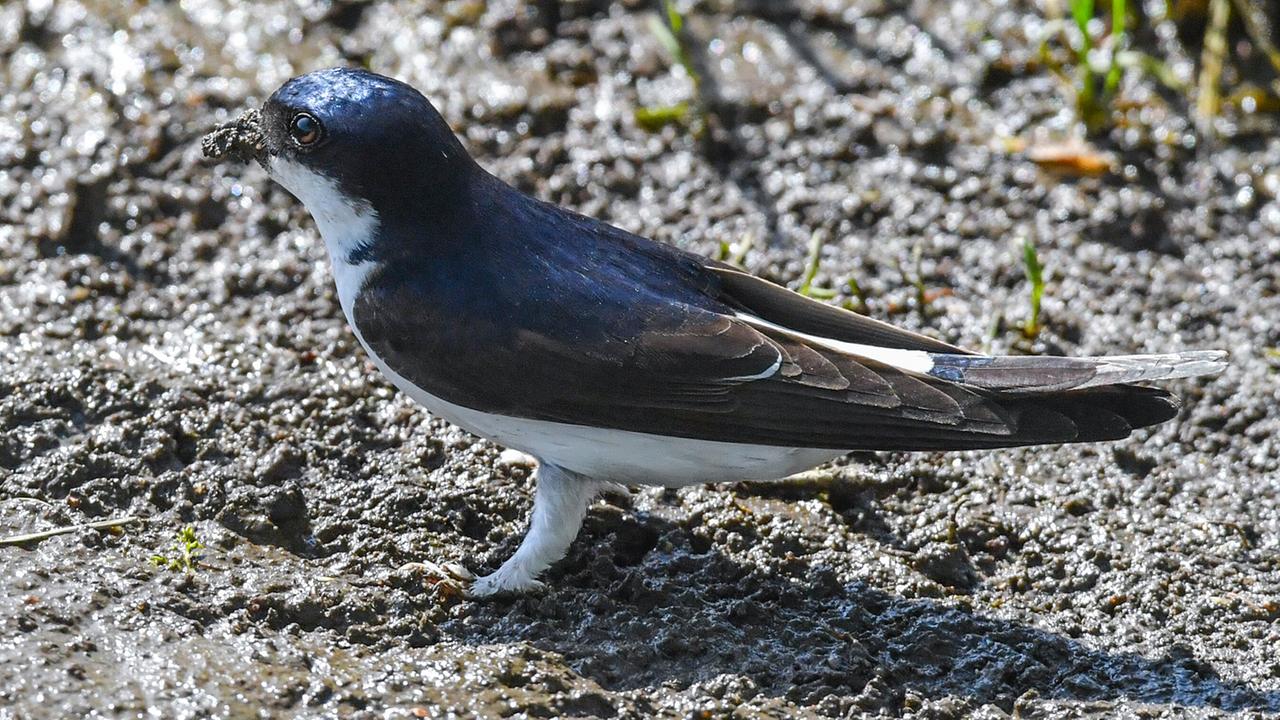
The Common House Martin is a master of aerial navigation. Measuring approximately 14 centimeters in length, the species is instantly recognizable by its striking plumage: a glossy, blue-black mantle contrasted against a brilliant, snow-white underside and rump. This stark white marking, often described as "flour-dusted," is the etymological root of its German name, Mehlschwalbe.
These birds are highly social creatures, typically nesting in colonies that can range from a few pairs to dozens. Their survival strategy is intricately tied to their ability to build complex, globe-shaped nests fashioned from mud pellets and saliva, tucked neatly under roof overhangs or cliff crevices.
As a migratory species, the House Martin spends the winter months in sub-Saharan Africa, braving a perilous journey that covers thousands of kilometers. They typically return to Central Europe in early April to begin their breeding season. A single pair may produce two broods per year, a biological necessity to compensate for high mortality rates during migration and the unpredictable risks encountered during the nesting phase.
Chronology of a Declining Population
The designation of the House Martin as Bird of the Year is not a celebration of abundance, but a cry for help. Ornithological records indicate that while Germany still hosts approximately 770,000 breeding pairs, the trend is alarmingly downward.
The Era of Abundance (Late 20th Century)
Historically, the House Martin benefited from the expansion of human settlements. As agricultural practices became more sedentary and stone buildings became more common, the birds found ample nesting sites and a steady supply of insects attracted to livestock.
The Modern Squeeze (2000–2025)
Over the last two decades, the "urban sprawl" effect has begun to negate these advantages. The shift toward highly sanitized, energy-efficient building standards has left the birds with few places to anchor their nests. Modern plaster and high-gloss paint provide surfaces too smooth for mud-based nests to adhere to.
The Climate Tipping Point (2026–2027)
The most recent seasons have seen a catastrophic acceleration in mortality due to extreme weather. The summer of 2026, in particular, served as a turning point, where prolonged heatwaves caused internal temperatures in mud nests—often situated under dark, heat-absorbing roof tiles—to reach lethal levels.
Supporting Data: Why the House Martin is Struggling
The decline of the House Martin is multifactorial, rooted in three distinct environmental challenges:
1. The Loss of Architecture and Infrastructure
The modernization of rural and urban infrastructure has inadvertently created a "housing crisis" for the species. The trend toward sealing off eaves and using smooth, synthetic building materials makes it impossible for the birds to secure their nests. Furthermore, the asphalt sealing of village squares and farmyards has eliminated the "mud pits" that were once common in rural landscapes. Without these sources of high-quality clay and water, the birds cannot gather the raw materials necessary to build or repair their homes.
2. The Collapse of Insect Biomass
House Martins are strictly insectivorous, feeding almost exclusively on aerial plankton—tiny flying insects such as midges, aphids, and flies. The widespread use of pesticides and the loss of wildflower meadows have led to a drastic reduction in the insect population, leaving the birds struggling to find enough food to feed their hungry broods.
3. Thermal Stress and Mortality
The most harrowing evidence of the House Martin’s struggle involves the physical toll of rising temperatures. Because the birds build their nests on the exterior of buildings, they are fully exposed to the elements. During record-breaking heatwaves, nest temperatures can rise to levels that cause heat exhaustion in nestlings. Observations by conservationists in the summer of 2026 documented instances where desperate chicks jumped from their nests prematurely to escape the stifling heat, only to perish on the ground.
Official Responses: Voices from the Frontline
The selection of the House Martin has sparked a renewed sense of urgency among conservationists. Martin Rümmler, a leading bird protection expert at NABU, notes that the species is a "canary in the coal mine" for urban environments.
"We are seeing a systemic failure to coexist with nature in our own living spaces," Rümmler stated. "The destruction of nests, often done out of a misguided desire for ‘clean’ building facades, is not only illegal but a direct contributor to the decline of a species that has shared our homes for centuries."
Martin Klatt, an expert in species protection at NABU Baden-Württemberg, echoes this sentiment, emphasizing the strain on wildlife rehabilitation centers. "During the last summer, we witnessed a breaking point. Our wildlife centers were flooded with injured and dying swallows and swifts. We were forced to implement admission stops because the sheer volume of birds affected by the heat was beyond our capacity to treat. This is a clear indicator that the environment is no longer hospitable for these animals during extreme weather events."
Implications: The Path Forward
The designation of the 2027 Bird of the Year is intended to serve as an educational catalyst. The campaign focuses on "passive" and "active" conservation measures that every citizen can implement to reverse the decline.
Legal Protection and Public Awareness
Crucially, it is important to emphasize that the removal or destruction of active House Martin nests is strictly prohibited by law. Property owners who wish to renovate their buildings are required to obtain an exemption, which generally involves a commitment to installing artificial nest platforms to ensure the birds can continue to breed on the site.
The "Help at Home" Initiative
NABU and LBV are promoting several simple, effective strategies for citizens:
- Installing Nest Platforms: Artificial, pre-formed nests can be attached to buildings where natural nests have failed or are impossible to build.
- Kot-Bretter (Dropping Boards): To alleviate concerns regarding hygiene on building facades, simple wooden boards can be installed beneath nests to catch droppings, making the presence of the birds far more manageable for homeowners.
- Providing Mud: In dry months, creating a small, damp patch of soil in the garden can provide the vital raw material birds need to construct their homes.
- Biodiversity Gardening: By avoiding pesticides and encouraging native plants, homeowners can help restore the insect populations that the House Martins depend on for survival.
Conclusion: A Shared Future
The House Martin is more than just a bird; it is a neighbor that has been part of the human landscape since the dawn of agriculture. Its struggle is a reflection of the larger ecological challenges posed by climate change and urban intensification. By naming the House Martin the Bird of the Year for 2027, conservationists are issuing a call to action.
Whether it is by protecting a nest under an eave, providing a mud source, or simply advocating for more nature-inclusive architecture, there is a path to recovery. As we look toward the future, the survival of the House Martin will serve as a key metric of our success in creating a world where both human progress and the natural world can thrive in tandem. The question remains: are we willing to make the small adjustments necessary to keep our most loyal summer visitors in our skies?