

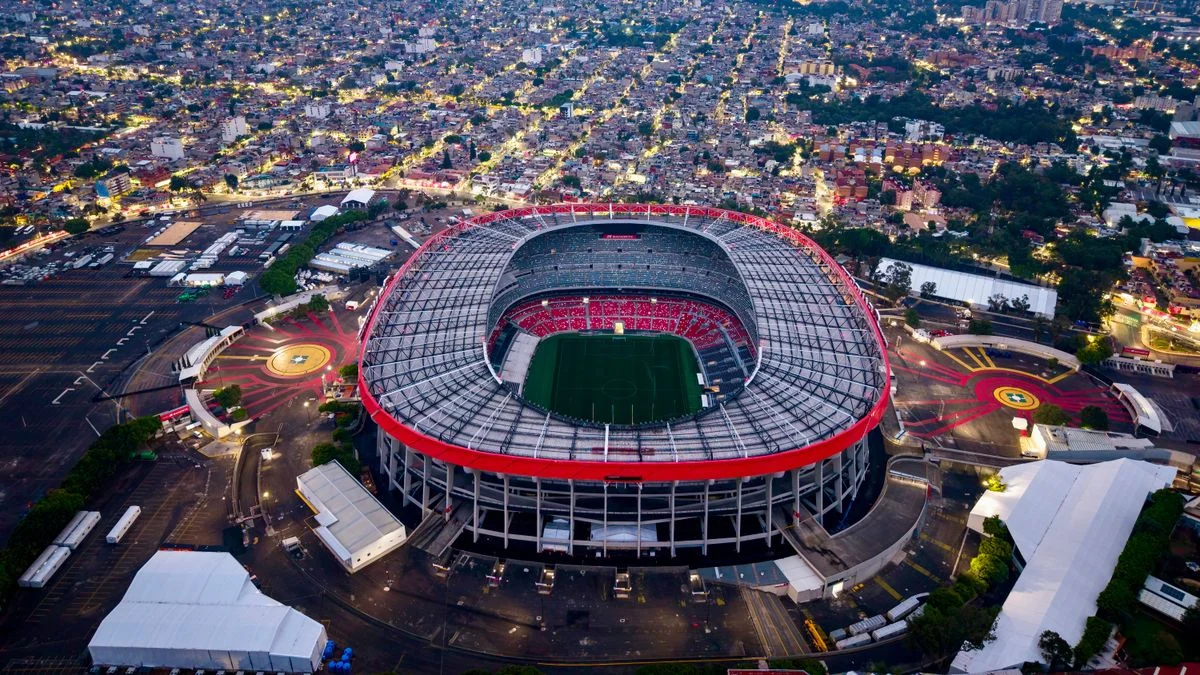
In a significant policy reversal that highlights the tension between national prestige and educational continuity, the Mexican government has announced that schools will remain open until July 15, 2026. This decision effectively scraps previous proposals to truncate the academic year by six weeks—a move originally floated to accommodate the logistical demands of the 2026 FIFA World Cup, which Mexico is co-hosting alongside the United States and Canada.
The government’s decision serves as a pivotal victory for parents, educators, and civil society groups who argued that the education of the nation’s youth should not be sacrificed for the sake of a global sporting event. As the dust settles on this controversy, the focus now shifts to how Mexico will balance the immense pressure of hosting one of the world’s most watched tournaments with the fundamental responsibility of educating its children.
The Core Conflict: Education vs. Logistics
The debate began when rumors surfaced that the Ministry of Public Education (SEP) might shorten the 2025–2026 academic calendar to mitigate the impact of the World Cup on the country’s infrastructure. With the opening match scheduled for June 11, 2026, at the iconic Azteca Stadium in Mexico City, officials were concerned about the strain on transportation networks, the potential for extreme traffic congestion, and the security challenges posed by hosting thousands of international visitors.
However, the proposal to end the school year early met with immediate and fierce resistance. Critics pointed to the irony of a government prioritizing the flow of tourist traffic over the learning hours of students. For many, the debate was symbolic of a broader issue in the Mexican education system: the tendency to treat schooling as a flexible variable rather than a non-negotiable public service.
Chronology of a Policy Reversal
The timeline of this dispute reflects the rapid escalation of public sentiment and the subsequent government retreat:
- Initial Speculation (Early 2024): Preliminary discussions regarding the "World Cup Logistics Plan" began circulating in government circles. Proposals included a staggered school calendar and potential closures to keep students off the roads during match days.
- Public Outcry (Mid-2024): As news reports suggested a six-week reduction in the school year, organizations like the National Union of Parents (UNPF) and educational think tanks began mobilizing. They published open letters and social media campaigns under the hashtag #LaEducaciónNoSeSuspende (Education Cannot Be Suspended).
- The "Clara Brugada" Intervention: The Mayor of Mexico City, Clara Brugada, publicly weighed in, suggesting that schools should remain closed on match days to ease the burden on public transport and reduce urban gridlock. This served to heighten the perception that the government was prioritizing sports over pedagogy.
- Academic Pushback (Late 2024): Leading figures in Mexican education, including Patricia Vázquez of Mexicanos Primero, issued scathing critiques, arguing that any lost time exacerbates existing learning deficits.
- The Official U-Turn (December 2024/January 2025): Education Minister Mario Delgado issued a formal statement confirming that the school year will conclude on July 15, as originally planned. The government cited "stability and safety" for families as the primary motivation for the reversal.
Supporting Data: The Case Against Shortened Terms
The opposition to the calendar change was rooted in hard data. Mexico’s education system, already struggling with the long-term impacts of the COVID-19 pandemic, could ill afford further disruptions.
Learning Deficits
According to recent studies by Mexicanos Primero and the OECD, Mexican students continue to lag in foundational skills such as reading comprehension, basic arithmetic, and scientific literacy. Marco Fernández, a professor at the Monterrey Institute of Technology and Higher Education (Tec de Monterrey), has been a vocal critic of the government’s initial proposal. He noted that the cumulative impact of lost school days is not merely a logistical inconvenience; it is a structural barrier to social mobility.
The Economic Reality for Families
While the government initially viewed school closures as a way to "provide stability," parents argued the opposite. For millions of working-class families, the school calendar is the heartbeat of their domestic routine. When schools close, parents are forced to find childcare on short notice or leave children unsupervised. As Minister Delgado admitted in his recent reversal, the daily lives of millions of Mexican families are inextricably linked to the academic calendar.
Official Responses and Political Maneuvering
The shift in stance represents a delicate balancing act for the administration of President Claudia Sheinbaum. The government is acutely aware that the 2026 World Cup is a flagship project for Mexico’s international image.
Mario Delgado’s Statement
Minister Mario Delgado attempted to frame the decision as a compromise. While the national calendar remains intact, the government has introduced a degree of regional flexibility. "Regional authorities will be empowered to make local adjustments based on specific circumstances," Delgado stated. This is intended to allow cities like Monterrey, Guadalajara, and Mexico City—which will host 13 matches combined—to manage localized traffic or security issues without forcing a national suspension of classes.
The Stance of Local Authorities
Clara Brugada’s office has signaled a pivot in its approach. Instead of broad school closures, the city is now exploring "remote working" initiatives for the private sector and civil servants to alleviate traffic, rather than relying on the school system as a traffic-control mechanism.
Implications for the Future of Mexican Education
The resolution of this conflict serves as a case study for future policy-making in Mexico. It underscores several critical challenges:
1. The Politicization of Education
The incident has highlighted how easily educational policy can be subordinated to short-term political or economic objectives. The fact that the government had to retreat suggests that the voice of the educational community is becoming an increasingly powerful force in Mexican public life.
2. Infrastructure Resilience
The struggle to host the World Cup has exposed the fragility of Mexico’s urban infrastructure. The initial impulse to close schools was a tacit admission that the public transit system in host cities is likely to buckle under the weight of the massive influx of tourists. This has triggered a renewed call for investment in urban mobility that does not require the sacrifice of public services.
3. The Quality of Learning
Experts like Marco Fernández argue that the government’s focus should remain on "reading, arithmetic, and scientific thinking." The controversy has forced the government to explicitly affirm that these foundational goals take precedence over the spectacle of international sports. Moving forward, the Ministry of Education will be under intense scrutiny to prove that the 2026 school year will be used to actively address, rather than ignore, the learning gaps identified by civil society.
Conclusion: A Lesson Learned?
The decision to keep Mexican schools open until July 15 is a victory for the principle that education is a public good that cannot be bartered. While the 2026 World Cup will undoubtedly bring significant economic benefits and international prestige to Mexico, the government has learned—the hard way—that the cost of hosting cannot be measured in school hours.
As the countdown to the opening match at the Azteca Stadium continues, the focus will now move toward execution: ensuring that the 13 matches held in Mexico are safe and successful, while simultaneously ensuring that the next generation of students is in the classroom, learning the skills they need to compete on a much more important global stage: the future economy. For now, the textbooks will remain open, and the students will remain in their seats, as the nation prepares to welcome the world without abandoning its own.










Leave a Reply