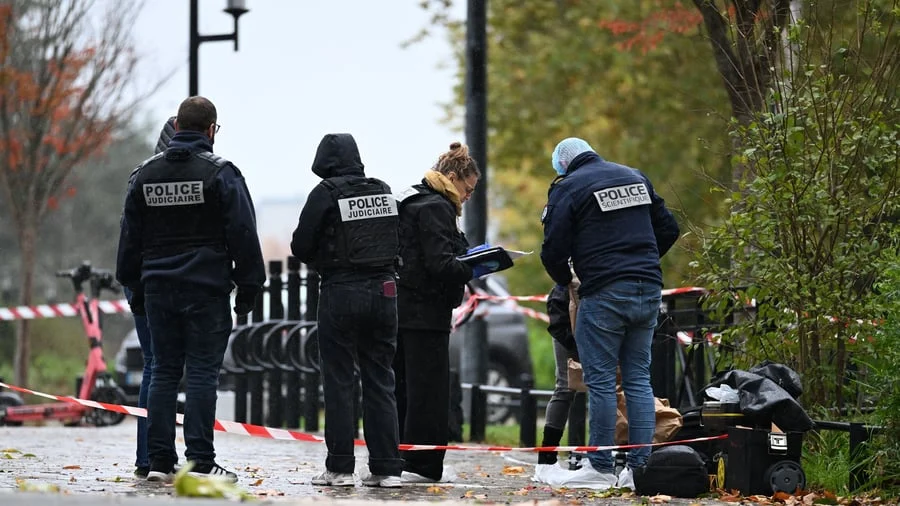
Overview: A Coordinated Assault on Identity
In a chilling sequence of events that has sent shockwaves through the French Republic, a series of shootings in the suburbs of Paris has been officially classified as a "terrorist act." The attack, which occurred in the commune of Trappes and surrounding areas, has left one person dead and five others in critical condition. French authorities, including Interior Minister Laurent Nuñez, have moved quickly to categorize the violence not as a random act of criminality, but as a deliberate, ideologically driven strike against specific segments of the population.
The incident, which unfolded over the course of a harrowing morning, has prompted an immediate, high-level response from the French government. President Emmanuel Macron has publicly condemned the violence, highlighting a disturbing evolution in the nature of domestic terror in France. According to official statements, the victims were targeted specifically due to their perceived ethnicity or religious affiliation, marking a grim turning point in the country’s ongoing struggle with extremism and social cohesion.
Chronology of the Incident
The terror began in the early hours of the morning in the suburban sprawl of the Paris region. Witnesses described a vehicle moving through the streets of Trappes and neighboring districts, from which a lone assailant opened fire on civilians. The mobility of the perpetrator created a state of panic across multiple communities, as police forces were scrambled to intercept the vehicle and secure the area.
Law enforcement agencies executed a swift and coordinated response, managing to apprehend the suspect shortly after the initial reports of gunfire were received. While the immediate threat was neutralized, the aftermath left a scene of devastation. Emergency services were dispatched to multiple locations to triage the wounded and secure the perimeter. The rapid capture of the suspect has allowed for the commencement of a formal judicial inquiry, led by the National Anti-Terrorism Prosecutor’s Office, to determine the full scope of the attack and identify any potential accomplices.
Casualties and Medical Status
The human toll of the attack is severe and continues to weigh heavily on the affected families and the broader community. The National Anti-Terrorism Prosecutor’s Office confirmed that a man, born in 2000, was killed during the shooting. The loss of such a young life has ignited widespread mourning and calls for justice.
In addition to the fatality, five other individuals were transported to local hospitals with serious gunshot wounds. As of late yesterday, medical officials reported that the conditions of the survivors remained unstable, with several fighting for their lives. The psychological impact of the incident extends far beyond those physically struck; numerous bystanders who witnessed the brutality of the attack are currently receiving professional support to manage the acute shock and trauma induced by the ordeal.
Official Responses and Political Repercussions
Interior Minister Laurent Nuñez addressed the media in Trappes shortly after the scene was secured. "The investigations are still ongoing, but this is clearly a terrorist crime," he stated, emphasizing the gravity of the incident. While the minister noted that the exact motives are still under investigation, he confirmed that the judiciary is actively pursuing the hypothesis that the attack was rooted in racial hatred.
President Emmanuel Macron issued a stern denunciation of the violence, framing it as a unique and unprecedented threat to the values of the French Republic. "These people were targeted solely because of their skin color or their perceived religion," Macron said. He underscored the profound moral crisis represented by this event, noting that it is the first time such an attack has been executed with the specific intent of killing fellow citizens based on identity-based prejudices.
The President’s language reflects a growing concern within the Élysée Palace regarding the rise of far-right extremism and the radicalization of individuals who hold deep-seated animosity toward France’s multicultural demographic. The government is now facing mounting pressure to explain how such an attack was planned and executed, and what measures can be taken to prevent future incidents of this nature.
Analyzing the Roots of the Violence
While the investigation is in its infancy, the classification of the incident as "terrorism" suggests that the perpetrator was driven by a coherent, albeit extremist, ideology. In the context of contemporary France, where political polarization has intensified, analysts are looking at the nexus between online radicalization and physical violence.
The focus on "perceived religion" or "skin color" as the primary motive points toward a xenophobic or white-supremacist undercurrent. France has, for years, grappled with the challenge of balancing secularism (laïcité) with the reality of its diverse population. This attack suggests that the rhetoric of "us versus them" has moved from the fringes of social media discourse into the streets, resulting in lethal consequences.
The investigative team is currently reviewing the suspect’s digital footprint, social media history, and potential associations with extremist groups. The goal is to determine whether the suspect acted as a "lone wolf"—a common phenomenon in recent European terror cases—or if they were part of a broader network of like-minded individuals.
The Broader Implications for French Security
This incident forces a re-evaluation of the French internal security apparatus. The ability of an individual to carry out a mobile shooting spree through multiple suburbs raises critical questions about surveillance, intelligence gathering, and the effectiveness of current counter-terrorism strategies.
For the residents of Trappes and the Paris suburbs, the incident has shattered the sense of normalcy. Many are now calling for increased police presence and more robust community outreach programs to bridge the gaps that allow such hatred to fester. The local authorities are working to maintain order while ensuring that the victimized communities receive the support they need.
Moreover, the event has reignited the national debate on gun control and the monitoring of potential domestic threats. Unlike many other Western nations, France already has strict laws regarding firearm ownership, which makes the procurement of the weapon used in this attack a primary point of interest for the ongoing investigation. Authorities are working to trace the origins of the firearm, which may provide further clues about the perpetrator’s resources and potential connections.
A Nation in Mourning
As France processes this tragedy, the focus remains on the victims and the pursuit of justice. The incident has served as a grim reminder that terrorism is not limited to any single ideology. The government’s commitment to label this as a "terrorist act" is a clear signal that it will not tolerate violence that seeks to divide the nation along racial or religious lines.
In the coming days, the French government is expected to announce further measures to combat hate speech and extremist mobilization. The judicial process will be closely watched, both by the public and by international observers, as it sets a precedent for how the state handles hate-motivated terror attacks.
For now, the people of Trappes are left to grapple with the reality that their streets were turned into a battlefield. The path to recovery will be long, but the official response indicates a firm resolve to address the underlying causes of the violence and to ensure that such an atrocity is never repeated. The tragedy is not just a crime against the individuals who suffered; it is a direct challenge to the fundamental promise of "Liberté, Égalité, Fraternité" that defines the modern French state. The coming months will test the resilience of the republic and its ability to protect all its citizens from the scourge of identity-based terror.