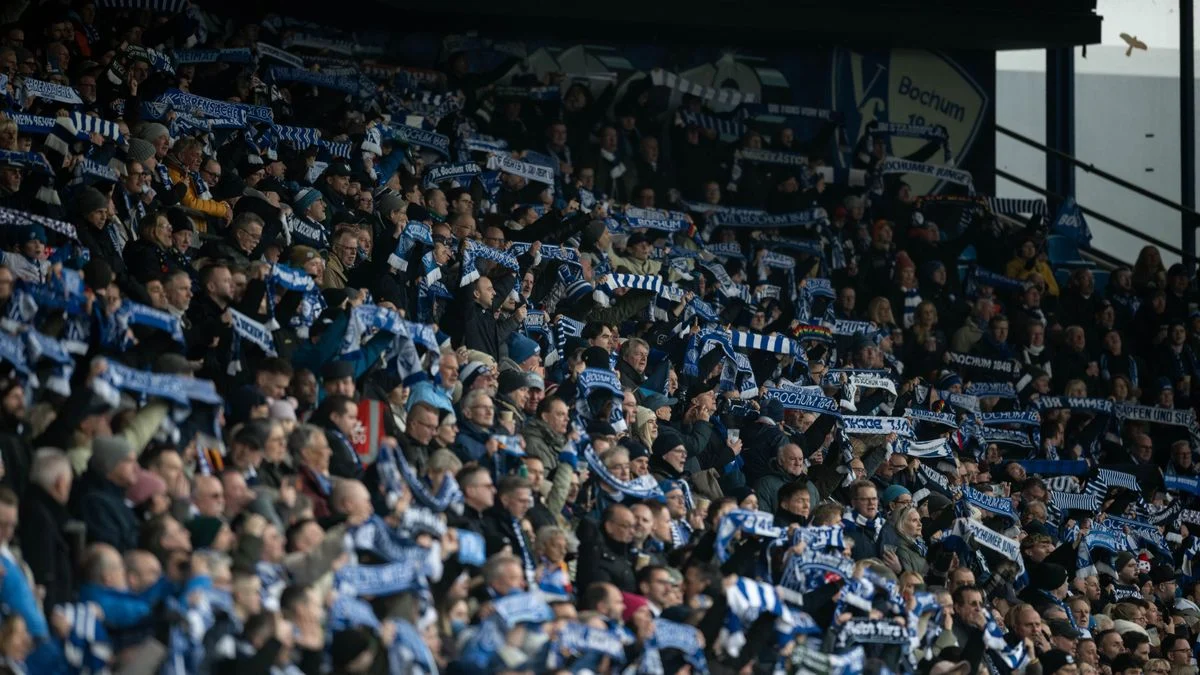
In an unprecedented development for German football, VfL Bochum has been forced to implement a highly unconventional restriction at the historic Vonovia Ruhrstadion. Following rigorous structural analysis conducted as part of broader modernization efforts, the club has issued a formal ban on rhythmic, synchronized jumping and hopping within specific sections of the East Stand. The decision, aimed at ensuring fan safety and structural integrity, marks a significant shift in stadium operations and has sparked a wider conversation about the safety of aging sports infrastructure in the modern era.
Main Facts: The "Trampoline Effect" Explained
The decision stems from an exhaustive investigation into the vibrational behavior of the East Stand’s terracing elements. As part of the planning phase for upcoming stadium renovations, the Bochumer Sportstätten Besitzgesellschaft mbH (BoSB)—the entity that owns the stadium—commissioned a specialized engineering firm to assess the structural dynamics of the stand.
The engineers identified a specific physical phenomenon triggered by crowd movement. While the structural load-bearing capacity of the concrete steps remains well within safety standards, the stand exhibits a susceptibility to resonance when subjected to synchronized, rhythmic movement. When large numbers of fans jump or hop in unison, the structure experiences a "trampoline effect." This oscillation, while not threatening the immediate collapse of the stand, creates intense vibrations that can lead to significant discomfort, motion sickness, and physical unease, particularly for fans unaccustomed to such environmental feedback.
To mitigate this, the Bochum building inspection authority, acting in coordination with the BoSB, has issued a directive that effectively bans synchronized, choreographic jumping in blocks N2, O, P, and Q. The measure is framed as a critical alternative to the total closure of the stand, which would have deprived thousands of fans of their viewing spots.
Chronology of the Structural Assessment
The path to this unusual restriction began months ago, as VfL Bochum laid the groundwork for a comprehensive modernization of the Ruhrstadion. The club’s long-term strategy includes upgrading the aging infrastructure to meet contemporary standards of comfort, safety, and commercial utility.
- Initial Planning Phase: As part of the technical documentation required for the expansion and renovation project, standard structural stress tests were scheduled.
- Engineering Assessment: An independent firm was tasked with analyzing the durability and oscillation patterns of the East Stand. The audit focused on how the concrete tiers react to the dynamic loads typical of a football match environment.
- Discovery of Resonance: The final report, submitted to the BoSB, highlighted that the current design of the East Stand’s support elements creates a resonant frequency that aligns uncomfortably close to the frequency of synchronized human jumping.
- Regulatory Intervention: Following the submission of the report, the local building inspection authority stepped in. They reviewed the findings and determined that, under current conditions, the "trampoline effect" posed a safety and health risk to patrons.
- The "No-Jumping" Mandate: Recognizing that a total closure would be catastrophic for the club’s fan engagement and match-day atmosphere, authorities provided the "no-jumping" ban as the only viable compromise, effective immediately.
Technical Data and Safety Standards
The core of the issue lies in the relationship between structural mass and dynamic loading. Stadiums are designed to hold static weight—thousands of spectators standing or sitting—with a high margin of safety. However, "dynamic loading" refers to the force applied when people move.
A single person jumping creates a force that is multiplied by the weight of the individual. When thousands of fans jump in sync—a common practice during goal celebrations or "ultras" chants—the rhythmic pulses can align with the natural frequency of the structure. If the structure is not sufficiently damped, it begins to sway or vibrate in a way that amplifies the movement, leading to the aforementioned "trampoline effect."
Engineers confirmed that while the stand is not in danger of catastrophic failure, the vibrational amplitude exceeds the levels deemed comfortable for the general public. The goal of the restriction is to prevent the "synchronization" of these forces. By ensuring that movement remains erratic and uncoordinated, the total energy transferred into the structural elements is significantly reduced, thereby keeping the vibrations within acceptable, imperceptible limits.
Official Responses and Club Policy
VfL Bochum has adopted a transparent, if regretful, tone regarding the new regulations. The club is acutely aware that telling football fans not to jump is akin to telling them not to cheer, yet they emphasize that the alternative—a complete closure of the East Stand—would be far more damaging to the match-day experience.
"The VfL regrets these unavoidable measures," the club stated in an official release. "However, we are relieved that, by adhering to the jumping ban, we can continue to utilize the East Stand at full capacity."
The club has clarified that standard, spontaneous cheering and typical goal-celebration movements are not the primary target of the ban. Instead, the focus is on "choreographed" jumping—the long, sustained, rhythmic bouncing often led by stadium capos. Security personnel and stewards will be briefed on how to monitor for prohibited behavior, though the club is relying heavily on the self-policing nature of the fan base to ensure compliance.
Implications for the Future: A Long-Term Solution
The most significant aspect of this situation is its temporal limitation. The "no-jumping" ban is not intended to be a permanent fixture of the Ruhrstadion; rather, it is a temporary stopgap that bridges the gap between current safety requirements and the conclusion of the planned modernization project.
The renovation plans already include structural reinforcements for the East Stand, which will effectively dampen the vibrations and allow for the return of unhindered fan expression. According to the club’s current schedule, these comprehensive modernizations are slated for completion by 2028.
Until that time, the club faces a delicate balancing act. They must manage the frustrations of a passionate fan base while navigating the strict legal mandates of the local building authority. The threat of "significant consequences"—ranging from increased security presence to the total closure of the stand—serves as a stark reminder of the gravity with which the authorities view the structural assessment.
The Broader Impact on Stadium Infrastructure
This incident at the Ruhrstadion serves as a case study for older stadiums across Europe. Many venues built in the late 20th century were designed with safety standards that did not fully account for the evolution of modern "ultra" culture, where synchronized, high-intensity rhythmic movement has become a standardized part of the fan experience.
As clubs look to modernize their facilities, they are likely to encounter similar engineering challenges. The case of VfL Bochum highlights that the future of stadium maintenance is as much about managing the "physics of passion" as it is about bricks and mortar. For now, the fans of the East Stand are asked to keep their feet on the ground, ensuring that the legacy of their support does not compromise the safety of the very structure that houses them.
The club’s upcoming match against Arminia Bielefeld will serve as the first real-world test of this policy. How the fans respond to these restrictions, and whether the measures succeed in mitigating the vibration levels, will be closely monitored by both the BoSB and the building inspectors. For VfL Bochum, it is a race against time and structural physics, aimed at preserving both the spirit of the game and the integrity of the stadium.