By Financial News Desk
Updated: October 8, 2026 | 14:02 CET
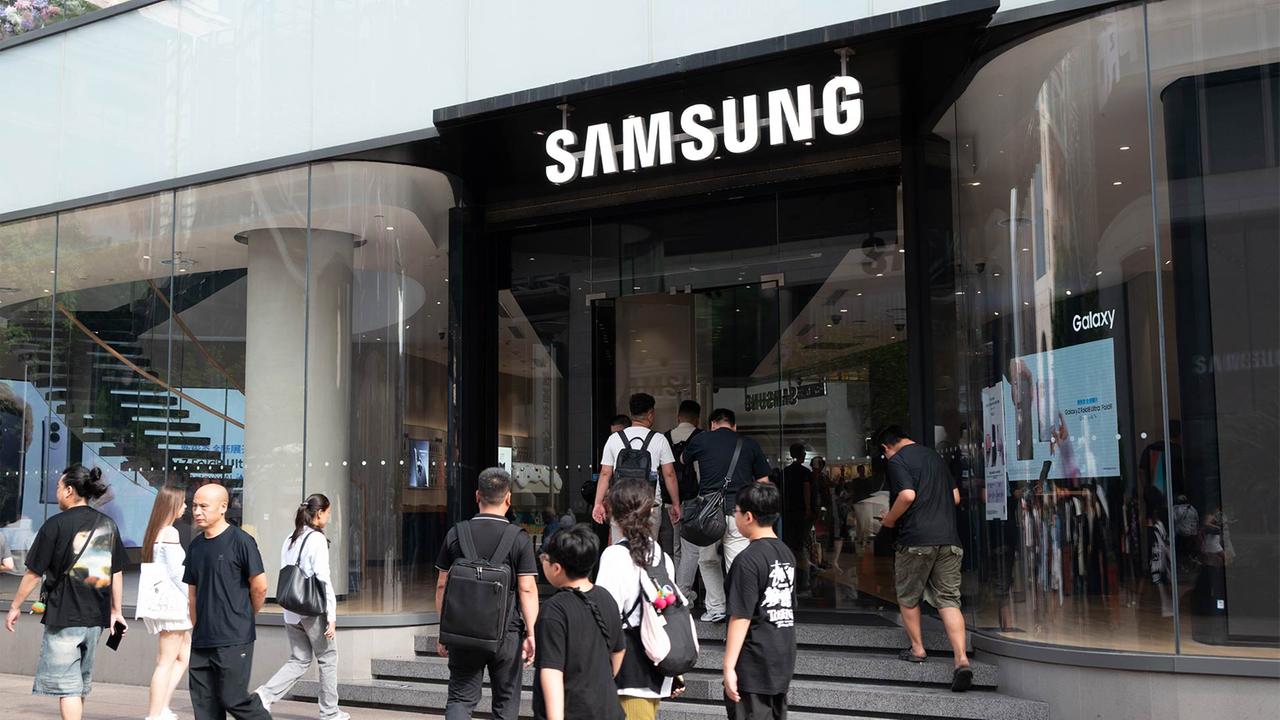
In a display of unprecedented financial might, Samsung Electronics has shattered all historical records for a technology company, posting a staggering operating profit of approximately 71.7 billion euros for the third quarter of 2026. This monumental achievement marks the fourth consecutive quarter of record-breaking growth for the South Korean behemoth, a surge primarily fueled by an insatiable global demand for high-end memory chips essential for the rapidly expanding artificial intelligence (AI) infrastructure.
While the wider global markets—including the German DAX—struggle with inflationary pressures and volatile interest rate environments, Samsung stands as a titan of the digital age, proving that the infrastructure of the AI revolution remains the most lucrative sector in the modern economy.
The Engine of Growth: The AI Semiconductor Boom
The core of Samsung’s current success lies in the “AI Gold Rush.” As governments and private enterprises worldwide race to construct massive data centers to house Large Language Models (LLMs) and generative AI applications, the demand for High Bandwidth Memory (HBM) has skyrocketed.
Unlike standard DRAM, HBM is specifically engineered to handle the massive, high-speed data throughput required by advanced AI processors, such as those produced by NVIDIA or AMD. Samsung has successfully pivoted its manufacturing capabilities to prioritize these high-margin, high-performance components.
According to industry analysts, the supply-demand imbalance in the semiconductor sector is currently at a historic high. The construction boom for data centers has outpaced the semiconductor industry’s capacity to scale production, leading to a natural, albeit aggressive, appreciation in unit prices. Douglas Kim, founder of Douglas Research, estimates that the sales volume for these specialized AI-optimized products surged by 50% in the third quarter alone compared to the previous three-month period. This aggressive growth suggests that Samsung is successfully closing the competitive gap with its domestic rival, SK Hynix, which has historically held the mantle as the global leader in HBM production.
A Chronicle of Success: The Four-Quarter Streak
To understand the scale of Samsung’s current dominance, one must look at the progression of the last twelve months:
- Q4 2025: Samsung initiates a strategic pivot toward high-density memory modules, seeing the first signs of the AI-driven recovery in the chip market.
- Q1 2026: The company reports a record-breaking quarter as data center operators scramble to secure long-term supply contracts.
- Q2 2026: Profits climb as memory prices rise by nearly 60% globally. Samsung accelerates its capital expenditure (CAPEX) to expand manufacturing lines.
- Q3 2026: The current peak. With a 71.7 billion euro operating profit—a ninefold increase compared to historical averages—Samsung establishes itself as the primary beneficiary of the AI investment cycle.
This trajectory reflects a calculated move by Samsung’s leadership to move away from the commoditized "boom-and-bust" cycles of consumer electronics and toward the "mission-critical" infrastructure of the AI era.
Official Stance and Future Projections
Samsung is scheduled to release its comprehensive, audited quarterly report on October 29, 2026. However, the preliminary figures have already set the tone for investor expectations. In an effort to maintain shareholder confidence during this period of high volatility, the company has signaled its intention to distribute a record 73 billion euros to its shareholders in the current fiscal year.
The company’s management has offered a cautious but optimistic outlook regarding the supply chain. In official briefings, Samsung executives noted that the current supply shortage is expected to persist until at least 2028. To mitigate the risks associated with market fluctuations, the company is actively securing long-term supply agreements with major hyperscalers—the operators of the world’s largest data centers. These contracts are designed to provide price stability and guarantee a steady revenue stream even if the spot price of semiconductors begins to level off.
Market Implications: The "Price Ceiling" Debate
Despite the celebratory tone of the earnings report, the stock market reaction has been uncharacteristically muted. Investors are currently gripped by a singular concern: sustainability.
"The primary focus for the market is no longer the current profit level, but rather the durability of this growth," explains Kim Seok-hwan, an analyst at Mirae Asset Management. "The market is asking if we have hit the ceiling of price increases for memory components."
Data from the market research firm TrendForce supports this cautious sentiment. While memory chip prices rose by roughly 60% between April and June, that growth is now decelerating. TrendForce projects that price increases for the remainder of the year will hover between 10% and 15%. According to Avril Wu, a manager at TrendForce, this cooling effect is a result of more structured procurement. Many large-scale clients are now moving toward long-term contracts that include "price caps," effectively preventing the extreme price spikes that defined the first half of the year.
The Broader Landscape: TSMC and the Asian Tech Axis
Samsung is not alone in this upward trajectory. TSMC, the world’s largest contract chip manufacturer, reported a staggering 50% increase in revenue for the third quarter, reaching a record high of 41.66 billion euros.
As the primary foundry for the world’s most advanced processors, TSMC’s success confirms that the bottleneck in the AI sector is not just software or design, but physical manufacturing capacity. The synchronicity between Samsung’s memory dominance and TSMC’s logic chip dominance underscores a massive, regional economic shift in East Asia. Taiwan and South Korea are effectively functioning as the "central banks" of the global AI economy, controlling the hardware without which the modern AI landscape could not exist.
The Contrast: Mobile and Consumer Electronics
While the chip division (DS – Device Solutions) is enjoying a golden age, Samsung’s mobile and consumer electronics segments remain sluggish. The smartphone market continues to face saturation, and consumers are extending the lifecycle of their devices, leading to lower-than-anticipated demand for high-end handsets.
The contrast is stark: while the semiconductor division is struggling to keep up with orders, the mobile division is fighting to maintain market share in a stagnant global environment. This duality highlights a strategic shift for Samsung, which is increasingly becoming a B2B infrastructure company rather than a consumer-facing retail giant.
Macroeconomic Context: DAX and Global Sentiments
The ripple effects of these tech earnings are being felt in global markets. On the day of the announcement, the German DAX index fell below the 25,000-point threshold. Financial analysts point to a confluence of factors: high energy costs, lingering fears over interest rate hikes, and a general investor apathy toward broader equities as capital continues to rotate into the high-performing, narrow "AI-tech" sector.
"As long as there is no tangible relief regarding energy prices or bond yields, the appetite for large-scale stock market investment will remain constrained," noted Andreas Lipkow, a market expert at CMC Markets.
For the average investor, the message is clear: the global economy is bifurcating. On one side, companies providing the physical architecture for the digital future are generating wealth at a scale never before seen in human history. On the other, the traditional manufacturing and retail sectors are facing the headwinds of a high-interest-rate environment and a cautious consumer.
Conclusion
Samsung’s record-shattering quarter is more than just a win for the company; it is a macroeconomic bellwether. It signals that we are in the middle of a multi-year, capital-intensive cycle where memory and processing power are the most valuable commodities on earth. As the world moves toward an increasingly automated future, the reliance on companies like Samsung will only deepen. Whether this profit level represents a peak or a new baseline remains the defining question for the global financial markets as we head into 2027.