Introduction: A Fragile Sanctuary Under Threat
Off the rugged, windswept coastline of Patagonia, specifically near Puerto Madryn and the UNESCO World Heritage site of the Valdés Peninsula, a tragic phenomenon is unfolding. This region has long been celebrated as one of the most vital nursery grounds for the Southern Right Whale (Eubalaena australis). Every year, these majestic marine giants migrate to the sheltered, temperate waters of the South Atlantic to give birth and nurse their young.
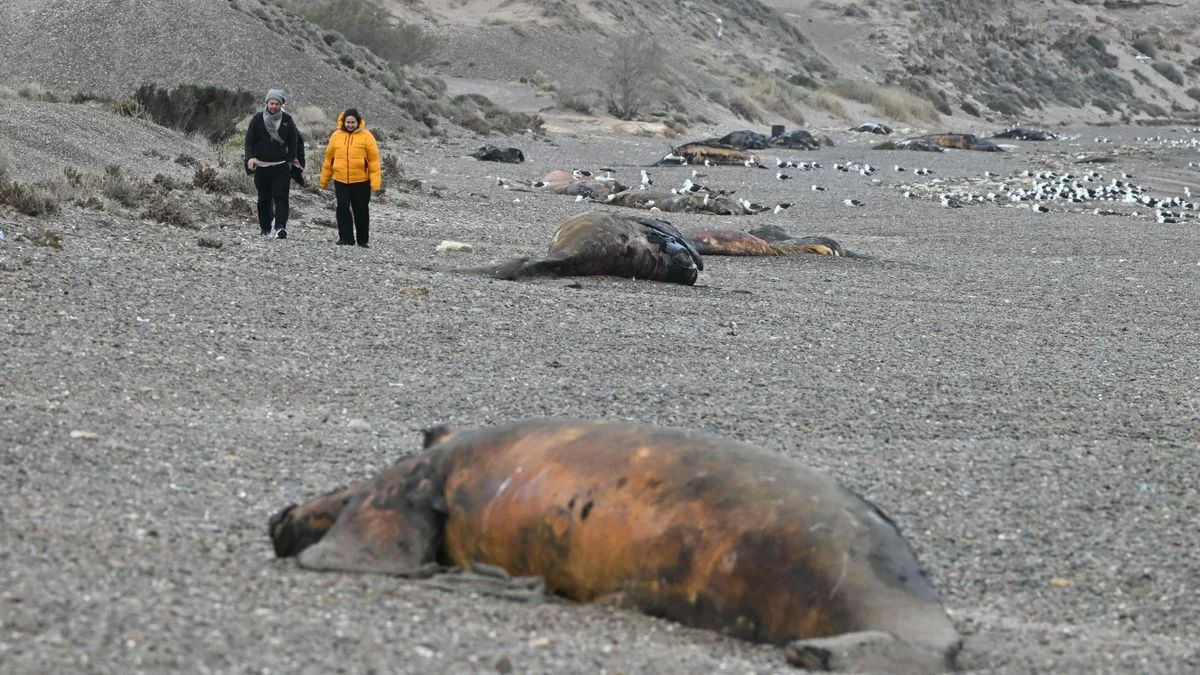
For years, conservationists and researchers have cheered the steady recovery of the population, which had been decimated by commercial whaling in previous centuries. However, the optimism of recent seasons has been shattered. In a span of just a few weeks, hundreds of whale calves have perished, washing up on the beaches of Argentina’s Chubut province. This mass mortality event has triggered an urgent scientific investigation, raising questions about the health of the marine ecosystem and the potential intersection between natural biological shifts and human environmental impact.
The Chronology of the Tragedy: From Discovery to Alarm
The alarm was first raised in June, when researchers patrolling the coast began noticing an unusual number of stranded calves. Initially, it was hoped that these were isolated incidents—perhaps the natural attrition of a particularly harsh winter. However, as the weeks progressed into the peak of the calving season, the frequency of strandings reached unprecedented levels.
By mid-season, the situation had shifted from a cause for concern to a full-scale crisis. Throughout the late winter and early spring, dozens of carcasses were found scattered along the shoreline each week. The sheer volume of deaths overwhelmed local conservation teams, who were tasked with performing necropsies under grueling conditions to determine the cause of death.
The chronology of this event highlights a rapid acceleration in mortality that has left the local scientific community, led by the Argentine research institute CONICET, working around the clock. What began as a scattered report in early June developed into a consistent, daily grim discovery, turning the pristine beaches of Chubut into a sobering laboratory of marine biology.
The Biological Culprit: The Erysipelas Hypothesis
After weeks of investigation, marine biologist Mariano Coscarella of CONICET provided a preliminary, albeit cautious, explanation for the high mortality rate. According to the research findings, the deaths of the calves are likely linked to Erysipelas, a severe bacterial skin infection.
Understanding Erysipelas in Cetaceans
Erysipelas is caused by the bacterium Erysipelothrix rhusiopathiae. In terrestrial mammals, it is often associated with skin lesions and systemic fever. In marine mammals, it can be particularly devastating. The bacteria can enter the animal through minor abrasions on the skin, subsequently causing septicemia—a systemic infection that can lead to rapid organ failure.
"It appears to be a natural cause," Dr. Coscarella stated in an interview with Agence France-Presse (AFP), emphasizing that the infection seems to be spreading through the local environment. Veterinarians examining the carcasses found distinct symptoms consistent with the infection, noting that the calves, whose immune systems are still developing, are uniquely vulnerable to such pathogens.
However, the scientific community remains cautious. While the infection is the primary suspect, researchers are not yet ready to rule out the influence of human activity. The "natural cause" label does not necessarily mean "independent of human influence." Climate change, shifting ocean currents, and potential pollution levels in the South Atlantic could be altering the bacterial composition of these waters, creating a "perfect storm" for such outbreaks.
Supporting Data: A Statistical Shift in Population
To understand the gravity of the situation, one must look at the population data from the previous year. 2021 was a banner year for the Southern Right Whale in the Valdés region. Authorities recorded 2,110 individual whales, including 800 calves—a record-breaking figure that signaled the species was thriving.

This year, however, the numbers tell a starkly different story. Monitoring efforts have counted only 1,375 whales, with roughly 400 calves. While this represents a significant drop, Dr. Coscarella and his team urge the public to maintain perspective. The Southern Right Whale is a resilient species, capable of living up to 60 years and reaching lengths of 17 meters. Despite the high mortality rate among this year’s cohort, experts do not currently view the overall population as being in immediate, long-term danger.
"These deaths are not a mid-term threat to the species," Coscarella noted. The resilience of the adult population and the cyclical nature of marine biology suggest that, while tragic, the event may not signal an irreversible decline, provided the environmental conditions do not continue to deteriorate.
Official Responses and Collaborative Mitigation
The government of the Chubut province has recognized the severity of the situation and has moved to coordinate a multi-agency response. Recognizing that the province’s identity—and its lucrative whale-watching industry—is tied to the health of these creatures, the local administration is working hand-in-hand with CONICET scientists.
The official stance from the provincial government, released in a joint statement, highlights the identification of a "widespread marine bacterium" as the primary driver. They are currently deploying resources to monitor water quality and track the movement of whale pods in real-time. This collaboration is crucial not only for the sake of the whales but for the integrity of the coastal ecosystem. By analyzing water samples and tracking environmental variables such as temperature and salinity, the authorities hope to determine if the bacterial proliferation is linked to specific oceanic anomalies.
Broader Implications: A Changing Ocean
The mass mortality in Patagonia serves as a microcosm of the broader challenges facing marine life in the 21st century. The Southern Right Whale is an indicator species; its health reflects the health of the Southern Atlantic.
The Climate Connection
While Erysipelas is a known bacterial pathogen, the question remains: why now? Scientists are increasingly looking at how climate change is altering the marine microbiome. Warmer ocean temperatures can lead to the proliferation of bacteria that might otherwise be dormant or present in lower concentrations. Furthermore, stress—whether from increased shipping traffic, noise pollution, or changes in the availability of krill, the whales’ primary food source—can weaken the immune systems of nursing mothers and their calves, making them more susceptible to infections that they might otherwise survive.
The Economic and Cultural Toll
Puerto Madryn is one of the world’s premier whale-watching destinations. The industry is the economic backbone of the region, attracting thousands of tourists who come to witness these gentle giants in their natural habitat. A prolonged or recurring die-off could have devastating economic consequences for the local communities that rely on eco-tourism. Beyond the economics, there is a deep cultural loss; for the people of Patagonia, the arrival of the whales is a seasonal celebration of life, and the sight of dead calves washing ashore is a source of profound communal grief.
Conclusion: A Call for Vigilance
The tragic loss of hundreds of Southern Right Whale calves is a stark reminder of the fragility of our natural world. While researchers currently point to a bacterial infection as the direct cause, the underlying drivers of this event remain a subject of intense scrutiny.
Is this a "natural" anomaly, or is it a symptom of a planet under pressure? The answer likely lies somewhere in the middle. The resilience of the Southern Right Whale has been proven time and again, but the ocean’s capacity to absorb the impacts of human-induced change is not infinite.
As the scientific community continues its investigation, the global community must watch closely. The fate of the Southern Right Whale is linked to our own. If we are to ensure that future generations continue to see these massive, 40-ton titans breaching in the waters of the Valdés Peninsula, we must commit to a deeper understanding of the oceans and a more rigorous approach to protecting the delicate balance of life within them. The silence on the beaches of Chubut is a call to action—a reminder that nature, no matter how vast, requires our stewardship and our attention.