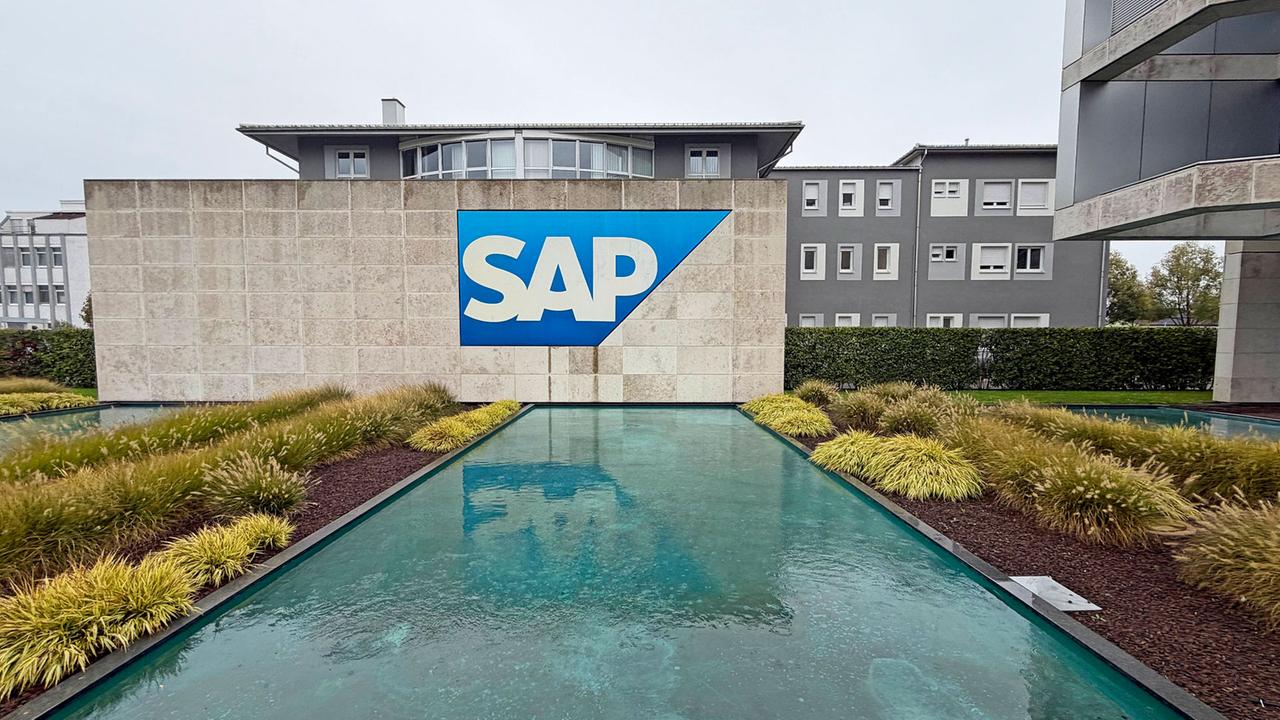
In a landscape defined by volatile market expectations and the relentless pursuit of artificial intelligence supremacy, European software giant SAP has delivered a performance that underscores the success of its multi-year structural transformation. With record-breaking revenues and a clear path forward in cloud computing, the Walldorf-based powerhouse is proving that legacy software leaders can successfully navigate the digital transition.
The Main Facts: A Milestone Quarter
In the third quarter of 2026, SAP achieved a historic financial milestone, surpassing both 10 billion euros in total revenue and 3 billion euros in adjusted operating profit for the first time in a single quarter. The company reported a total revenue increase of 13 percent, reaching 10.3 billion euros for the three-month period ending September 30.
The primary engine of this growth remains the cloud division, which saw its revenues climb by 26 percent. This figure is closely monitored by analysts and institutional investors as the primary indicator of the company’s future health and long-term recurring revenue stability. The adjusted operating profit (EBIT) rose by 18 percent to 3.03 billion euros, while the net profit followed suit with an 11 percent increase to 2.27 billion euros.
These results reflect a company that has successfully moved away from the traditional, license-heavy business model of the past and into the subscription-based, high-margin cloud ecosystem that defines the modern enterprise software market.
Chronology of the Transformation
To understand the significance of these figures, one must look back at the trajectory of SAP under CEO Christian Klein. For years, the company faced criticism regarding its slow transition to cloud services and the friction caused by moving its massive, legacy customer base onto new platforms.
- The Early Challenges: Years ago, SAP faced a period of stagnation as it struggled to convince traditional customers that moving their complex ERP (Enterprise Resource Planning) systems to the cloud was a necessary evolution.
- The Strategic Pivot: Under Klein’s leadership, the company accelerated its "Rise with SAP" initiative, focusing on a comprehensive migration to cloud-native architectures.
- The AI Integration: In the last 18 months, the narrative shifted from simple cloud migration to "AI-first" enterprise management. By embedding generative AI agents directly into its software, SAP transformed its offering from a data storage utility into an active business intelligence partner for its clients.
- The Recent Rebound: Following a slump in mid-2024, where concerns about the threat of commoditized AI models led to a sharp decline in share price, the company spent the summer of 2026 proving that its proprietary, high-security AI tools were indispensable to its corporate clients. The stock has since recovered more than 50 percent from its July lows.
Supporting Data and Financial Performance
The sheer scale of SAP’s current momentum is illustrated by the volume of its cloud backlog. As of the end of the third quarter, the volume of cloud orders grew by 26 percent on a currency-adjusted basis, reaching a staggering 24.1 billion euros.
- Cloud Revenue: 6.67 billion euros (up 25 percent), comfortably beating market expectations.
- Total Revenue: 10.3 billion euros (up 13 percent).
- Operating Margin Expansion: The 18 percent growth in operating profit confirms that the company is achieving better economies of scale as its cloud operations mature.
- Guidance Adjustment: CEO Christian Klein has raised the floor of his expectations, suggesting that cloud revenue growth for the full year will likely hit the upper end of the previously projected 23 to 25 percent range.
However, CFO Dominik Asam provided a note of cautious realism. He reminded investors that the fourth quarter is historically the most significant for SAP, often accounting for nearly half of the annual bookings. While the company is currently on a strong trajectory, any macroeconomic cooling or volatility in the final months of the year could temper the momentum heading into 2027.
Official Responses and Executive Outlook
CEO Christian Klein was buoyant during the earnings call, labeling the performance an "excellent third quarter." He emphasized that the company’s investment in AI is not merely a marketing gimmick but a fundamental change in how software is consumed. "Our customers are not just buying cloud access; they are buying the efficiency that our new AI agents bring to their core operations," Klein noted.
The company’s leadership remains focused on the "AI Agent" narrative. By automating complex workflows—such as supply chain adjustments, procurement negotiations, and financial auditing—SAP is positioning its software as a tool that reduces headcount requirements and increases corporate agility.
Finance Chief Dominik Asam was slightly more tempered. While acknowledging the record-breaking nature of the quarter, he cautioned that "the market should not assume a linear progression." He highlighted that the firm is balancing the aggressive investment required to stay ahead of the AI curve with the need to maintain the high-profit margins that shareholders expect.
Market Implications: The Broader Tech Sector
Despite the positive results, SAP’s stock experienced a modest decline in European trading following the announcement. This movement, however, appears to be less about SAP’s specific performance and more about the "guilt by association" within the broader technology sector.
On the same day, major tech players like Tesla, Meta, and IBM reported earnings that were received with skepticism by the markets. This has led to a general risk-off sentiment in the tech sector, exacerbated by rising bond yields and persistent concerns regarding the price of oil.
Analysts, including industry veteran Hans Bernecker, noted that "the current quarterly reports from tech giants simply aren’t enough to sustain a massive rally in the face of macro-economic uncertainty." The fear is that even with strong individual performances, the tech sector is hitting a valuation ceiling where investors are demanding perfection that cannot be consistently delivered in an inflationary environment.
Implications for the Future
The success of SAP serves as a case study for the European tech industry. It proves that the "old guard" of European enterprise software is capable of competing with the hyper-growth tech giants of Silicon Valley.
1. AI as a Defensive Moat: By integrating AI directly into the ERP systems that run global supply chains, SAP has created a "moat." Companies are unlikely to abandon SAP for cheaper, generic AI solutions because the cost of migrating mission-critical, integrated business data is far too high.
2. The Shift to Recurring Revenue: The transition to a subscription-based cloud model has stabilized SAP’s cash flow. Even if the global economy slows, the recurring nature of these contracts provides a floor for the company’s earnings that was absent a decade ago.
3. Investor Sentiment: For shareholders, the challenge remains the valuation. Having surged past the 200-euro mark, the stock is no longer a "value play." Investors will now be looking for SAP to sustain these double-digit growth rates throughout 2027. If the fourth quarter shows any signs of weakness, or if the "AI-agent" adoption slows, the stock could face downward pressure.
In conclusion, SAP’s third quarter of 2026 was a victory of execution. By successfully marrying its vast, established customer base with cutting-edge AI, the company has secured its position as the bedrock of digital infrastructure for global business. The road ahead remains tied to the broader fluctuations of the global economy, but for now, the Walldorf-based software giant is firmly in control of its own narrative.