By Medical Science Correspondent
June 20, 2026
A significant breakthrough in critical care medicine has emerged from the University Medicine Magdeburg, promising to change the standard of care for thousands of patients worldwide. A landmark international clinical trial has identified more effective and better-tolerated alternatives to the long-standing antibiotic treatment for Staphylococcus aureus bloodstream infections—a condition that claims hundreds of thousands of lives annually.
The findings, which challenge decades of clinical practice, suggest that moving away from the conventional antibiotic "Flucloxacillin" in favor of "Cefazolin" and "Penicillin" could significantly reduce the incidence of acute kidney failure, a common and life-threatening complication associated with sepsis treatment.
The Silent Killer: The Global Burden of Staphylococcal Sepsis
Staphylococcus aureus is among the most formidable bacterial pathogens in modern medicine. Known for its ability to cause severe, systemic infections, it is the primary culprit behind thousands of cases of bacteremia—the presence of bacteria in the bloodstream—which can rapidly escalate into sepsis, an extreme body-wide response to infection that leads to organ failure and death.
In Germany alone, over 3,000 people succumb to Staphylococcus aureus bloodstream infections every year. On a global scale, the statistics are even more sobering, with approximately 300,000 annual fatalities attributed to this specific pathogen. Because S. aureus can colonize skin and mucosal surfaces, it is opportunistic, frequently entering the bloodstream through surgical sites, intravenous catheters, or underlying skin lesions.
For decades, the medical community has relied on Flucloxacillin as the "gold standard" for treating these infections. However, while effective at killing the bacteria, the drug carries a significant clinical baggage: it is notoriously harsh on the renal system.
A Flawed Standard: The Kidney Complication
For years, clinicians have faced a difficult trade-off when prescribing Flucloxacillin. While it is highly potent against methicillin-susceptible Staphylococcus aureus (MSSA), its use is frequently complicated by nephrotoxicity—the toxic effect of a substance on the kidneys.
Acute kidney injury (AKI) is not merely a minor side effect; it is a severe, life-altering complication. When the kidneys lose the ability to filter waste products from the blood, the patient’s condition can deteriorate rapidly. In a sepsis patient—who is already fighting a systemic inflammatory response—a sudden drop in kidney function can lead to the need for emergency dialysis, prolonged hospital stays, and a significantly higher risk of mortality.
The medical community has long sought a solution that balances antimicrobial efficacy with patient safety. The recent "SNAP" (Staphylococcus aureus Network Adaptive Platform) study has finally provided the data required to justify a shift in clinical protocols.
The SNAP Study: Methodology and Scope
The SNAP study represents the largest, most comprehensive clinical trial ever conducted on the treatment of Staphylococcus aureus bloodstream infections. Spanning eight countries and involving 1,341 participants, the trial utilized an adaptive platform design, allowing researchers to evaluate multiple treatment arms simultaneously.
The Comparison
The primary objective was to compare the efficacy and safety profiles of alternative antibiotics against the standard Flucloxacillin protocol. Patients were randomized to receive either Cefazolin or Flucloxacillin. In a secondary study, those with infections caused by strains sensitive to penicillin were randomized to receive either Penicillin or Flucloxacillin.
The Results
The trial outcomes, published in the New England Journal of Medicine and The Lancet, were striking:
- Mortality Rates: After 90 days, mortality in the Flucloxacillin group stood at 17%. In the Cefazolin group, the rate was 15%. This demonstrated that Cefazolin is not inferior to the current standard in terms of saving lives.
- Renal Protection: The most significant difference was found in patient safety. Patients treated with Cefazolin experienced significantly fewer episodes of acute kidney failure compared to those treated with Flucloxacillin.
- Penicillin Efficacy: Similar safety benefits were observed in the comparison between Penicillin and Flucloxacillin for susceptible strains, reinforcing the conclusion that the "standard" drug was arguably more dangerous than necessary.
Expert Perspectives and Institutional Impact
At the heart of the German contribution to this global effort is the University Medicine Magdeburg, which coordinated 19 study centers across the country.
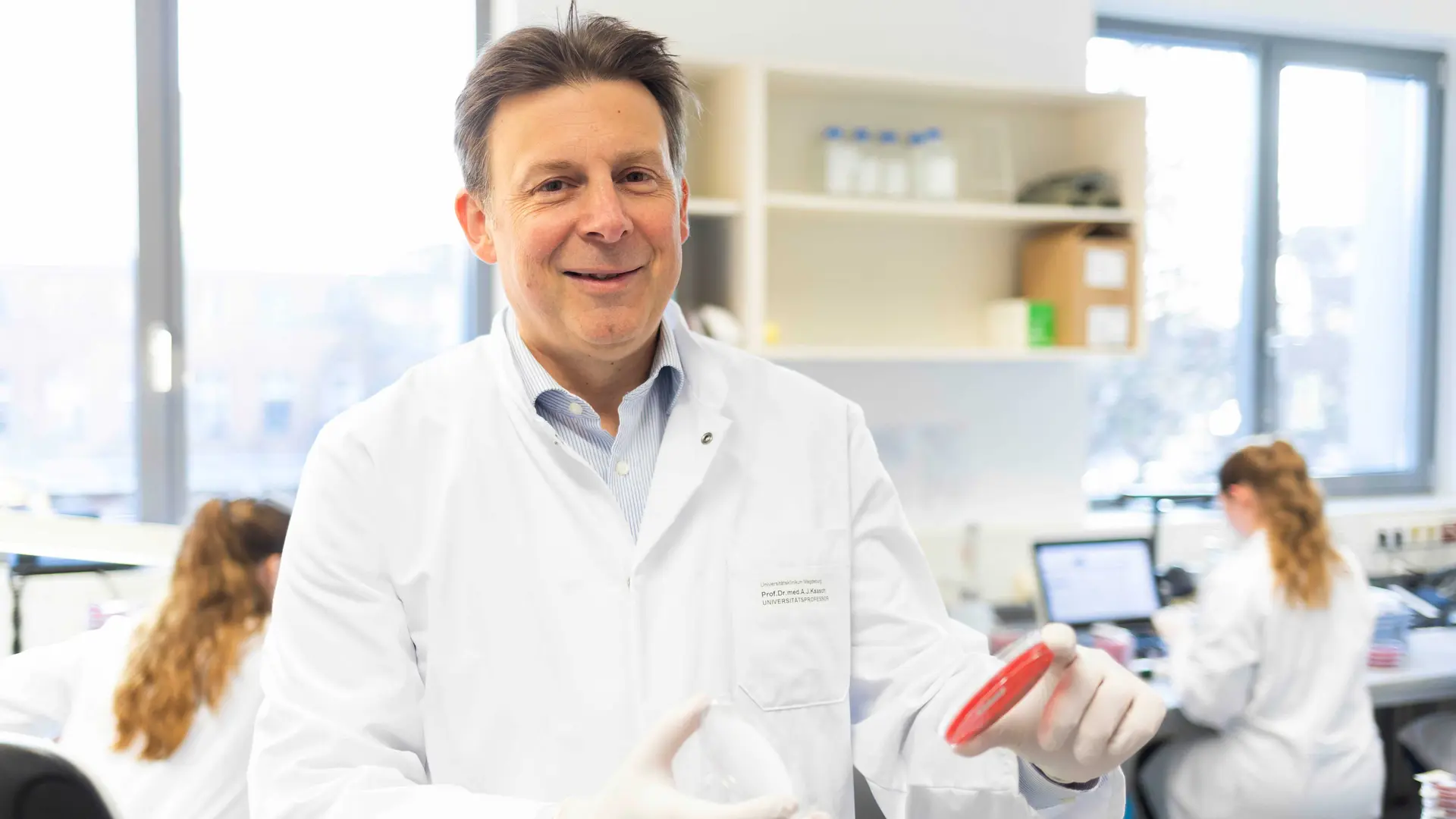
A "Important Milestone"
Professor Achim Kaasch, Director of the Institute for Medical Microbiology and Hospital Hygiene at the University of Magdeburg and the lead of the German branch of the SNAP study, characterized the findings as a fundamental shift in medical practice.
"These results are not just academic; they will change how we treat patients in the intensive care unit tomorrow," Prof. Kaasch stated. "The data clearly indicates that Cefazolin will become the new standard of care for the majority of adults suffering from these infections. By choosing a more tolerable antibiotic, we are directly reducing the burden of treatment-induced organ failure."
Clinical Translation
Dr. Jana Butzmann, a study physician at the University Medicine Magdeburg, emphasized the practical benefit for the patient. "The results indicate that Cefazolin is at least as effective as Flucloxacillin, but with a vastly improved safety profile. For a patient already dealing with the trauma of sepsis, avoiding the additional strain of kidney injury is a critical improvement in the quality of care."
Implications for Global Healthcare Policy
The transition to Cefazolin and Penicillin as primary treatments represents a victory for evidence-based medicine. However, the implications extend beyond just replacing one drug with another.
Re-evaluating Clinical Guidelines
Medical boards and hospital systems worldwide are now tasked with updating their antibiotic stewardship protocols. Transitioning to these safer alternatives requires staff training, pharmacy updates, and a cultural shift in how doctors approach "standard" treatments.
Economic and Systemic Benefits
The economic impact of reducing kidney failure in the ICU is substantial. Dialysis, prolonged hospitalization, and the management of chronic kidney disease carry massive costs for healthcare systems. By preventing these complications at the point of care, hospitals can improve patient throughput and reduce overall treatment costs while simultaneously improving clinical outcomes.
Future of the SNAP Platform
The success of the SNAP study serves as a blueprint for future clinical research. By using an adaptive platform, researchers were able to test multiple hypotheses within a single, massive trial framework. This efficiency is vital in the fight against antimicrobial resistance and evolving bacterial pathogens.
Addressing the Sepsis Crisis: A Broader Context
While the SNAP study focuses on Staphylococcus aureus, it is part of a larger, global effort to tackle the "Sepsis Crisis." In Germany alone, at least 85,000 people die from sepsis of any origin annually.
Major research initiatives, such as the large-scale project led by the University Medicine Leipzig, are working in tandem with studies like SNAP to improve the entire chain of survival for sepsis patients—from early detection using AI-driven diagnostics to the optimization of antibiotic therapy.
The integration of these findings means that we are moving toward a future where "one-size-fits-all" antibiotic therapy is replaced by precision medicine that considers both the pathogen and the patient’s long-term organ health.
Conclusion: The Path Forward
The findings from the SNAP study represent a rare moment where clinical research provides a clear, actionable path to better care. By validating Cefazolin and Penicillin as safer, equally effective alternatives to Flucloxacillin, the medical community has a unique opportunity to spare thousands of patients from the devastating complications of drug-induced kidney failure.
As the international community adopts these new standards, the focus must remain on rapid implementation. The goal is clear: to ensure that the treatment for an infection does not become the cause of a new, secondary illness. Through the diligent work of researchers at institutions like the University Medicine Magdeburg, the standard of care for sepsis is undergoing a much-needed, life-saving evolution.
For more information on the study, the full findings can be reviewed in the latest editions of The New England Journal of Medicine and The Lancet.