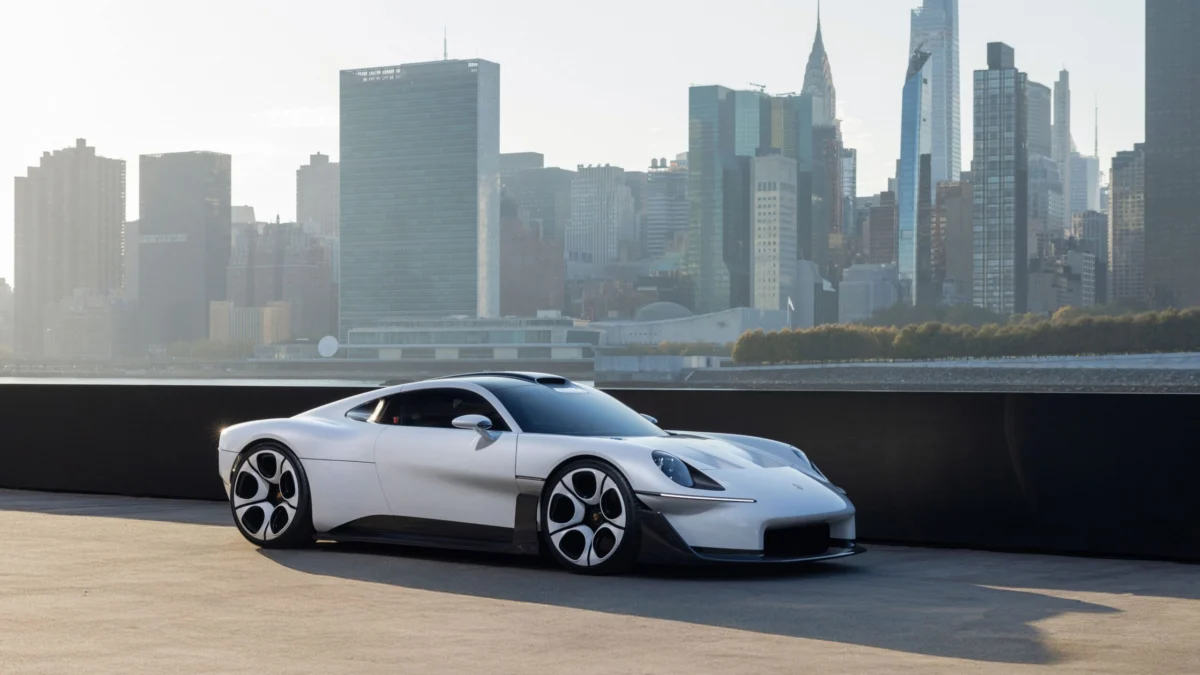
NEW YORK — In a move that signals a decisive shift in the automotive landscape, Porsche has officially pulled the veil off its latest crown jewel: the "Mission S." Unveiled in the heart of New York City, the new flagship supercar is poised to redefine the hierarchy of the Stuttgart-based manufacturer, positioning itself firmly above the legendary 911. The announcement marks not just the arrival of a new model, but the beginning of a transformative era for the brand under the leadership of CEO Michael Leiters.
I. Main Facts: The Mission S Emerges
The Mission S represents Porsche’s aggressive push into the rarefied air of ultra-high-end performance vehicles. While the 911 has long served as the backbone and emotional core of the Porsche identity, the Mission S is designed to transcend the traditional sports car segment, moving into the territory of limited-edition, hyper-exclusive motoring.
According to the official release, the vehicle is built upon a sophisticated mid-engine architecture. By placing the engine at the heart of the chassis, Porsche aims to achieve the optimal balance between track-ready agility and the visceral engagement expected of a top-tier supercar. The design philosophy is described as a marriage of modern engineering prowess and a "clear, historical design language," drawing inspiration from the brand’s most iconic racing successes.
II. Chronology: The Road to the Mission S
The development of the Mission S did not occur in a vacuum. It is the result of a deliberate, multi-year strategic pivot that began to gain momentum following the appointment of Michael Leiters as CEO.
- The Transition: Following his departure from Ferrari, Leiters brought with him a mandate to refine the Porsche portfolio. The objective was clear: prioritize exclusivity and margin over sheer volume.
- The Conceptual Phase: Internal reports suggest that design studies for the Mission S began shortly after the pandemic, focusing on how to bridge the gap between the 911’s legacy and the future of internal combustion engineering.
- The New York Premiere: The global reveal in New York was selected specifically to signal Porsche’s commitment to the North American market, which remains a primary consumer base for ultra-luxury vehicles.
- The Future Roadmap: While the debut serves as a design preview, the industry now shifts its focus toward the production rollout, with rumors of limited production runs expected to follow in the coming years.
III. Supporting Data: The Economics of Exclusivity
Porsche’s strategy is rooted in a fundamental shift in business modeling. The company is moving away from the traditional volume-growth model toward a "value-over-volume" approach.
The Shift in Segment Mix
Under Leiters, the goal is to increase the proportion of high-priced luxury models within the total sales mix. Currently, these premium offerings account for roughly one-third of sales; the company aims to push this figure toward 50% by the end of the decade.
Pricing Projections
The economic ambition is staggering. Porsche has set a clear financial target: by 2030, the average price of its top 10,000 units is projected to climb from the current €270,000 to €330,000. This increase is intended to insulate the company from the volatility of the mass-market automotive sector while maximizing profit margins on every chassis that rolls off the assembly line.
IV. Design Philosophy: Engineering Meets Heritage
Tobias Sühlmann, the newly appointed chief designer at Porsche, emphasized that the Mission S is an exercise in restraint and evolution. "The Mission S connects a powerful mid-engine platform with a clear, historically inspired design language," Sühlmann stated during the presentation.
The design team was tasked with avoiding the "design fatigue" often seen in modern supercars—characterized by excessive aero-flicks and aggressive angles—in favor of cleaner, timeless lines. The car serves as a tribute to the legendary 917 and other endurance racers of the 1970s, yet it incorporates modern computational fluid dynamics to ensure it remains competitive in the current performance landscape. The objective is "maximal flexibility," allowing the platform to be adapted for both high-speed touring and competitive track environments.
V. Official Responses and Strategic Implications
The silence regarding technical specifications—such as horsepower, top speed, or acceleration metrics—is intentional. By focusing on the design and the brand’s new strategic trajectory, Porsche is managing expectations and building anticipation. However, the company did drop a significant hint: internal combustion engines (ICE) will play a larger role in their future than previously assumed.
The Return to Combustion
In an era where many luxury brands are rushing toward full electrification, Porsche’s strategic pivot suggests a pragmatic realization. As the company moves toward higher price brackets, the "soul" of the engine becomes a primary selling point. Collectors and ultra-luxury buyers are increasingly seeking the mechanical engagement of high-performance combustion units, a demand Porsche intends to meet.
Implications for the Market
- The "Ferrari-fication" of Porsche: By hiring leadership from Ferrari and adopting a model of scarcity, Porsche is effectively competing for the same ultra-wealthy demographic that previously viewed the Italian marque as their only option.
- Brand Dilution Risk: By positioning the Mission S significantly higher than the 911, Porsche risks creating a "two-tier" brand perception. The challenge will be ensuring that the 911 remains relevant while the new flagship commands the spotlight.
- The Sustainability Paradox: While Porsche continues to invest in synthetic fuels and high-performance engines, the regulatory environment in Europe and the U.S. remains a hurdle. The Mission S will likely be the flagship for Porsche’s e-fuel research, serving as a testbed to prove that internal combustion can coexist with environmental responsibility.
VI. Looking Forward: The Competitive Landscape
The introduction of the Mission S places Porsche in direct competition with the likes of the Ferrari SF90, the Lamborghini Revuelto, and McLaren’s upcoming successors. Unlike those rivals, however, Porsche brings a unique "everyday usability" heritage that has long defined the 911. If they can successfully translate the reliability and daily driving comfort of a 911 into a hyper-car platform, they will have created a product category that is virtually unrivaled.
The automotive world now waits for the next phase of the Mission S rollout. When will the technical specs be revealed? Will there be a hybrid assist system? And most importantly, how will the traditional Porsche enthusiast react to a model that is inherently designed to be more expensive and less accessible than anything that has come before?
For now, the Mission S stands as a statement of intent. It is a declaration that Porsche is not merely a manufacturer of excellent sports cars, but a player in the most exclusive tier of luxury, where performance, heritage, and engineering prestige are sold at a premium. As the company steers toward 2030, the Mission S will be the benchmark by which its success—both financial and cultural—is measured.
The road ahead for Porsche is clear: build fewer, build better, and build faster. The Mission S is the first chapter of this new, high-stakes story.